
Review · ARUSHA
9-Day Serengeti Migration Footsteps Tanzania Safari
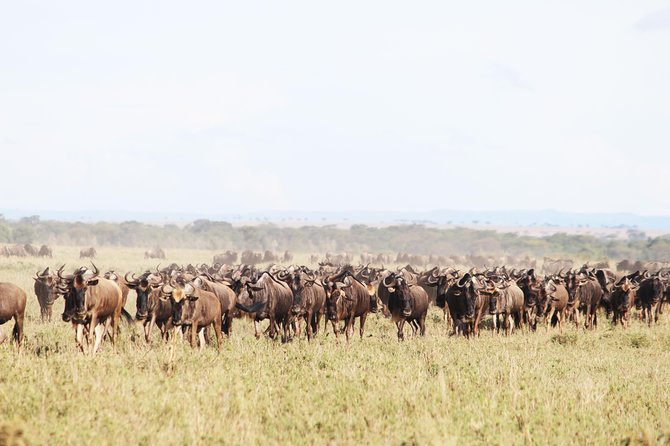
The heart of this safari is the chance to follow the Great Migration instead of treating the Serengeti as a quick one-night stop. Four nights in and around the park give you time to search for wildebeest, watch resident lions and cheetahs, and wait for the right moment along the Mara River.
I like the mix of famous parks and quieter corners, especially Tarangire’s baobabs and the less-visited northern Serengeti. I also like the private format, since your group shares the vehicle and can work with guides such as Enock, Mwita, Gilbert, or Yusuph. The main caution is timing: a river crossing is never guaranteed, and the migration route changes with rain and grazing conditions.
Key points at a glance
- Four nights in the Serengeti: More time means better odds of seeing both migrating herds and resident predators.
- Northern Serengeti from July to November: This is the main period described for Mara River viewing, with August highlighted as a strong month.
- Ndutu from December to March: The southern migration zone replaces the northern focus during this season.
- Private transportation: Only your own group participates, giving the safari a more personal feel.
- Three distinct wildlife settings: Tarangire, Ngorongoro Crater, and Lake Manyara each offer a different type of game viewing.
- Price of $4,539 per person: A substantial outlay, but it covers nine days, park access, private transport, and most meals.
A migration safari built around patience
Many Tanzania safaris give you a taste of the Serengeti and then move on. This one gives the park the most time. Days 3 through 7 are built around reaching the migration area, spending time there, searching for crossings, and then returning toward Seronera and Ngorongoro.
That matters because wildlife does not follow a timetable. A herd may gather at a riverbank for hours, then cross in a rush, or turn back altogether. Four Serengeti nights give your guide more chances to find the action rather than relying on one lucky afternoon.
The schedule is designed around the migration’s broad seasonal pattern. From July through November, the focus is the remote northern Serengeti and the Mara River. From December through March, the migration is expected around Ndutu in the southern Serengeti area. If seeing a crossing is your main goal, ask for the exact operating dates and current location of the herds before paying a deposit.
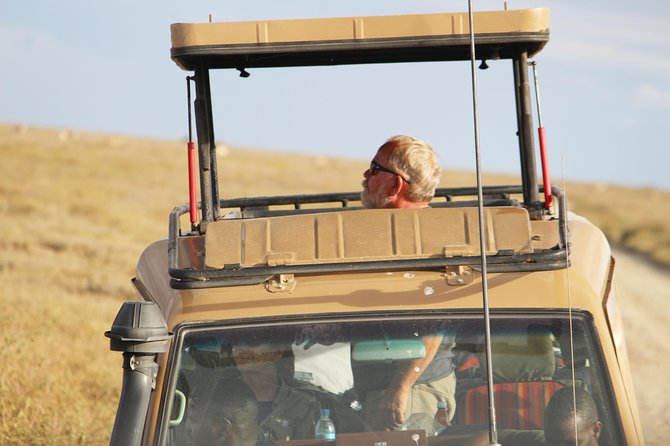
The safari is private, but it is not a private aircraft or luxury lodge package by default. You travel by road in private transportation, with long drives between parks. That gives you a close look at northern Tanzania, but you should be comfortable with early starts, dusty roads, and full days in a vehicle.
More Great Migration safaris around Arusha:
- 8 Days Great Wildebeest Calving Migration Safari from Arusha
★ 5.0 · 254 reviews - 10-Day Serengeti Wildebeest Migration Safari from Arusha
★ 5.0 · 218 reviews - 8 Day Spectacular Migration Serengeti mid -Range Tanzania Safari
★ 5.0 · 161 reviews
Day 1: A quiet start in Arusha
Your first day is simple. A Lion King representative picks you up from the airport and takes you to your Arusha accommodation. The day is meant for rest, preparation, and getting ready for the safari ahead.
This is useful after an international flight. You are not asked to begin with a long game drive or a difficult transfer. The listed start time is 8:30 a.m., and the trip begins from Arusha, so confirm the exact pickup plan if your arrival falls outside the normal schedule.
The accommodation for this first night is not specified in the details provided. Ask for the property name, what meals are included on arrival day, and whether airport pickup is included for your particular booking.
Day 2: Tarangire’s elephants and baobabs
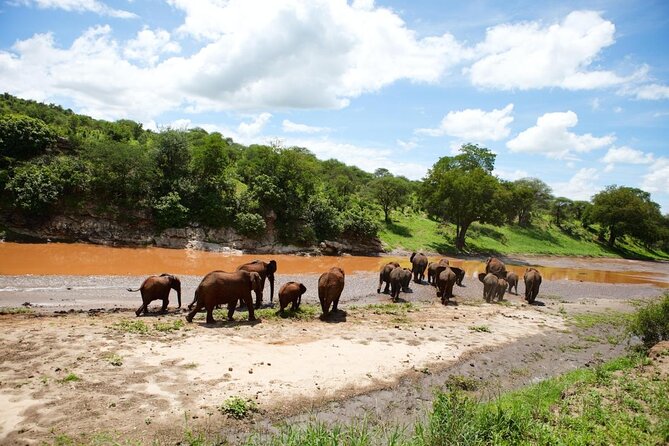
After breakfast, you drive to Tarangire National Park for a full day of game viewing. Tarangire is a strong opening act because it feels different from the Serengeti. Its nine vegetation zones include open areas, river country, and stands of enormous baobabs.
The Tarangire River draws wildlife, particularly during drier periods. You may see elephants, lions, leopards, buffalo, zebra, giraffes, antelope, and many bird species. The park is especially known for its large elephant population, and the slower pace of watching family groups interact can be as rewarding as checking off a famous predator.
I like that Tarangire is not treated as filler. The baobabs give the day a strong sense of place, and the park adds variety before you reach the open Serengeti plains.
The drawback is the long road day. You have a full game drive after the transfer from Arusha, so expect a busy schedule. Still, the stop earns its place because it offers a different setting and a good chance for elephant sightings.
Day 3: Through the highlands to the Serengeti
The route to the Serengeti passes through fertile highlands where Iraqw people grow wheat and corn. You then travel through the misty forests of the Ngorongoro Conservation Area, where baboons may appear and elephants or leopards can sometimes be hidden in the thick vegetation.
You also get a view of Ngorongoro Crater before continuing west. By midday, the plan is to reach Serengeti National Park, Tanzania’s largest park, with grasslands, swamps, lakes, and other habitats.
This is a valuable transition day because you see how quickly northern Tanzania changes. The drive is not just a transfer between two safari parks. It moves from cultivated highlands to forest, crater country, and then the wide Serengeti.
The schedule does include a lot of road time. The Serengeti is huge, and reaching the central or northern areas takes time. If you want a restful holiday with minimal driving, this itinerary may feel demanding. If you enjoy seeing the country change outside the vehicle, the route adds context.
More Multi-Day Safaris around Arusha:
- 4 Days Group Camping Safari
★ 5.0 · 1,101 reviews - 5 Days Group Camping Safari
★ 5.0 · 730 reviews - 3 Days Serengeti & Ngorongoro Group Camping Safari
★ 5.0 · 574 reviews - 7-Day Premium Luxury Tanzania Safari All-Inclusive
★ 5.0 · 426 reviews
Days 4 and 5: Waiting for the Mara River
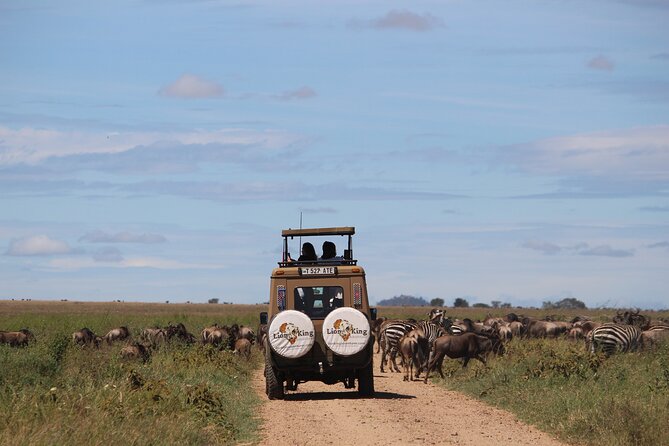
Day 4 takes you north from the Seronera area. The route covers roughly 100 kilometers through rolling country marked by small rivers, occasional hills, and kopjes. Lobo Kopje is one of the notable rock formations in this region.
Northern Serengeti receives fewer visitors than the southern and central parts because it is farther from the main entry routes. That remoteness is part of the appeal. You still have a permanent population of wildlife, but the setting feels less crowded and more open.
The migration is described here during August, with the possibility of seeing wildebeest attempt the Mara River crossing. Day 5 is devoted to another early start and further searching. The scene can be dramatic: large herds gather at the bank, hesitate, and then sometimes follow one animal into the water.
There is no promise that the crossing will happen in front of you. Even during the correct season, the herds can be spread out, the river can be unsafe, or the animals can wait for hours. A good guide can search, communicate with other vehicles, and position your group sensibly, but nature makes the final decision.
This is where the private format helps. Your guide can shape the day around current sightings instead of following a fixed group schedule. It also lets you decide how long you want to stay at a sighting, within park rules and the day’s driving plan.
The northern section is a long way from Arusha, and the roads can be tiring. The reward is a less developed setting and a serious attempt to reach the migration rather than a short stop near the park’s southern entrance.
Day 6: Returning toward Seronera
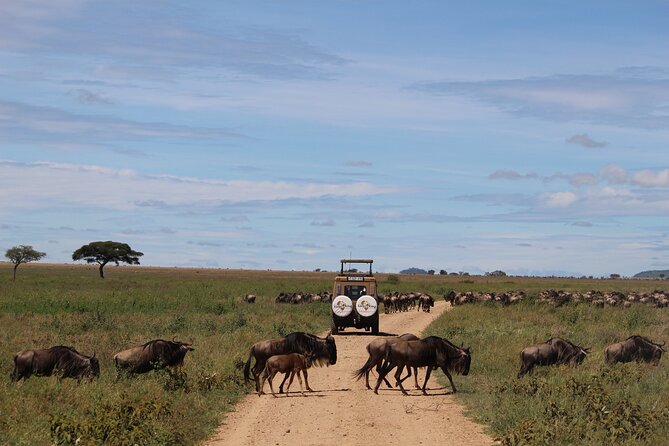
After another breakfast, you head back toward Seronera for more wildlife viewing. The route gives you another chance to find animals away from the migration herds.
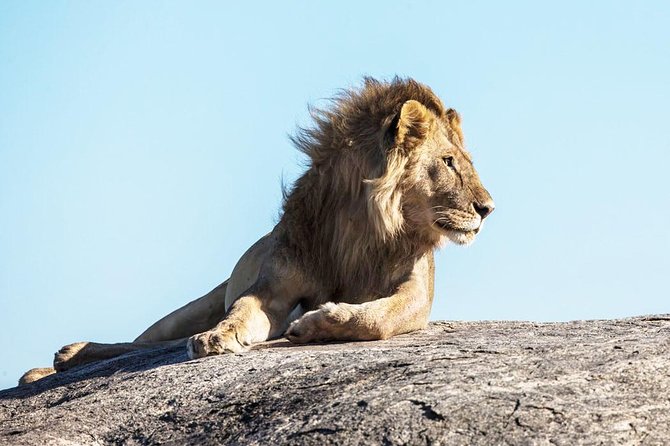
The Serengeti is not only about wildebeest. Lions, leopards, and cheetahs live here year-round, and your guide will search for them among the open plains and rocky areas. Several people who took this safari saw the Big Five, but that should be treated as a fortunate result, not a promise.
This is also the day when the trip’s rhythm becomes clear. You spend long periods outside, return to camp or lodge for dinner, and have time to relax by the fire under the night sky. The accommodation details vary, but the trip includes overnight stays in the Serengeti, with tented camps or lodges described among the experiences associated with this route.
Ask which properties are planned for your dates. One accommodation named in the supplied information is Nyota Luxury Camp, but it should not be assumed for every departure.
Day 7: From the Serengeti to the crater rim
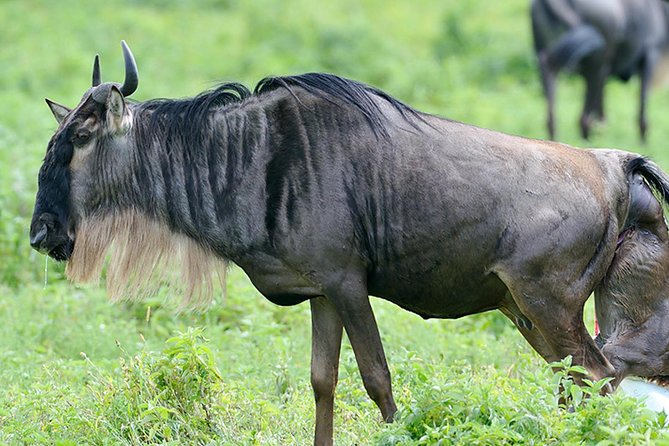
You begin with another Serengeti game drive before traveling to Ngorongoro Crater. By afternoon, you reach the crater rim, where the first view looks down on open grassland, streams, and large numbers of animals.
Staying on the rim gives you a useful head start for the next morning. It also creates one of the best visual changes on the trip, from the broad Serengeti to a vast volcanic caldera below.
This is another long transfer day, so you should not expect a full day of uninterrupted wildlife viewing. The value comes from combining a final Serengeti drive with a crater-rim overnight rather than trying to rush from the park to the crater floor in the same morning.
Day 8: Wildlife inside Ngorongoro Crater
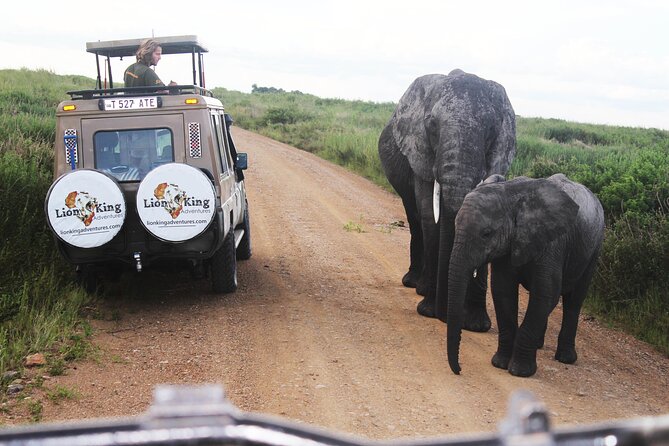
You rise early, eat breakfast, and descend to the crater floor for a full day of game viewing. Ngorongoro formed about three million years ago after a huge volcanic explosion. The caldera is about 610 meters deep and covers roughly 260 square kilometers.
Because the crater is an enclosed ecosystem, animals are often easier to find here than in the open Serengeti. You may see lions, elephants, buffalo, zebra, wildebeest, and other wildlife. It is also regarded as one of the stronger places in Tanzania for searching for the Big Five.
The crater is visually different from every other stop. You have open grassland below, steep walls around you, and streams and other water sources that support wildlife. The crater is also culturally important: the name Ngorongoro is linked to the sound of bells worn by Maasai cattle.
The early start is worth it for the game viewing, but the day can be tiring after several previous drives. If you have limited mobility, ask the operator for practical details about vehicle access and time spent on the crater floor. The supplied information says most people can participate, but it does not provide specific accessibility arrangements.
Day 9: Lake Manyara and the road back to Arusha
The final park is Lake Manyara, about 120 kilometers west of Arusha. The shallow salt lake covers roughly 70 percent of the park’s surface at certain times, expanding and shrinking with the seasons.
Bird life is a major reason to visit. The park can support thousands of flamingos and around 500 bird species. You may also see monkeys, giraffes, zebra, wildebeest, buffalo, elephants, and, with luck, lions resting in trees.
Lake Manyara is compact but varied. Its open plains, woodland, baobab-dotted cliffs, and lake margins create a different setting from both Tarangire and the Serengeti.
After lunch, you drive back to Arusha, arriving in the late afternoon. This makes the final day practical for an onward stay in town, though you should avoid booking a tight evening flight unless the operator confirms the timing.
Guides, vehicles, and the private format
The strongest part of this experience is likely to be the guide assigned to your group. Names associated with this safari include Enock, Mwita, Gilbert, Yusuph, Leonard, Amani, Simon, Ozzy, Richard, Immanuel, and Shafino.
Enock is described as especially attentive and careful with arrangements. Mwita is associated with strong animal-finding skills and a background in the Serengeti. Gilbert is praised for sharp eyesight and a thoughtful manner, while Yusuph is noted for making first-time safari visitors feel well cared for. These guides are not guaranteed for every departure, so request your guide’s name when possible.
The private vehicle matters. You are not sharing the trip with an unknown group, and the format can suit families, honeymooners, friends, and people who want a slower pace at sightings. Families with teenagers have used this kind of itinerary successfully, but nine days of driving still calls for patience.
Meals include nine breakfasts, eight lunches, and seven dinners. Parking fees and private transportation are included. Gratuities, international flights, and any items not listed are extra, so budget for tips separately.
Is $4,539 per person good value?
At $4,539 per person, this is not a budget safari. But the price includes nine days, several national parks, private transportation, park-related fees, and most meals. You also receive four nights focused on the Serengeti, which is more useful for migration viewing than a brief overnight visit.
The value depends heavily on the accommodation level, vehicle standard, group size, and exact dates. Those details are not fully stated, so ask for them before booking. Compare the price with the quality of the camps or lodges, not just the number of parks.
For a private safari with strong guide support and a serious attempt to reach the migration, the package can make sense. It is less compelling if you mainly want a quick Big Five trip or if your budget is tight.
Who should book this safari?
You should consider it if you want the Great Migration to be the main event, can handle long road days, and value a private itinerary. It also suits families and small groups who want one vehicle and a guide focused on their needs.
I would be more cautious if your dates do not match the migration zones. A December to March departure should be planned around Ndutu, while July to November points toward the north and Mara River. If you are set on seeing a river crossing, build your expectations around a chance, not a guarantee.
Free cancellation is available when you cancel at least 24 hours before the start time. The operator may also require a minimum number of participants, despite the private format, so confirm the terms for your booking.
My call: book this safari if you want a long, varied northern Tanzania route with extra Serengeti time and you accept the uncertainty that makes wildlife travel real. Before you commit, get the exact travel dates, camps, guide assignment if available, vehicle details, and current migration location in writing.
FAQ
Where does the safari start and finish?
It starts in Arusha, Tanzania, with pickup offered. The activity ends back at the meeting point in Arusha.
How long is the safari?
The experience lasts approximately nine days. The listed start time is 8:30 a.m.
When can I expect the migration in the northern Serengeti?
The northern Serengeti migration period is listed as July through November, with August identified for possible Mara River crossings.
Where is the migration found from December through March?
During December through March, the migration is described as being around the Ndutu region.
Are meals included?
Yes. The package includes nine breakfasts, eight lunches, and seven dinners.
Is this a private tour?
Yes. Only your group participates, and private transportation is included.
New safaris around Arusha
- Arusha: Serengeti and Ngorongoro Multi-Day Camping Safari★ 4.6 · 46 reviews
- Arusha: 3-Day Serengeti & Ngorongoro Crater Big Five Safari★ 4.6 · 20 reviews
- 5-Day Private Northern Tanzania Safari from Arusha★ 5.0 · 182 reviews
- 3 Days Private Safari – manyara, Ngorongoro & Tarangire★ 5.0 · 94 reviews
- 6 Day Tanzania Wildlife Mid range Safari★ 5.0 · 54 reviews
- 4 Days Tarangire, Serengeti and Ngorongoro Mid-Range Group Safari★ 5.0 · 84 reviews
- 5 Days Mid-Range Group Safari with Accommodation★ 5.0 · 67 reviews
- 7-Day Premium Luxury Tanzania Safari All-Inclusive★ 5.0 · 426 reviews
Arusha Safaris: how they compare.
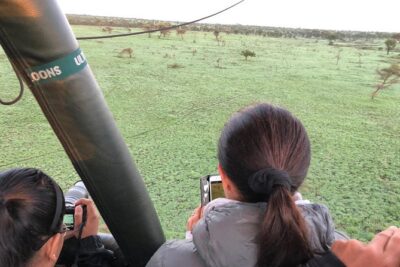
Balloon Safari & Bush Breakfast in Serengeti – Miracle Experience
Read our review →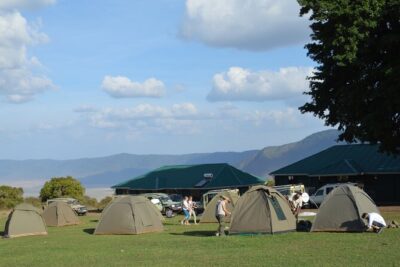
3 Days Serengeti & Ngorongoro Group Camping Safari
Read our review →
7-Day Premium Luxury Tanzania Safari All-Inclusive
Read our review →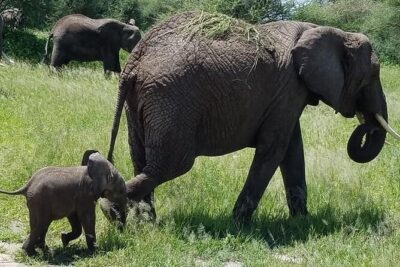
8 Days Great Wildebeest Calving Migration Safari from Arusha
Read our review →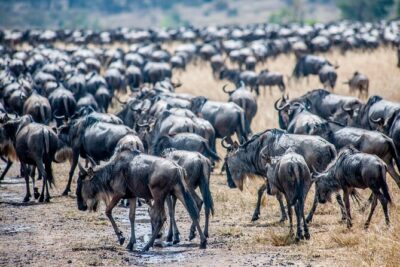
10-Day Serengeti Wildebeest Migration Safari from Arusha
Read our review →
5-Day Private Northern Tanzania Safari from Arusha
Read our review →Other lists this safari sits on