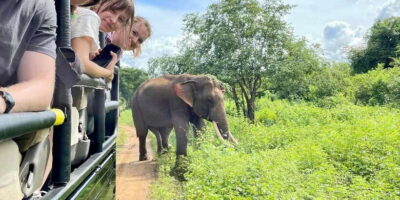
Review · UDAWALAWE
Udawalawe: National Park Safari & Elephant Transit Home Tour
Wild elephants are the reason to come, and Udawalawe National Park gives you a strong chance of seeing them in open country. Add crocodiles by the water, herds of buffalo, deer, peacocks, monkeys, and a sharp-eyed guide, and this half-day outing packs a lot into four hours.
I like the hotel pickup and return because it removes the usual safari-day fuss. I also like that guides such as Pathum, Koshala, Mahesh, and Prasad often take quieter routes and keep a respectful distance from the animals. The main catch is simple: the advertised $21 covers the jeep experience, not the park or Elephant Transit Home entry fees.
Key points to know
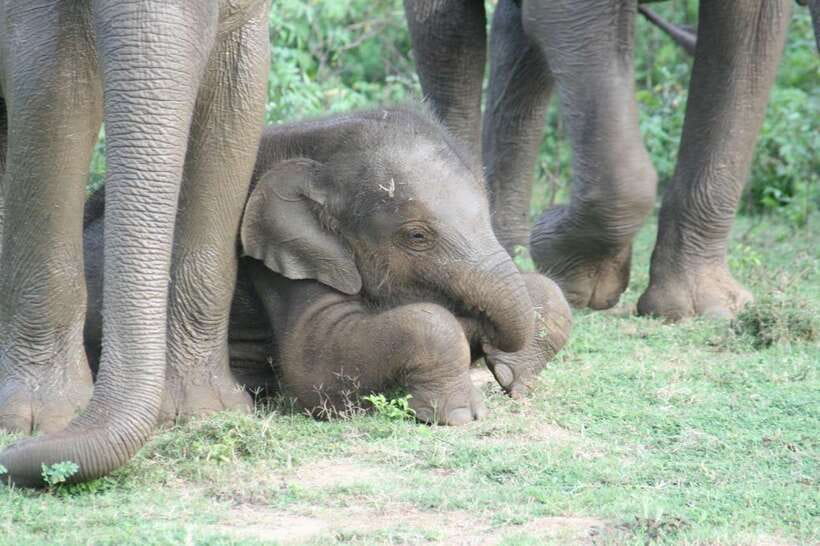
- Elephants are the main attraction: You may see solitary males, family groups, young elephants, and, with luck, babies.
- The park is more than elephants: Crocodiles, water buffalo, deer, wild boar, monkeys, mongoose, monitor lizards, birds, and butterflies are all possible.
- Early starts pay off: Morning departures offer cooler conditions and leave much of the day free for onward travel.
- The Elephant Transit Home is a separate visit: Plan for an additional entrance fee and feeding-time schedule.
- The jeep holds up to seven people: A full vehicle is good value, though less private than a smaller group.
- Guide quality matters: Pathum, Koshala, Mahesh, and Prasad receive repeated praise for animal spotting, route choices, and respectful driving.
Why Udawalawe works so well for a short safari
Udawalawe is a practical choice when you want a real wildlife outing without giving up an entire day. This tour lasts about four hours, including the safari and Elephant Transit Home visit, so you can fit it into a stopover or continue to another part of Sri Lanka afterward.
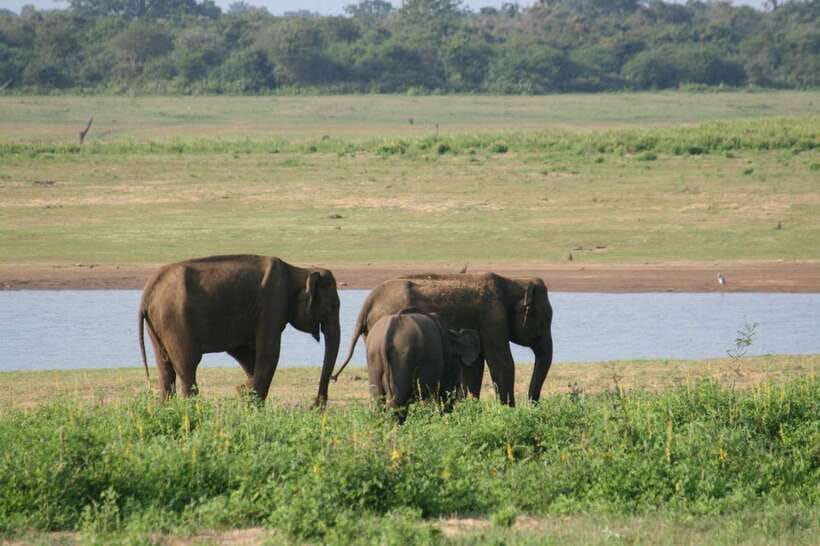
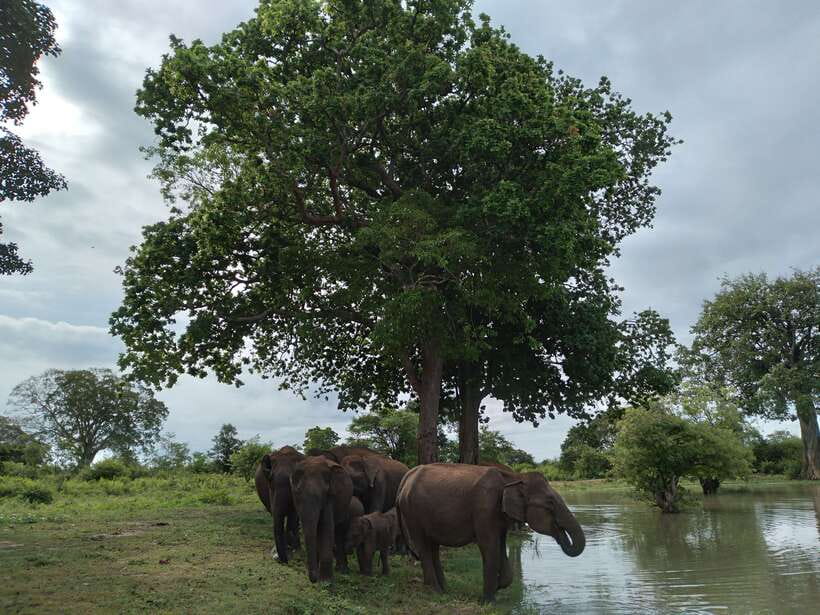
The park is especially well known for elephants. The plentiful water sources draw animals toward lakes and other wet areas, which can make sightings easier than in thicker forest. You still need luck, patience, and good timing, but you are not simply driving around hoping for a glimpse through dense trees.
I would choose this experience if elephants are high on your Sri Lanka wish list, but I would not book it expecting a guaranteed leopard sighting. A few people have seen one, including sightings reported in April and October, but leopards are rare. The dependable appeal is the broader mix of wildlife, with elephants usually taking center stage.
More Elephant Safaris in Sri Lanka
- Udawalawe National Park: Elephant Safari with Expert Guide
★ 4.9 · 641 reviews - From Sigiriya: Minneriya National Park Elephant Safari
★ 4.8 · 365 reviews - Private Jeep Safari at Minneriya National Park to Visit Elephants
★ 5.0 · 338 reviews
Hotel pickup keeps the morning simple
Pickup is available from hotels in the Udawalawe area, or you can meet at the national park entrance. After the safari, you are returned to your pickup location. If your hotel is outside the stated area, an extra transportation charge applies, so check that before booking.
The transport is a safari jeep, with a maximum of seven people. That limit matters. A jeep shared among several people costs less per person, but you may have less freedom to choose where to sit or how long to pause. If your group is small, the final price can also feel less predictable once entry fees are added.
The pickup arrangements have generally been smooth, and the driver-guide combination is one of the tour’s strongest points. Pathum is often praised for explaining birds, elephants, and other animals as you go. Koshala is noted for choosing less crowded tracks and helping with good photo positions. Mahesh and Prasad also receive strong marks for friendly service and wildlife spotting.
A small practical note: the jeep is not just a transfer vehicle. Your driver is also your guide, spotter, and route planner. That means the quality of the day depends heavily on the person behind the wheel. The repeated praise for specific guides is encouraging, but guide assignments can change.
The four-wheel-drive safari through Udawalawe
Once inside the park, the day becomes a slow search. You move along dirt tracks and pause when the guide spots movement, tracks, birds, or animals near the water. This is not a ride with a fixed list of stops. The route changes according to wildlife activity and the conditions that day.
Elephants are often the first thing you hope to see, and the sightings can vary. You might find one animal standing apart from the road, a small group feeding, or a larger family gathering near water. Some outings have produced 10 to 15 elephant sightings, while another produced six separate elephants. That difference is a useful reminder that safaris are never fully predictable.
Several guides are praised for avoiding the tightest clusters of jeeps. That can make a real difference. Instead of staring at an elephant surrounded by vehicles, you may have a quieter view with time to watch its behavior. One guide was especially appreciated for explaining elephant body language and keeping a careful distance.
Do not assume that a closer view is always a better view. An elephant may look impressive from a jeep, but the best guide will avoid blocking its path or pushing too near. The strongest experiences here come from quiet observation, not from forcing an encounter.
Wildlife beyond the elephants
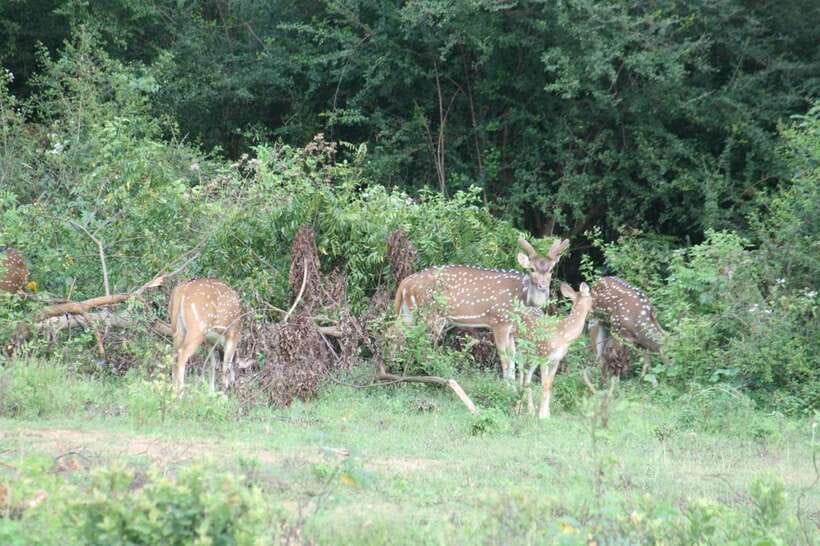
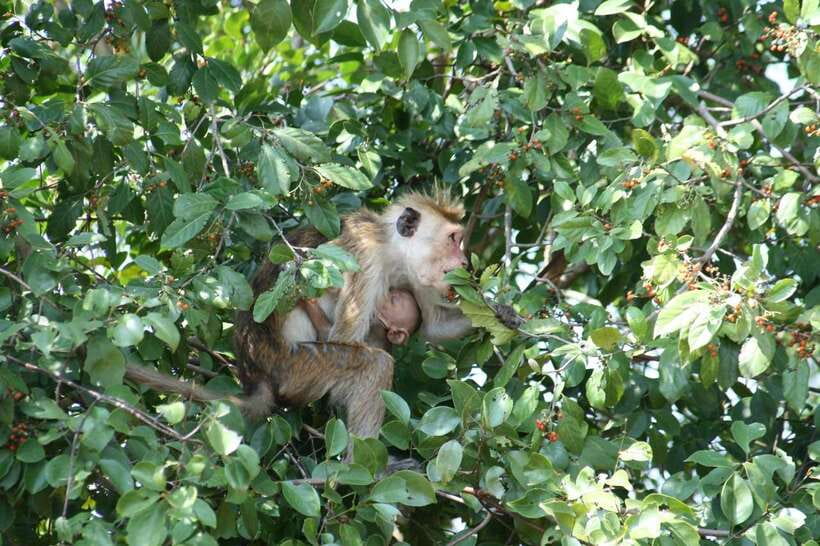
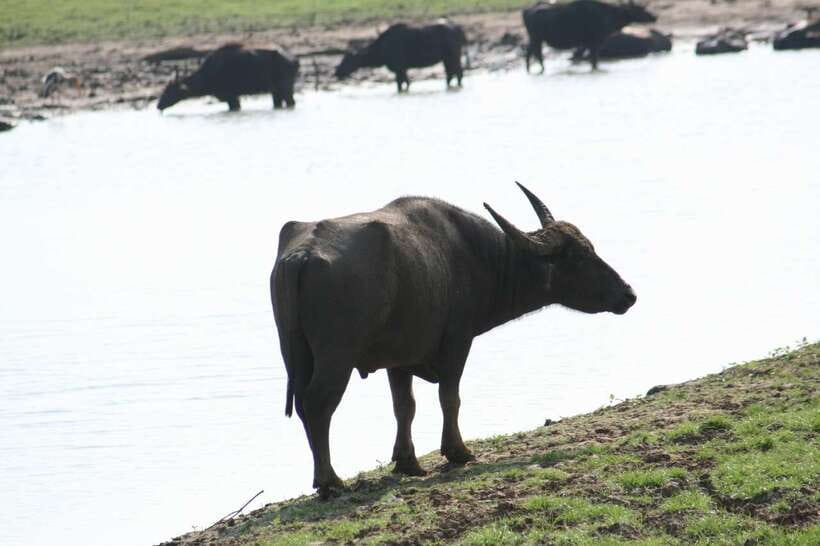
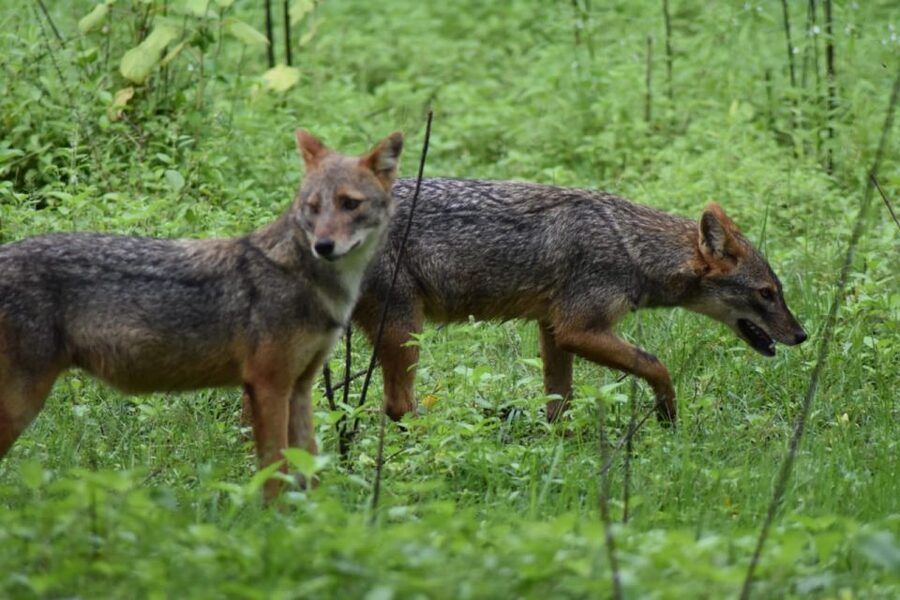
Udawalawe gives you a good chance to see a broad range of animals in a short outing. Water buffalo and spotted deer are common targets, along with barking deer, sambar, wild boar, hares, mongoose, and jackals. Monkeys, monitor lizards, iguanas, and crocodiles also appear in the reports from this tour.
The crocodiles are often found near water, where they may be almost invisible until your guide points them out. That is where an experienced spotter earns their keep. The same is true of small creatures. One guide stopped to show a snake after the safari, and another person praised a driver for finding even tiny animals.
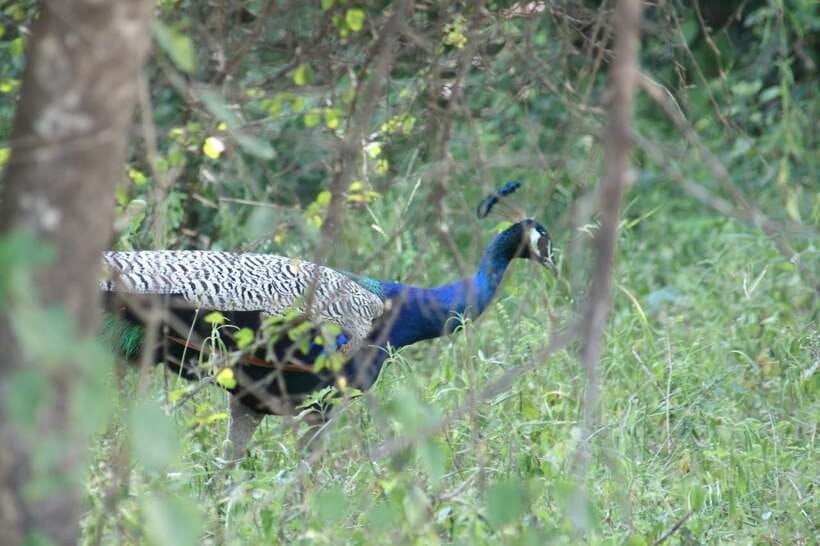
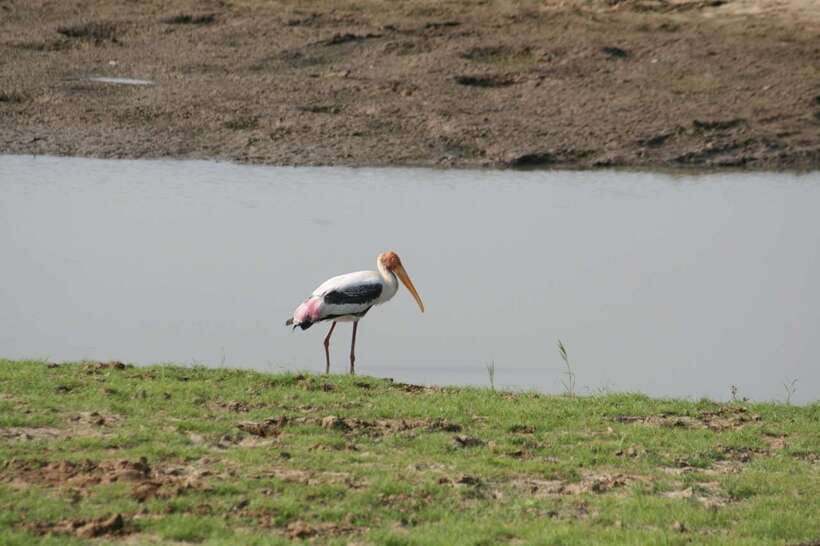
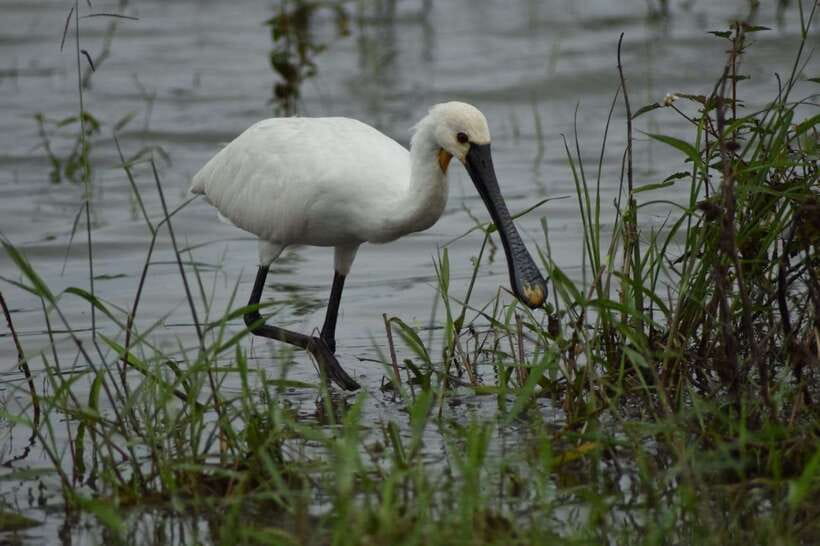
Birdlife adds another layer to the ride. Peacocks, eagles, hornbills, and many other birds are possible, with one outing producing a Malabar hornbill. The park is said to have many bird species, as well as around 50 butterfly species and 30 snake species. You will not see all of them in four hours, of course, but the variety means the safari can still be worthwhile on a day when elephant sightings are modest.
You may also see animals from different distances. Some sit out in the open, while others disappear quickly. Bring patience. A guide can point out a bird or lizard, but cannot make wildlife perform for the camera.
More National Park Safaris in Sri Lanka
- Udawalawe National Park | Private Safari Tour
★ 5.0 · 1,499 reviews - Yala National Park Safari Tours: Morning/Evening/Full Day
★ 4.8 · 818 reviews - Full day Safari – Yala National Park – 04.30 am to 06.00 pm with – Janaka safari
★ 5.0 · 603 reviews - Yala National Park: Half, 7-Hour, or Full-Day Safari & Meals
★ 4.8 · 489 reviews
The Elephant Transit Home during feeding time
The second part of the outing takes you to the Elephant Transit Home. This center cares for young wild elephants before they can return to the wild, and the feeding period gives you a chance to see the animals at close range.
This is not the same as walking among a herd or handling elephants. The main experience is watching the feeding routine and learning about the care given to young animals. Some accounts describe very close views, but you should treat physical contact as neither guaranteed nor the main point of the visit.
Timing matters here. Feeding sessions take place at set times, and the tour is arranged to reach the center during one of them. One morning visit was timed for the feed, while another reached the afternoon session at 2:30. Confirm the departure time when booking so the safari and feeding visit line up on the day you go.
The extra stop adds emotional weight to the outing. Seeing young elephants being fed can be memorable, but it also raises a useful question about wildlife tourism. The strongest version of this visit is one where you watch quietly, follow the center’s rules, and understand that these are rescued or orphaned wild animals, not tame pets.
Entry to the Elephant Transit Home is not included. One past booking recorded a charge of 3,600 Sri Lankan rupees for two people, but fees can change. Treat that figure as a guide only and check the current rate locally.
How much value do you really get for $21?
At $21 per person, the tour looks inexpensive for a four-hour jeep safari with pickup and a driver-guide. It can be very good value if you are staying nearby, sharing the jeep, and want a straightforward way into the park.
The price needs context. It does not include the Udawalawe National Park entrance fee, the Elephant Transit Home entrance fee, food, or drinks. Entry costs can vary with group size and current park rules. One small group paid about $50 for park entry, while another paid 10,000 Sri Lankan rupees for two people. Those examples show why you should ask for the current total before you set your budget.
Tips are also not included. Tipping is personal, but a guide who spends hours spotting animals, explaining behavior, and helping with photographs may reasonably expect something extra. Carry Sri Lankan rupees for entry fees and tips, rather than assuming the initial booking price covers every cost.
For a family or group of several people, the value is usually stronger because the jeep cost is spread across more passengers. For one or two people, the added park fee may be a bigger part of the final bill. Even then, the convenience of pickup, the four-wheel-drive vehicle, and the guide’s local knowledge can make it easier than arranging each piece separately.
Morning or afternoon: choosing your timing
Early morning is the safest recommendation. The air is cooler, wildlife is often active, and you still have the rest of the day for travel. Several people specifically liked morning starts, including a 7:30 pickup, because the light was good and the heat was manageable.
A morning safari also gives you more room if a vehicle problem or slow animal sighting delays the schedule. One outing required a truck change, but the driver handled it without derailing the day. That kind of buffer is useful if you have a bus, train, or hotel change later.
The Elephant Transit Home can also be visited during an afternoon feeding session, so an afternoon departure may suit your schedule. Still, check the exact feeding time. The safari route and the center’s timetable need to match, and the park experience may feel hotter later in the day.
Food and drinks are not included. One guide provided a table and chairs so the group could eat breakfast, but that should not be treated as a standard service. Bring water and any food you need, and confirm what your pickup time allows.
Who will enjoy this safari most?
I would recommend this tour to first-time safari visitors, families who want a manageable outing, and anyone traveling through southern or eastern Sri Lanka with limited time. The four-hour format is long enough to see a good range of wildlife without turning into an exhausting full-day drive.
It also suits photographers who care about animal behavior and changing viewpoints. Guides have been praised for finding quieter routes and allowing time for photos. Just remember that a shared jeep may limit your control over seating and stops.
Birdwatchers may enjoy it too, especially if you are happy to treat elephants as one part of the day rather than the only goal. The park offers birds, butterflies, reptiles, and mammals, and guides can help identify what you would otherwise miss.
I would be more cautious if you want a private vehicle, guaranteed leopard sightings, or a fully inclusive price. You can request details about the jeep arrangement and all current fees before paying, but the basic package is designed as a practical shared safari, not a luxury wildlife expedition.
The cancellation terms are useful for a changeable itinerary: you can cancel up to 24 hours in advance for a full refund, and you can reserve now and pay later. The tour is conducted in English.
Should you book the Udawalawe safari?
Yes, if you want a reasonably priced, short safari where elephants are the main event and you value a helpful driver-guide. The repeated strengths are clear: smooth pickup, strong animal spotting, good elephant sightings, and guides who often avoid the worst crowds.
Book with realistic expectations. Your final cost will be higher than $21 after park and Elephant Transit Home entry, and wildlife sightings will never be guaranteed. Ask about the current fees, pickup location, feeding time, and likely group size before you confirm.
If you can choose your timing, take the morning departure. If Pathum, Koshala, Mahesh, Prasad, or another named guide is available, that may be worth requesting, though assignments cannot be assumed. For a compact introduction to Udawalawe, this is a sensible choice with genuine wildlife value.
FAQ
How long does the Udawalawe safari and Elephant Transit Home tour last?
The experience lasts about four hours. The time includes the 4×4 jeep safari and the visit to the Elephant Transit Home during feeding hours.
Is hotel pickup included?
Pickup and return are included for hotels in the Udawalawe area. You can also meet at the Udawalawe National Park entrance. Hotels outside the listed area may require an additional charge.
Are park and Elephant Transit Home entrance fees included?
No. The Udawalawe National Park entrance fee and Elephant Transit Home entrance fee are separate from the tour price.
How many people can ride in one jeep?
Each safari jeep can carry a maximum of seven passengers. The vehicle may be shared with other people.
What animals might I see?
Possible sightings include elephants, crocodiles, water buffalo, spotted deer, barking deer, sambar, wild boar, hares, mongoose, jackals, monkeys, monitor lizards, iguanas, snakes, and many bird species. Wildlife sightings vary by day.
Is the Elephant Transit Home visit during feeding time?
The tour is arranged to visit during a feeding period, but the exact morning or afternoon time depends on the schedule and your departure. Check the starting time so the safari connects properly with feeding hours.
New safaris around Sri Lanka
- Tangalle: Safari Day Trip to Yala & Udawalawe w/ Picnic★ 4.3 · 16 reviews
- Tangalle/Hiriketiya: Yala National Park Safari in a 4×4★ 4.9 · 22 reviews
- Tangalle/Hiriketiya/Mirissa: Shuttle to Ella and Yala Safari★ 4.8 · 95 reviews
- Tangalle/Hiriketiya: Udawalawa Safari & Elephant Orphanage★ 4.8 · 11 reviews
- Wasgamuwa: Wasgamuwa National Park Private 3-Hour Safari★ 4.9 · 10 reviews
- Sigiriya Lion Rock Hike & Minneriya National Park Safari★ 4.8 · 55 reviews
- Sigiriya Rock Hike & Minneriya Elephant Safari – Day Tour★ 4.3 · 15 reviews
- Colombo/Negombo to Sigiriya, Dambulla & Jeep Safari Day Tour★ 4.6 · 41 reviews
Udawalawe Safaris: how they compare.
Udawalawe National Park | Private Safari Tour
Read our review →Udawalawe National Park Half Day Jeep Safari (Private Tour)
Read our review →