
Review · SAFARI
Safari – Finding the most endangered monkey in the World
The rare red-shanked douc langur is the star here, and Son Tra Nature Reserve near Da Nang gives you a real chance to see it in the wild. You ride into the forest by motorbike, then walk into quieter corners where these critically endangered monkeys feed, rest, and raise their young. This is not a zoo visit. The animals may be high in the trees, far from the road, or absent altogether.
I like the small groups of no more than five, which make it easier to stop quietly and share binoculars and questions with your guide. I also like the mix of wildlife and scenery: the mountain roads, forest slopes, secret beach views, and careful animal watching. The main drawback is simple: monkey sightings are never guaranteed, since weather, animal behavior, and luck all matter.
Key points to know before you go
- Red-shanked douc langurs in the wild: Look for adults, babies, alpha males, and family groups in their natural forest setting.
- Motorbike access into Son Tra: Your English-speaking guide also drives you along twisting mountain roads to reach remote slopes.
- Expert spotting and field learning: Guides such as Cillian, Tam, Huy, and Binh are praised for finding monkeys and explaining how to identify age and sex.
- Small-group format: With a maximum of five people, the outing feels focused and gives you a better chance to observe quietly.
- Binoculars, water, and fruit included: You can travel light, though you should bring your own camera if you want photographs.
- A wildlife-first approach: The guides keep a safe distance and avoid disturbing the monkeys.
Why Son Tra is such a good place to search for douc langurs
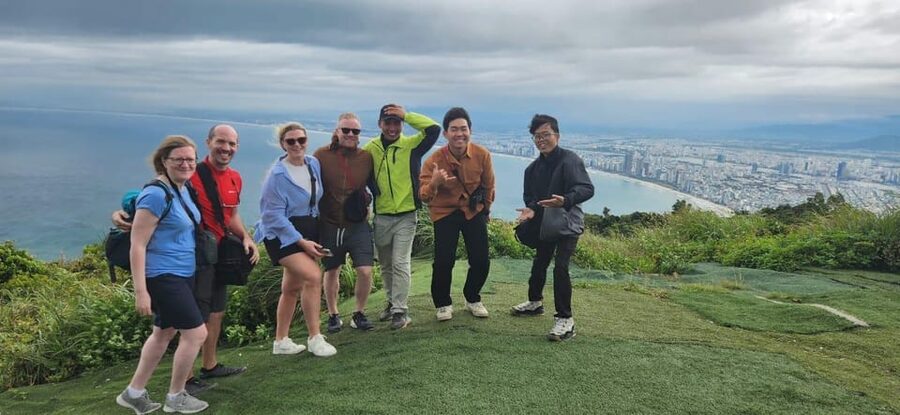
Son Tra Nature Reserve sits close to Da Nang, but the experience quickly leaves the city behind. You travel up Monkey Mountain by motorbike, following mountain roads and forest slopes toward areas where the langurs are known to spend time.
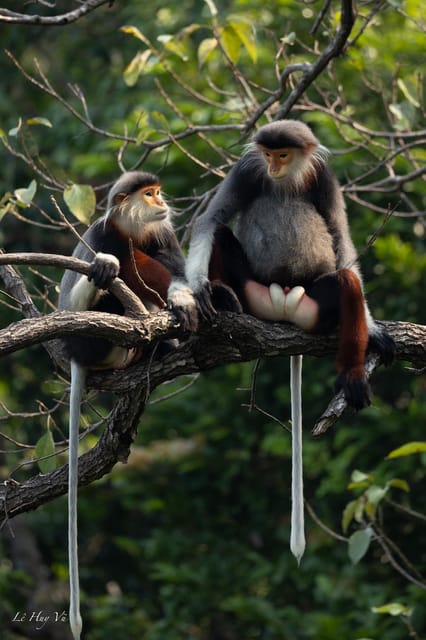
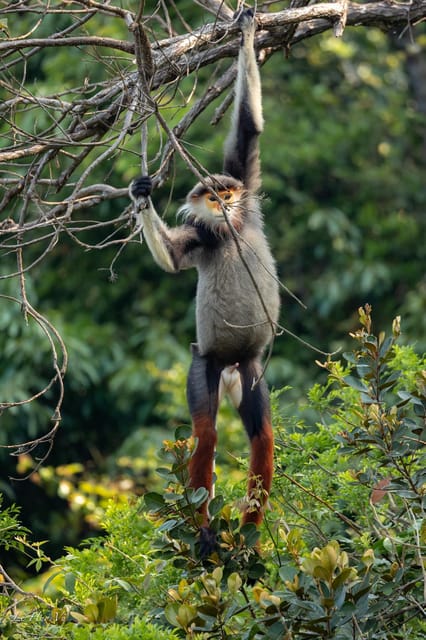
The red-shanked douc langur is one of the world’s most endangered primates. Its bright face, pale legs, and reddish lower limbs make it easy to recognize once you have a clear view, but spotting one is not like finding a large animal in an open field. These monkeys can blend into the trees, sit still for long periods, or move through branches above you.
That is why a guide matters. Cillian is praised for spotting monkeys quickly, while Tam is known for finding males, females, and babies. Huy and Binh are also named as part of the guide team. You should not assume you will receive a particular guide, but the experience clearly depends on people who spend serious time watching the forest.
The guides do more than point upward. They explain how to tell a female from a male, estimate age, and recognize the different members of a group. You may also help record basic information about the animals you see. That turns the outing into more than a photo stop. You are paying attention to behavior, movement, and habitat.
More safaris around the world:
- Dubai: Desert Safari, Quad Bike, Camel Ride & Al Khayma Camp
★ 4.9 · 68,962 reviews - Dubai: Desert Safari, Quad Bike, Camel Ride and Sandboarding
★ 4.9 · 43,505 reviews - Dubai: Safari, Quad Bike, Camel Ride, and Buffet Dinner
★ 4.9 · 33,424 reviews
The motorbike ride into Monkey Mountain
The outing begins at the meeting point in front of Esco Beach Bar in Da Nang. This is also the return point, and it is the designated meeting place for people coming from Hoi An or those without a Da Nang pickup location.
From there, your guide drives you by motorbike into Son Tra. The bike is useful here because it reaches mountain roads and slopes that would take much longer on foot. You are not simply driven to one viewing platform. The route may include several forest roads and hidden slopes, with stops based on where the monkeys may be active.
I like this part because the ride gives the outing a sense of movement and discovery. You pass from city surroundings into forested mountain country, then stop when the guide sees something worth checking. It is also practical. A short safari on foot alone would cover less ground.
Still, you should be comfortable as a motorcycle passenger. The roads twist and climb, and the experience is not designed for people who want a slow, fully paved walk. If you are nervous on a motorbike, mention that before booking and make your comfort clear to the guide.
The company provides a more powerful bike for people weighing over 85 kilograms and up to 100 kilograms, with an extra charge of 250,000 Vietnamese dong. The experience is not suitable for anyone over 100 kilograms, or 220 pounds. Bring only what you need, since there is no room for a backpack or luggage.
Walking into the langur habitat
After riding into the reserve, you walk into quieter areas of the forest. The route is described as an easy stroll across mountain roads and scenic terrain, but the combination of slopes, uneven ground, and short forest walks means sensible shoes are still a good idea.
The exact path depends on conditions and animal movement. That is part of the point. This is not a fixed animal encounter with a guaranteed viewing spot. Your guide searches the trees, listens, studies the branches, and may change direction when a group is located elsewhere.
Binoculars are supplied, which is important. Douc langurs may sit high above the road, and a close-looking photograph is not always possible. With binoculars, you can study their unusual coloring and watch natural behavior without stepping too close.
The guides make a point of keeping a safe distance. That matters more than getting the closest possible picture. Loud voices, sudden movement, and pressure to approach can disturb wild primates. This outing is at its best when you let the animals set the pace.
You may see adults, young monkeys, or a breeding-season group with lively offspring. You may also see only a brief movement in the canopy. The company is clear that rare monkeys cannot be guaranteed every time. Weather, the animals’ behavior, and luck all play a part.
That uncertainty is not a flaw in the forest. It is the basic condition of wildlife watching. If you need a certain number of monkeys for your day to feel worthwhile, this may not be the right activity. If you can enjoy the search, the mountain roads, and the chance of a remarkable sighting, the format makes sense.
Learning to read the animals
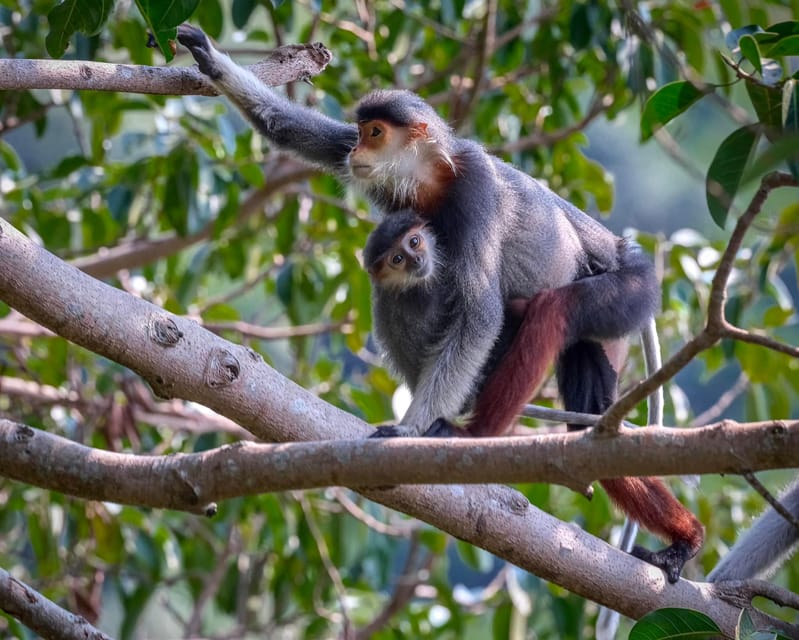
The best part of the outing is not only seeing a douc langur. It is learning what you are looking at.
Your guide can show you signs of age and sex, explain the difference between adults and young animals, and point out group behavior. You may watch monkeys feeding, resting, moving through trees, or keeping close to their family group. The guide’s job is partly to find them and partly to help you understand them once they appear.
The activity also includes real-time data collection. You may help record information about the monkeys encountered during the outing. The details provided are limited, so you should ask your guide what data is being collected on the day, but the idea gives the experience a useful purpose beyond sightseeing.
The forest has its own supporting cast. Depending on conditions, you might see birds, colorful butterflies, plants, or even a mongoose. These sightings are not promised, but they give you something to notice while the guide searches the trees.
The outing can also include conversations with local animal photographers along the route. Their photographs and observations may help you understand the monkeys more clearly. Professional images can show details that are difficult to capture from the road, especially when the animals are high in the canopy.
Same parks, another way to see the animals:
- Dubai: Red Dune Safari, Quad Bike, Camel Ride, BBQ Dinner
★ 4.9 · 32,185 reviews - Dubai: Premium Safari, Camel Ride & Al Khayma Camp 3-Buffets
★ 4.9 · 30,335 reviews - Dubai: Desert Safari with BBQ Dinner & Quad Biking Options
★ 4.9 · 20,485 reviews - Dubai: Half-Day Desert Safari, Camel Ride, ATV & Dune Buggy
★ 4.9 · 19,221 reviews
Views, slopes, and a possible secret beach
The monkeys are the reason to book, but the setting adds real value. Son Tra offers mountain views, forested slopes, and quiet corners away from Da Nang’s busy streets. Some of the best moments may come when no animal is visible and you are simply looking across the coast or down toward a secluded stretch of shore.
The route can include a secret beach and several less-used slopes in the forest. The exact access depends on the day, so do not treat the beach as a guaranteed swimming stop. It is better understood as one of the surprises that may be folded into the search.
This variety helps the experience feel worthwhile even during a quiet wildlife day. You ride, walk, scan the trees, learn about the reserve, and stop for views. The scenery cannot replace the langurs, but it reduces the risk of a disappointing outing if the monkeys stay hidden.
Sunset timing adds atmosphere, though starting times depend on availability. You should check the selected departure time carefully. The advertised duration is 2.5 hours, while the walking description refers to an easy three-hour stroll, so confirm the exact schedule when booking.
What the small group changes
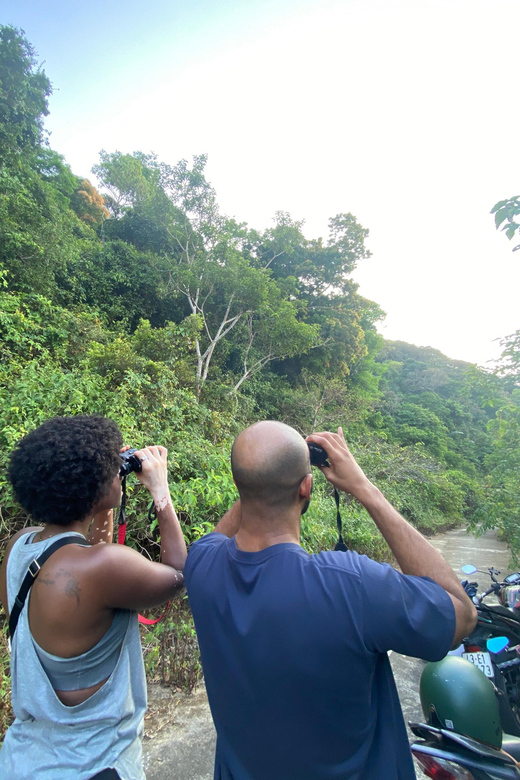
The maximum group size is five participants. That is a strong fit for wildlife watching because a large crowd would make quiet observation harder and could increase pressure on the animals.
A small group also lets you ask practical questions as they arise. You can pause when the guide spots something, adjust your binoculars, and hear the explanation without competing with a busload of people.
There is one detail to understand: your guide is also your private driver. That means the same person manages the motorbike ride, the route, the search, and the interpretation. It keeps the experience personal, but it also means the pace may vary depending on road conditions and animal sightings.
The available feedback gives special credit to careful driving, including Cillian’s considerate riding. That is useful if you are older or uneasy on a motorcycle. Still, tell the operator about any concerns before departure, and travel light so you can sit comfortably.
Price, inclusions, and what you need to bring
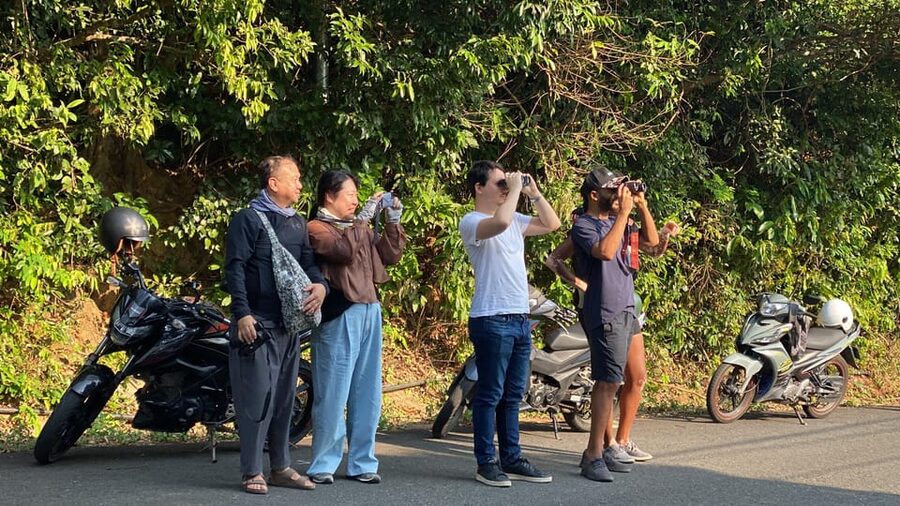
The price is $48 per person. For a 2.5-hour private-driver experience in a group of five or fewer, that is reasonable if you value specialist wildlife guiding rather than a standard city tour.
The price includes:
- An English-speaking guide and motorbike transport
- Binoculars for viewing monkeys in the trees
- Water and fruit snacks
- Walking access to remote areas
- A small-group format
You need to bring your own camera. Some guide team members may take photographs with professional cameras and provide a link to images afterward, but this should not be treated as a guaranteed inclusion. If photography matters to you, bring your own camera or phone and ask about the photo arrangement at the start.
Pack lightly. There is no room for a backpack or luggage on the motorbike. Wear comfortable clothes and shoes for a short forest walk, and keep your hands free as much as possible.
During Lunar New Year, from January 28 to February 1, 2025, there is a 300,000 Vietnamese dong service charge payable on the spot. People weighing over 85 kilograms and up to 100 kilograms pay an additional 250,000 Vietnamese dong for the stronger bike.
Alcohol and drugs are not allowed. Children under five cannot join the activity.
Who should book this safari
I would choose this outing if you care about wildlife, enjoy small groups, and can accept an uncertain result. It suits photographers, primate fans, older children above the minimum age, and anyone looking for a different side of Da Nang.
It is especially good for people who want to learn. The guides do not simply point out a monkey and move on. They explain behavior, identify age and sex, and help you observe without disturbing the animals.
You should think twice if you dislike motorbikes, need guaranteed wildlife sightings, or want a flat walk with fixed stops. This is a search through a real forest, not a controlled animal encounter.
I also would not book it with heavy luggage, a large backpack, or expectations of walking right up to the langurs. The animals come first, and the best sighting may be through binoculars from a respectful distance.
Should you book the Son Tra langur safari?
Yes, if you want a focused wildlife outing near Da Nang and understand that the monkeys are wild. The strongest reasons to book are the small group, careful guides, supplied binoculars, and the chance to see red-shanked douc langurs with adults and babies in their natural home.
The $48 price is fair for the motorbike transport, guide, snacks, equipment, and access to quiet forest areas. Just keep your expectations realistic. You may see several groups, as some outings have, or you may spend much of the time searching through branches.
Book this for the search itself, the views, and the chance of a rare encounter. If the langurs appear, you may get one of Da Nang’s most memorable wildlife moments. If they stay hidden, the mountain ride and forest setting still give the outing a clear purpose.
FAQ
Where does the safari start and finish?
It starts and ends in front of Esco Beach Bar in Da Nang. This is the meeting point for people coming from Hoi An or those without a Da Nang pickup location.
How long does the activity last?
The advertised duration is 2.5 hours. The walking description refers to an easy stroll of up to about three hours, so check the exact timing and departure slot when booking.
Are monkey sightings guaranteed?
No. Seeing red-shanked douc langurs depends on weather, monkey behavior, and luck. Rare individuals and groups cannot be guaranteed.
What is included in the price?
The activity includes an English-speaking guide, motorbike transport, binoculars, water, and fruit snacks. Cameras, personal expenses, and gratuities are not included.
Can children join the safari?
Children under five are not allowed to join. The supplied information does not give a maximum age.
What should I bring?
Travel light because there is no space for backpacks or luggage. Bring your own camera if you want photographs, since cameras are not provided.
New safaris around the world
- Safari Camel Ride in Banana Beach from Agadir★ 5.0 · 10 reviews
- Agadir Quad Bike Safari Desert Sunset★ 5.0 · 29 reviews
- Agadir Buggy safari / off road Experience Half Day | Adventure & Connections ®★ 4.5 · 65 reviews
- Agadir Buggy Safari Adventure★ 5.0 · 93 reviews
- Full-Day Safari Small Desert With Lunch★ 4.5 · 224 reviews
- Agadir Jeep safari 4×4 Desert Adventures with Lunch★ 5.0 · 365 reviews
- Agadir National Park & 4×4 Jeep Desert Safari Tour with Lunch★ 4.5 · 30 reviews
- Jeep safari 4×4 mini sahara desert with Berber Lunch★ 5.0 · 130 reviews