
Review · SAFARI
Padstow: Guided RIB Sealife Safari
The most exciting part of this Padstow trip is the chance to see dolphins close to the boat, sometimes racing beside the RIB for several minutes. You also get a fast, splashy ride from the Camel Estuary to the open Atlantic, with cliffs, sea caves, nesting birds and rugged headlands passing by.
I like the small group of 12, which makes it easier to hear the guide and get a clear view. I also like the serious approach to wildlife: the crew searches carefully, slows down for sightings and reminds you that this is the sea, not a staged animal show. The catch is simple: an open RIB is bouncy, noisy and often wet, so this is not a good match for anyone prone to seasickness or looking for a gentle boat cruise.
Key points to know before you book
- Dolphins are the star sighting: Pods may swim beside the RIB, but no wildlife sighting is guaranteed.
- Two hours feels active, not leisurely: You cover about 25 miles of coast, with fast runs between slower viewing stops.
- Puffin season matters: April to July offers the best chance of seeing nesting puffins, guillemots and razorbills around the cliffs.
- The boat is open and bouncy: Borrowed waterproof jackets and trousers help, but wear warm layers and waterproof shoes.
- Guides add real local detail: Guides including Harriet, Kelsey, Ian and Anne have been praised for explaining wildlife, history and coastal landmarks.
- The price buys a focused outing: At $60 per person, the trip offers a small-group wildlife safari and a high-energy boat ride in one package.
Leaving Padstow for the open Atlantic
You meet at the Padstow Sealife Safaris office and should check in 30 minutes before departure. That early arrival matters because the crew needs to sort life jackets, explain safety rules and provide waterproof clothing before you board.
The RIB leaves from Padstow and follows the Camel Estuary toward the sea. This first stretch gives you a useful change of pace. You begin in sheltered water, then move toward the more open conditions beyond the estuary. Once the boat picks up speed, you will feel the difference immediately.
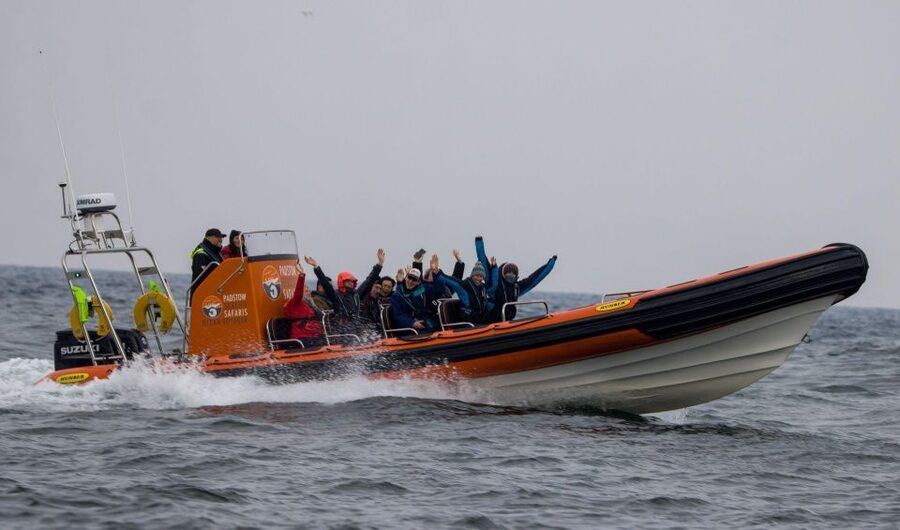
This is a proper rigid inflatable boat, not a covered sightseeing vessel. It is fast, open to the weather and designed to skim across the water. Several people describe the ride as a water roller coaster or a large jet ski, which is a fair warning rather than an exaggeration. You may get spray in your face, bounce over waves and briefly leave your seat as the RIB hits a swell.
The skipper balances speed with wildlife watching. The boat does not simply race out and race back. It slows in areas where seals, dolphins, seabirds or other marine life may be present, allowing the guide to point things out and giving you time to take photographs.
More guided game drives around the world:
- Dubai Desert Trail: Guided Quad/Polaris and Red Dunes Safari
★ 4.9 · 1,059 reviews - Salou: Off-Road Guided Quad Safari with Hotel Pickup
★ 4.8 · 896 reviews - Camargue: Half-Day 4×4 Guided Safari Adventure
★ 4.6 · 846 reviews
Twenty-five miles of North Cornwall coast
The route covers roughly 25 miles of coastline, though the exact direction depends on the weather, sea conditions and sightings on the day. That flexibility is important. The crew may head toward Port Isaac, Trevose Head or another part of the coast if conditions and animal activity make it the better choice.
Port Isaac offers a particularly enjoyable combination of scenery and local interest. The village is associated with the television series Doc Martin, and seeing it from the water gives you a very different view from walking its narrow streets. Trevose Head provides another strong viewpoint, including a distinctive look at the newer Padstow Lifeboat Station.
You are not simply ticking off landmarks. The guide adds information about the coast, local heritage and the animals living around it. This helps turn the boat trip into more than a high-speed ride with occasional wildlife. Guides such as Harriet, Kelsey, Ian and Anne have been praised for mixing facts with warmth and humor, a useful quality when the wind makes conversation difficult.
The coastline itself is a major part of the experience. Expect cliffs, exposed rock, Atlantic water and small coastal spots that are difficult to reach from land. The views are best when the RIB slows, so keep your camera ready but also give yourself time to look up from the screen.
Your best chance of seeing dolphins and seals
Dolphins are the sighting most likely to make this trip memorable. Common dolphins have been seen swimming close to the RIB, jumping beside it and staying with the boat for a long time. Some trips have encountered several pods, while others have seen no dolphins at all.
That variation is worth taking seriously. The crew can search, but it cannot summon wildlife on demand. A good guide will set the right expectation before departure, and this team has been praised for explaining that the animals are wild and unpredictable.
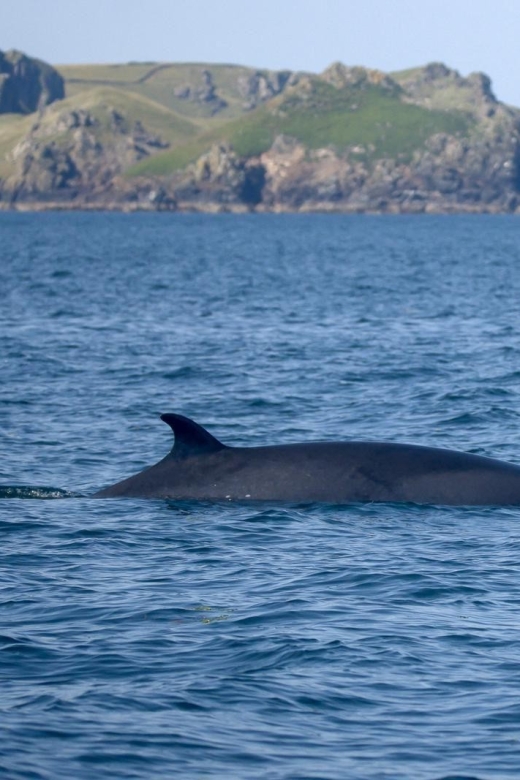
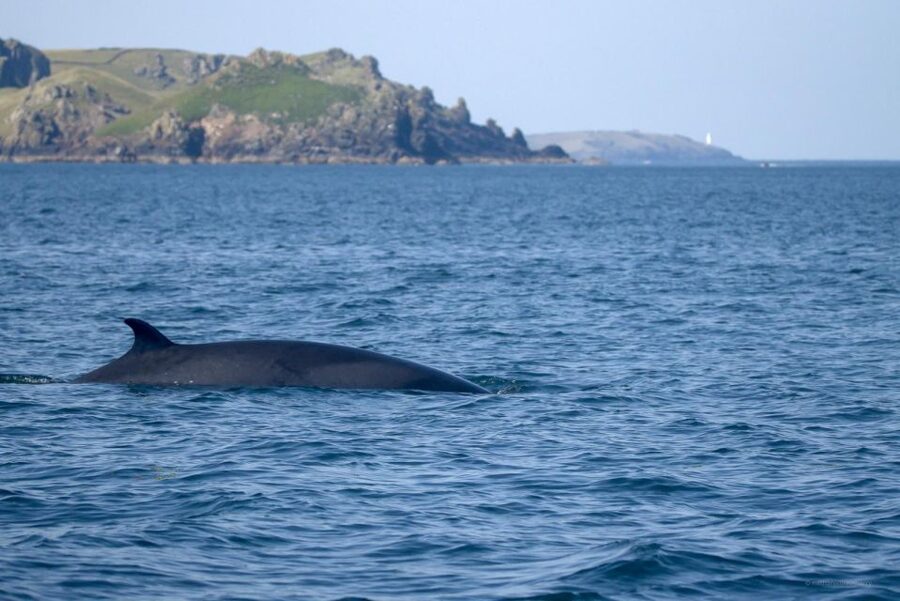
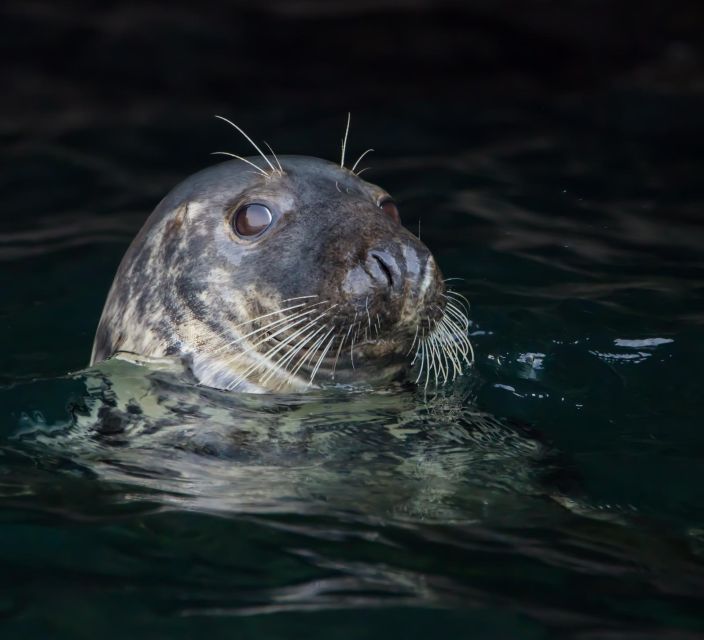
Seals are another possible sighting. You may see them resting on rocks or moving through the water near the coast. Porpoises, whales, sunfish and even tuna have also been spotted on different outings, but these are possibilities rather than promises.
The trip also works when the larger animals stay away. Jellyfish, seabirds and the coastline itself provide plenty to watch. You may find that a quiet stretch of sea becomes interesting once the guide explains what you are seeing and why certain birds gather in particular places.
For photography, a phone can capture dolphins if they come close, but you will need quick reactions. A camera with a zoom lens or a pair of binoculars will help with distant birds and seals. Keep anything valuable secure, since spray and bouncing are part of the ride.
Puffin Island and the spring bird season
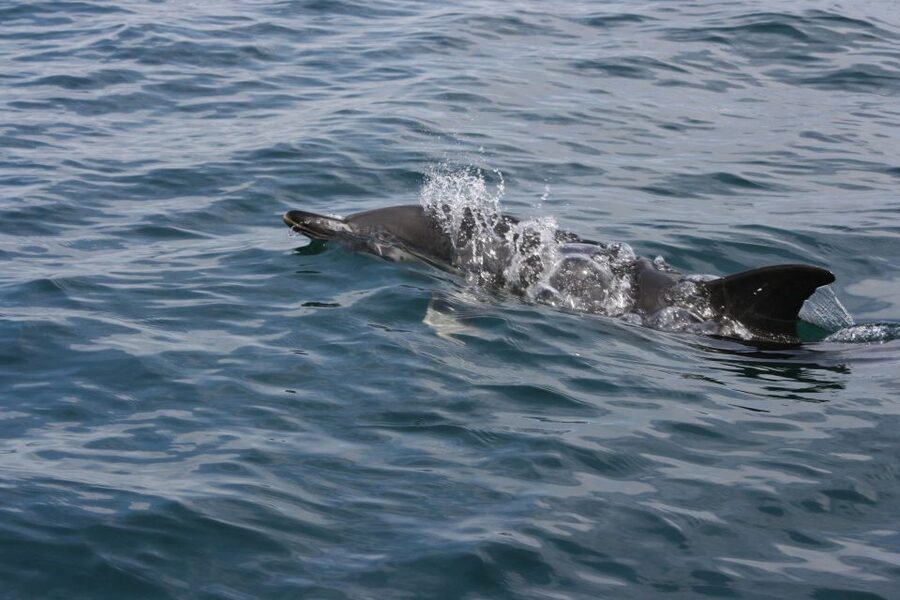
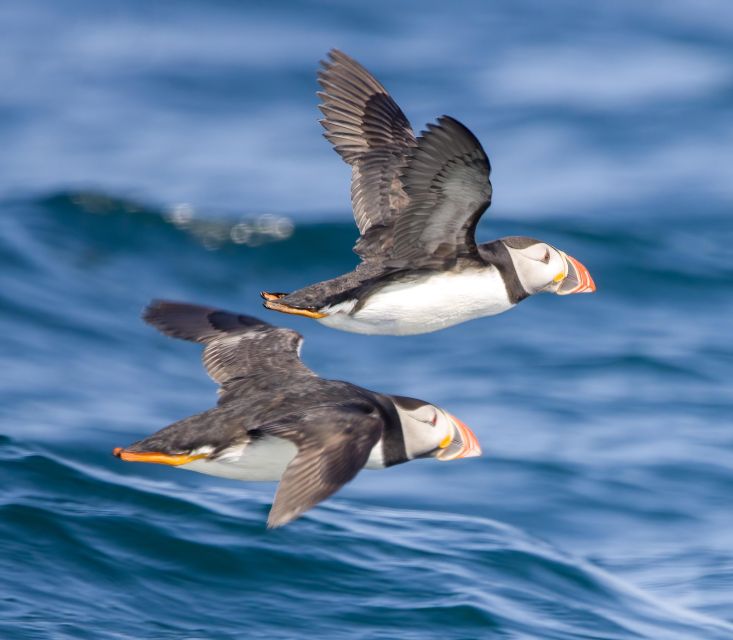
From April through July, the cliffs become especially interesting for birdwatching. Guillemots and razorbills gather around nesting ledges, while puffins may be seen near the area known as Puffin Island.
Puffins are not guaranteed, and the name should not be treated as a promise. Still, the timing gives you a sensible reason to book in spring or early summer if seabirds are a priority. Sightings have included puffins along with gannets, shearwaters, fulmars, oystercatchers, shags and cormorants.
Gannets can be especially impressive when they plunge into the sea to feed. From a RIB, you may get a closer, lower viewpoint than you would from a cliff path. The guide can help you tell a shag from a cormorant or identify a bird flying past too quickly for an untrained eye.
Bring binoculars if you own them. One person who enjoyed the trip specifically wished they had brought a pair, and that is good advice. The boat may get close to some wildlife, but birds on cliff ledges can still be distant.
If your main goal is puffins, book within the April to July window and keep your expectations sensible. If your main goal is a thrilling ride with a chance of marine life, the season matters less.
More safaris around the world:
- Dubai: Desert Safari, Quad Bike, Camel Ride & Al Khayma Camp
★ 4.9 · 68,962 reviews - Dubai: Desert Safari, Quad Bike, Camel Ride and Sandboarding
★ 4.9 · 43,505 reviews - Dubai: Safari, Quad Bike, Camel Ride, and Buffet Dinner
★ 4.9 · 33,424 reviews - Dubai: Red Dune Safari, Quad Bike, Camel Ride, BBQ Dinner
★ 4.9 · 32,185 reviews
What the two-hour itinerary feels like
The two-hour format is well judged for an active trip. You spend time travelling quickly between areas, then pause for wildlife viewing, photographs and short explanations. It is long enough to reach the Atlantic coast without turning into an all-day commitment.
The opening safety briefing covers the basic rules before you leave. You receive a life jacket and can borrow waterproof jackets and trousers. Wear them. Even on a sunny day, wind chill and sea spray can make the boat feel cold, and waterproof trousers protect you when spray comes over the sides.
The middle part is usually the most varied. You may stop near cliffs or rocks for seals, scan the water for dolphins and porpoises, then move on to seabird colonies or a headland. Conditions can change the order and location, so do not expect a rigid sequence of stops.
The final run back to Padstow may feel fast and exhilarating. One person found the ride exciting at first but somewhat repetitive toward the end, which is a useful point for anyone who does not enjoy speed for its own sake. The trip is best understood as wildlife watching combined with an adventure ride, not as a calm nature cruise.
The real cost: $60 for a small-group outing
At $60 per person, this is not the cheapest way to spend two hours in Padstow. You are paying for a specialist boat, a skipper, a guide, safety equipment, borrowed waterproofs and access to stretches of coast that are hard to see from land.
The value improves if you see dolphins, puffins or a whale, but the trip should not be judged only by its biggest possible sighting. The crew still has to operate the boat safely and search the coastline even on a quiet wildlife day. A trip with seals, seabirds and dramatic cliffs can still be worthwhile.
The group limit of 12 is another reason the price makes sense. A small boat gives you a better chance of hearing the guide and looking over the side without fighting for space. It also keeps the outing personal compared with a large sightseeing vessel.
For families, the cost can add up quickly, especially with teenagers. One parent described the experience as excellent value but felt the price was the main drawback for older children. If your budget is tight, decide if the boat ride itself is enough value even if the animals stay hidden.
Who should book, and who should skip it
I would choose this trip if you enjoy fast boats, outdoor weather and the possibility of seeing wildlife in its natural setting. It suits couples, families with older children and anyone who wants something more active than a standard coastal cruise.
Children under two cannot take part. The trip is also not suitable for pregnant women, people with back problems, recent surgery, mobility impairments, wheelchair users, people over 80, or anyone prone to motion sickness or seasickness.
The warnings about sea conditions are not minor. Choppy water is common, and the boat can be bouncy even when the weather looks fine from shore. If you already know that rough boat rides make you ill, I would choose a land-based wildlife walk instead.
For families, the experience can work well. A five-year-old who was nervous at first soon settled in and had a great time, while other children kept talking about the dolphins afterward. Still, every child is different. Explain in advance that the boat will be loud, fast and wet.
Practical clothing and packing advice
Wear warm outdoor clothing beneath the borrowed waterproofs. A jacket, sun hat, sunglasses and sunscreen are all useful because bright light reflects off the water even when the air feels cool.
Waterproof shoes are more practical than ordinary trainers. The deck can get wet, and your feet will feel the cold quickly if your shoes absorb spray. Bring a camera, but use a secure strap or keep it protected when the RIB speeds up.
A small pair of binoculars is worth packing for seabirds and distant animals. Do not bring a drone, fishing equipment or food for the animals. Feeding wildlife is not allowed, and the crew needs the animals to behave naturally.
If you arrive late, you risk missing the safety briefing or departure. Check in 30 minutes before your scheduled time, then use the waiting period to sort your clothing and ask any last practical questions.
Should you book the Padstow Sealife Safari?
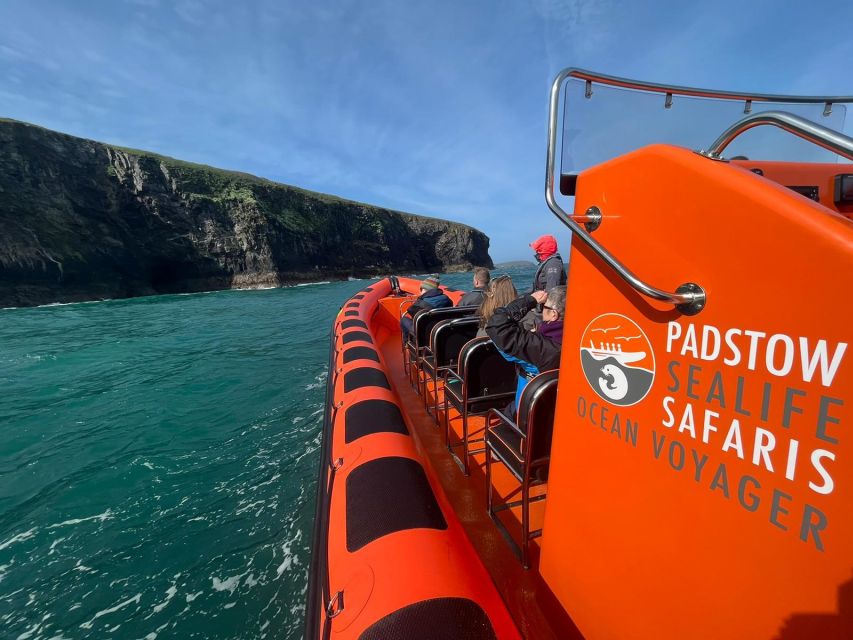
Book it if you want a wildlife search with genuine uncertainty, not a guaranteed dolphin show. The strongest trips combine close dolphins, seals, puffins, seabirds and a skilled skipper who knows when to slow down. Even a quieter outing still gives you Atlantic scenery and an unusual view of the North Cornwall coast.
Skip it if you dislike bouncing boats, cold spray or the possibility of seeing only a few animals. For everyone else, $60 is a fair price for two hours that combine marine wildlife, local guiding and a fast RIB ride. Bring waterproof shoes, accept that nature makes the schedule, and book during April to July if puffins and nesting seabirds are high on your list.
FAQ
How long is the Padstow Sealife Safari?
The trip lasts two hours, including the journey from Padstow through the Camel Estuary toward the Atlantic and the return to the Padstow office.
How much does the tour cost?
The listed price is $60 per person.
How many people can join the boat?
The tour is a small-group experience limited to 12 participants.
What wildlife might I see?
Possible sightings include seals, dolphins, porpoises, whales, sunfish, tuna, jellyfish and many seabirds. Wildlife sightings are not guaranteed.
Can I see puffins on this trip?
You may see puffins around Puffin Island, especially from April through July. The same period can also offer views of nesting guillemots and razorbills.
Is the boat ride rough?
The open-top RIB is fast and bouncy, and choppy conditions are common. You should expect sea spray and possible wet weather during the trip.
What clothing is provided?
You can borrow waterproof jackets and trousers, and life jackets are provided. You should still bring warm, weather-appropriate clothing and waterproof shoes.
Where do I meet the tour?
Meet at the Padstow Sealife Safaris office. Check-in begins 30 minutes before your scheduled departure time.
New safaris around the world
- Safari Camel Ride in Banana Beach from Agadir★ 5.0 · 10 reviews
- Agadir Quad Bike Safari Desert Sunset★ 5.0 · 29 reviews
- Agadir Buggy Safari Adventure★ 5.0 · 93 reviews
- Full-Day Safari Small Desert With Lunch★ 4.5 · 224 reviews
- Agadir Buggy safari / off road Experience Half Day | Adventure & Connections ®★ 4.5 · 65 reviews
- Agadir Jeep safari 4×4 Desert Adventures with Lunch★ 5.0 · 365 reviews
- Agadir National Park & 4×4 Jeep Desert Safari Tour with Lunch★ 4.5 · 30 reviews
- Jeep safari 4×4 mini sahara desert with Berber Lunch★ 5.0 · 130 reviews