
Review · SAFARI
Hilvarenbeek: Light Safari at Beekse Bergen
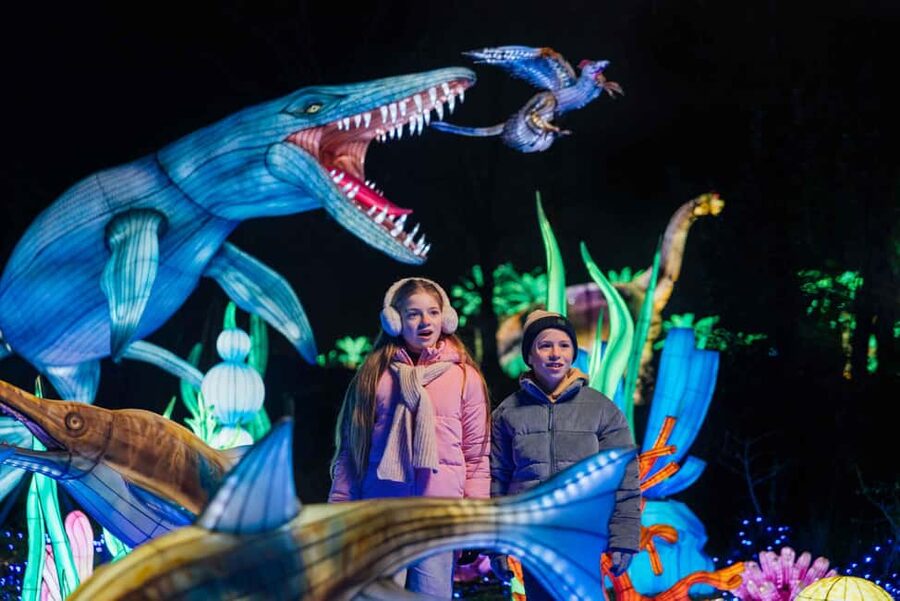
Beekse Bergen’s Light Safari turns the zoo after dark into a glowing trip through time. You walk past 5,000 illuminated animals, plants, and flowers, moving from the birth of our planet to dinosaurs, the Ice Age, ancient Greece and Rome, the Middle Ages, and an imagined future.
I like the clear 14-era layout, which gives the evening a story rather than a string of random lights. I also like that the elephant and monkey enclosures remain open after the other animals have gone indoors. The main drawback is food: you will find winter snacks and drinks, but not a full meal, so arrive fed or expect lines at the busiest refreshment stops.
Key points at a glance
- Fourteen time zones: Follow a route through major chapters of Earth’s natural and human story.
- Five thousand glowing figures: Expect illuminated animals, flowers, and plants rather than a normal evening zoo visit.
- Evening elephant and monkey viewing: These are the key animal areas open after most animals retire indoors.
- Warm winter atmosphere: Hot chocolate, freshly baked treats, and crackling campfires add comfort on a cold night.
- A $25 evening outing: The price covers Light Safari entry, but not daytime Safari Park admission or the parking exit ticket.
- Easy planning: The experience is wheelchair accessible, supported in Dutch and English, and offers cancellation up to 24 hours before the visit.
Beekse Bergen after dark: a zoo with a different purpose
Light Safari takes place at Safaripark Beekse Bergen in Hilvarenbeek, in North Brabant. This is not a standard night opening where you walk around hoping to spot animals in the shadows. As evening arrives, most of the real animals move into their indoor shelters. The park then gives the grounds a new role: a walk through light, color, nature, and history.
That difference matters. You are paying for an art-led evening experience, not a guarantee of active animal viewing. The glowing displays become the main event, while the elephant and monkey enclosures provide the most direct connection with living animals.
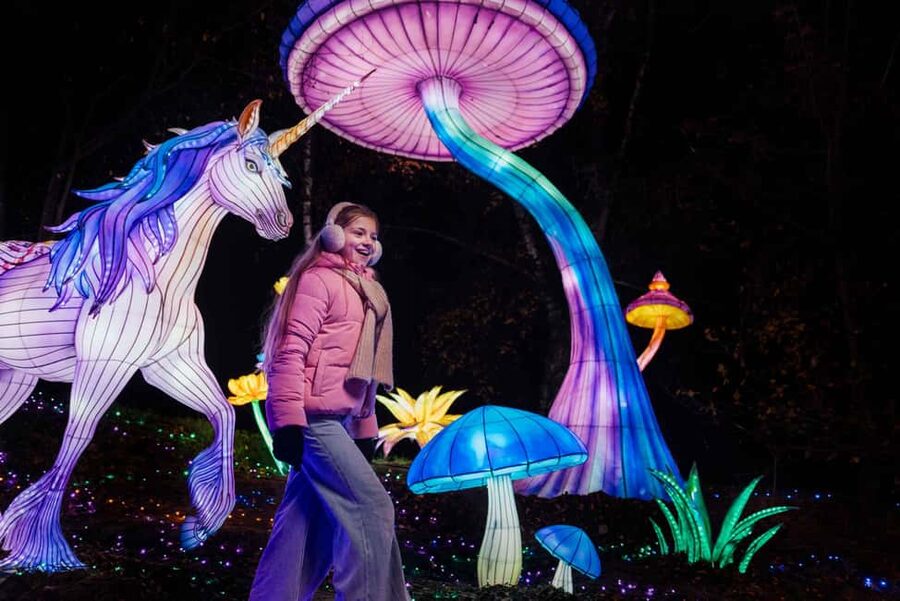
The route is built around 14 eras. You begin at the earliest stage of the planet and move forward through dinosaurs, the Ice Age, Greek and Roman culture, the Middle Ages, and a possible future. The theme gives families an easy way to talk about what they are seeing, while adults can simply enjoy the visual design and the slower evening pace.
The third edition of Light Safari also suggests a settled event rather than a first attempt still finding its feet. Still, the route is seasonal, so the exact presentation can change from year to year. The useful thing is to think of it as a winter night walk with a strong narrative, not as a fixed museum exhibit.
More safaris around the world:
- Dubai: Desert Safari, Quad Bike, Camel Ride & Al Khayma Camp
★ 4.9 · 68,962 reviews - Dubai: Desert Safari, Quad Bike, Camel Ride and Sandboarding
★ 4.9 · 43,505 reviews - Dubai: Safari, Quad Bike, Camel Ride, and Buffet Dinner
★ 4.9 · 33,424 reviews
From the birth of Earth to the age of dinosaurs
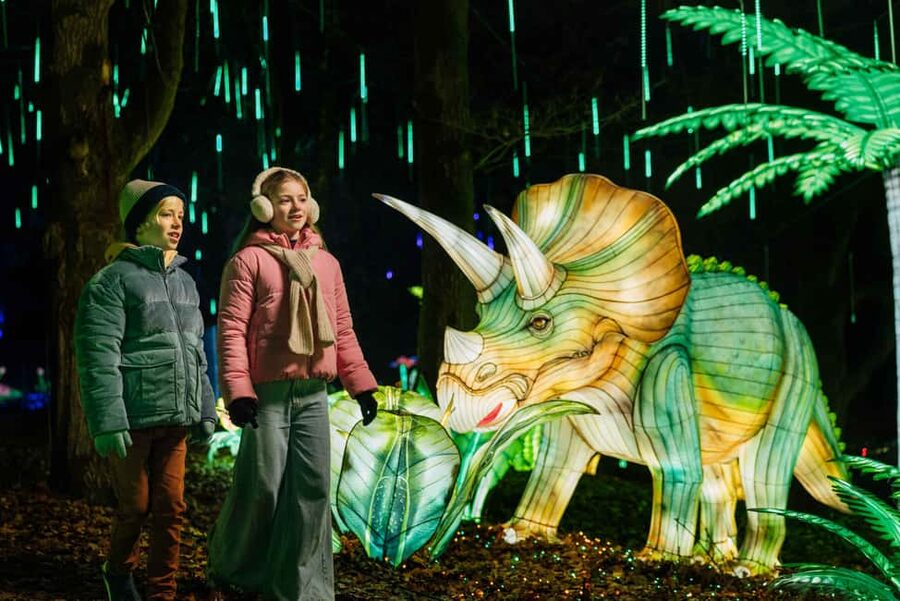
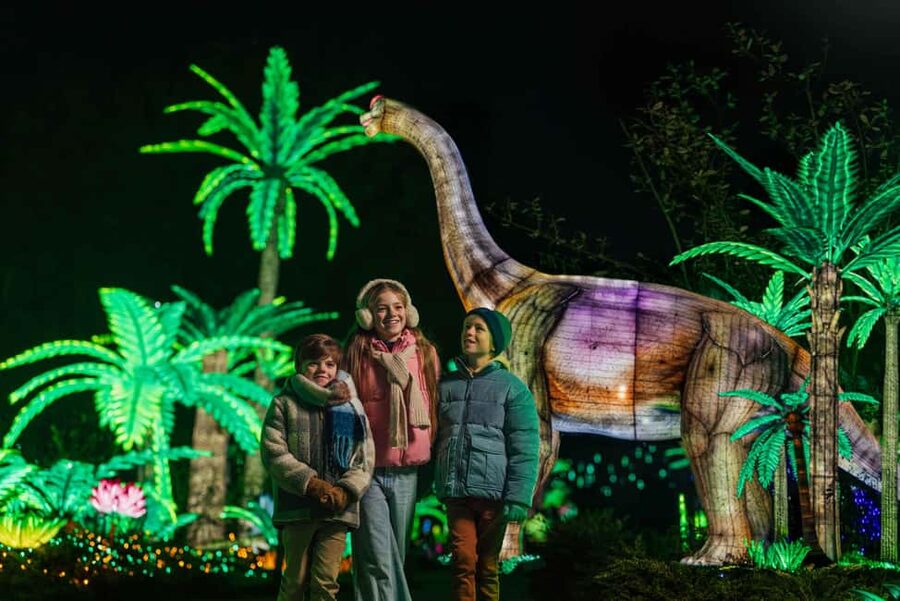
The first eras look back millions of years. Light is used to show the beginnings of the planet and the natural forces that shaped it. You then move into the dinosaur period, where large glowing creatures make the subject easy to grasp, especially for children.
This opening section gives the walk a sense of scale. You are not just seeing pretty animals. You are being reminded that nature existed long before human cultures, and that the planet has changed dramatically over time.
The dinosaur section should be one of the strongest stops for families. It offers an instant visual hook, and the large illuminated forms are likely to be easier to appreciate at night than small detail-heavy displays. If you are visiting with children, this is a good point to slow down and let them identify the creatures and compare the prehistoric world with the modern zoo around them.
The tradeoff is that the experience depends on lighting rather than interpretation. The supplied information does not describe detailed signs, talks, or named guides for each era. If you want a full educational program, you may find the storytelling lighter than a natural history museum visit. If you want a pleasant route with enough context to keep the evening moving, the format should work well.
The Ice Age and nature’s changing cast
After the dinosaurs, the route moves into the Ice Age. This is another useful shift in mood. The glowing animals and plants show a colder, harsher world, and the change from dinosaurs to Ice Age creatures keeps the walk from feeling like one long repeated display.
I like this part of the route because it reinforces the main idea: animals and plants are not fixed pieces of the planet. They appear, adapt, and disappear as conditions change. The 14-era structure lets you see that idea in a simple sequence instead of requiring a long explanation.
Expect the walk to feel visual and atmospheric here. The displays are designed to be seen after dark, so the cold setting should work with the season and the natural winter chill. You will probably appreciate the nearby hot drinks even more after this section.
There is no stated walking time for the full route. That makes it hard to promise a precise schedule. Plan it as a full evening outing rather than a quick add-on, especially if you stop for food, photographs, and the open animal enclosures.
Greece, Rome, and the road into the Middle Ages
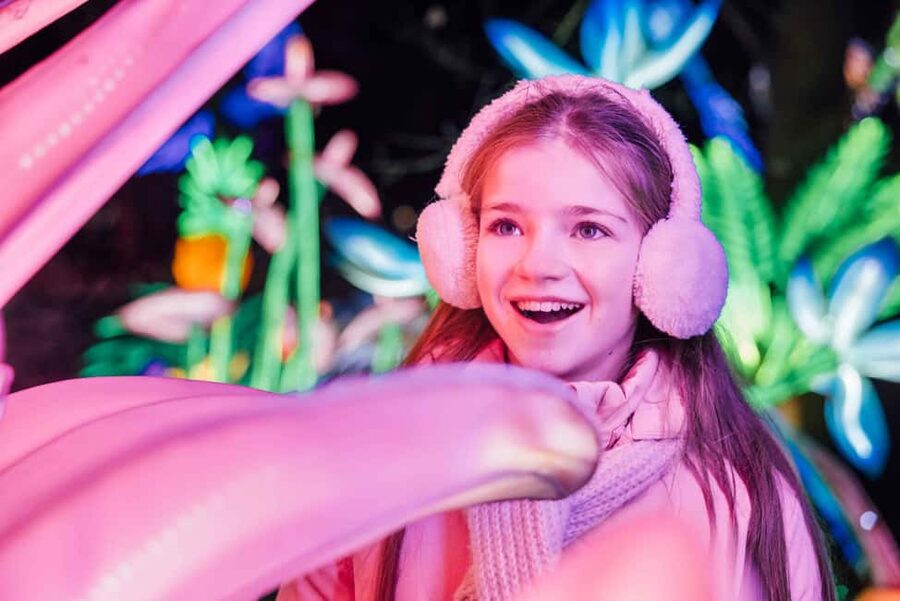
The story then leaves prehistory and moves through the cultures of ancient Greece and Rome. This is where the event broadens from natural history into human history. Animals and plants remain part of the display, but they are now connected with the societies that used, studied, represented, and lived alongside them.
The ancient-world sections give the route a welcome change of subject. A walk made only of glowing wildlife could become repetitive. Greek and Roman references break up the animal displays and add a cultural layer.
The Middle Ages follow, bringing a more mystical tone. The information describes this section as mystical rather than as a detailed historical reconstruction, so you should expect mood and visual suggestion rather than a formal lesson in medieval events.
This is a good place to keep your expectations in line with the format. Light Safari tells broad stories through illuminated scenes. It does not promise a guide, lectures, or a museum-style collection of original objects. I would treat the historical periods as imaginative chapters that support the walk, not as a substitute for a history tour.
Same parks, another way to see the animals:
- Dubai: Red Dune Safari, Quad Bike, Camel Ride, BBQ Dinner
★ 4.9 · 32,185 reviews - Dubai: Premium Safari, Camel Ride & Al Khayma Camp 3-Buffets
★ 4.9 · 30,335 reviews - Dubai: Desert Safari with BBQ Dinner & Quad Biking Options
★ 4.9 · 20,485 reviews - Dubai: Half-Day Desert Safari, Camel Ride, ATV & Dune Buggy
★ 4.9 · 19,221 reviews
A glimpse of the future
The final era looks ahead to an unimaginable future. After moving through the planet’s earliest days, prehistoric life, ancient civilizations, and the Middle Ages, this ending gives the event a forward-looking finish.
A future-themed finale is a smart choice for the route. It stops the evening from ending in the past and asks you to think about what might come next. The exact imagery is not specified, so I would not book this expecting a particular film, robot display, or science-fiction story. The attraction promises an impression of the future, not a fixed explanation of it.
The conclusion is also designed to slow you down. A campfire provides a natural stopping point after the 14 eras, and the cozy squares offer a place to warm your hands and take a break. This matters in winter, when a cold evening walk can become tiring faster than expected.
The elephant and monkey enclosures
Most of the animals retreat indoors for the night. That is an important fact to understand before you book. You will not be touring the entire Safari Park at night with all its animals active and visible.
The elephant and monkey enclosures are the exception. They remain open during Light Safari, giving you a chance to see real animals as part of the evening. These areas add variety and make the event feel connected to Beekse Bergen rather than simply placed on a separate festival ground.
I would plan these stops around your light route instead of treating them as a separate attraction. The night setting may make the enclosures feel different from a daytime visit, but no specific animal behavior or viewing time is promised. If seeing a broad range of zoo animals is your main goal, buy daytime admission separately and visit the park during the day. Daytime Safari Park entry is not included with Light Safari.
Hot chocolate, baked treats, and the practical food question
Food is part of the atmosphere, but it is not a replacement for dinner. Along the route you can find hot chocolate, freshly baked treats, winter snacks, and drinks. Squares and campfires give these stops a social, relaxed feel.
The practical warning is simple: do not arrive very hungry and assume a full restaurant meal will appear. The available choices are mainly quick snacks and drinks, and lines can take patience. For a family, the food works well as a warm break. For a couple expecting dinner, eat beforehand or plan around the limited snack-style selection.
The campfire is especially useful because it gives you more than a place to buy something. It creates a pause between sections and helps make the cold weather part of the experience rather than just a problem to tolerate.
Is $25 good value?
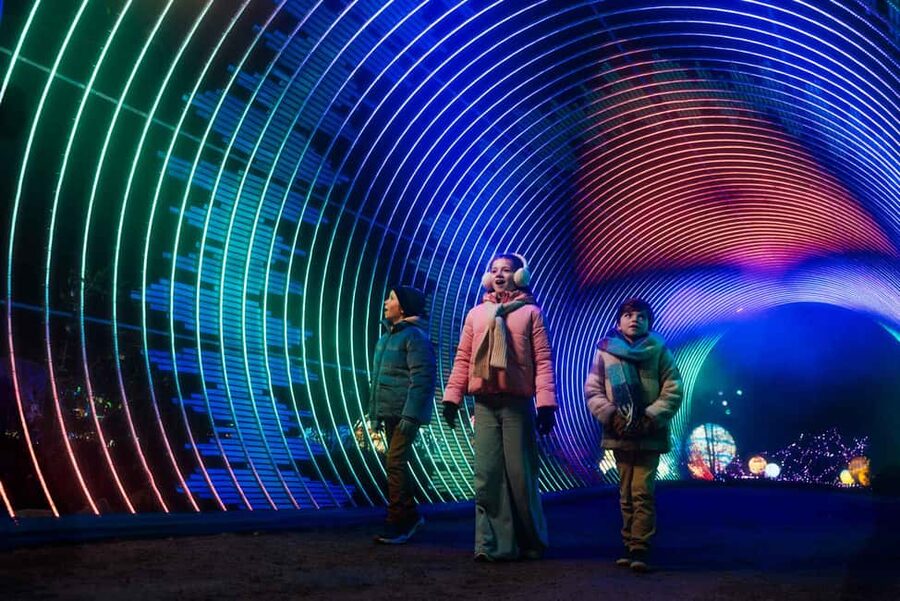
At $25 per person, Light Safari is priced like a special evening attraction rather than ordinary park admission. The value depends on what you want from Beekse Bergen.
I think the price is reasonable if you enjoy illuminated art, seasonal events, and a slow walk with a clear theme. You receive access to the full Light Safari route, including the 14 eras, the glowing displays, the atmospheric squares, and the elephant and monkey enclosures.
The value is weaker if you mainly want a full zoo visit. Daytime Safari Park entry is not included, and the event does not give you access to every animal area after dark. You also need to account for the parking exit ticket, which is separate.
For a family, the event may work best as a planned winter outing rather than an impulse visit. The dinosaurs, animals, and changing time periods give children plenty to look at, while the hot drinks and campfire help adults enjoy the pace. For adults, the appeal is strongest if you like photography, seasonal lighting, or creative displays with a bit of history attached.
Timing, language, access, and comfort
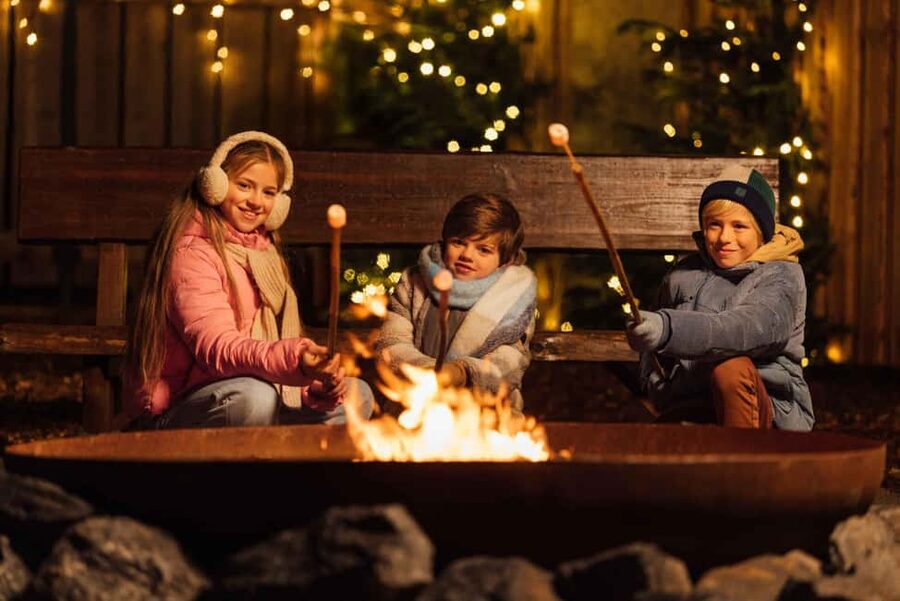
Light Safari is valid for one day, with starting times shown when you check availability. The supplied details do not give a fixed visit length, so allow enough time to walk through all 14 eras without rushing.
The experience is wheelchair accessible. Support is available in Dutch and English, including host or greeter assistance. No individual guide names are provided, and the format appears to be a route-based experience rather than a guided tour with a named leader.
Dress for a winter evening. The route is outdoors, and the event itself highlights campfires and hot drinks for a reason. Comfortable footwear will help, particularly if you plan to stop often or travel with children.
Pets are not allowed, although assistance dogs are permitted. That rule is worth checking before you set out, especially if you are combining the visit with a wider day at Beekse Bergen.
You can cancel up to 24 hours in advance for a full refund, and the reserve-now, pay-later option can help if your winter plans are still moving around. Those policies make the $25 commitment easier to manage, but you should still check the available start time before booking.
Who should book Light Safari?
I would recommend it to families, couples, and anyone who enjoys a seasonal evening walk with a visual theme. The 14 eras give the route enough variety, and the mix of nature, animals, history, and future ideas makes it broader than a simple light display.
It is also a good choice if you are already planning to visit Beekse Bergen and want a second experience after the daytime park. Just remember that daytime admission is separate.
I would hesitate if you are looking for close animal encounters throughout the evening, a full dinner, or a formal guided history tour. Most animals are indoors, the food is snack-based, and the storytelling is delivered through the displays rather than a named guide.
For the right audience, the strength is its charm. You walk through a planet-sized story, warm up with hot chocolate, see elephants and monkeys after sunset, and finish by a fire. That makes $25 a fair price for a distinct winter night out.
FAQ
Where is Light Safari held?
Light Safari is held at Safaripark Beekse Bergen in Hilvarenbeek, North Brabant, Netherlands.
How much does Light Safari cost?
The listed price is $25 per person.
What does the ticket include?
The ticket includes entry to Light Safari.
Is daytime admission to Safaripark Beekse Bergen included?
No. Entry to the Safari Park during the day is not included.
Is parking included?
The parking exit ticket is not included.
How many eras are included in the route?
The route passes through 14 different time zones, or eras, moving from the beginning of the planet toward the future.
Can I see animals during Light Safari?
Most animals retreat to their indoor enclosures for the night. The elephant and monkey enclosures remain open during Light Safari.
Is Light Safari wheelchair accessible?
Yes. The activity is wheelchair accessible.
What languages are available?
Host or greeter support is available in Dutch and English.
Are pets allowed?
Pets are not allowed. Assistance dogs are allowed.
Can I cancel my booking?
Yes. You can cancel up to 24 hours in advance for a full refund.
New safaris around the world
- Safari Camel Ride in Banana Beach from Agadir★ 5.0 · 10 reviews
- Agadir Quad Bike Safari Desert Sunset★ 5.0 · 29 reviews
- Agadir Buggy safari / off road Experience Half Day | Adventure & Connections ®★ 4.5 · 65 reviews
- Agadir Buggy Safari Adventure★ 5.0 · 93 reviews
- Full-Day Safari Small Desert With Lunch★ 4.5 · 224 reviews
- Agadir Jeep safari 4×4 Desert Adventures with Lunch★ 5.0 · 365 reviews
- Agadir National Park & 4×4 Jeep Desert Safari Tour with Lunch★ 4.5 · 30 reviews
- Jeep safari 4×4 mini sahara desert with Berber Lunch★ 5.0 · 130 reviews