
Review · CAMPING SAFARIS
Cairo: 3-Day Siwa Oasis Tour, Safari, Camp & Historical Site
Siwa is the kind of Egypt experience that changes the pace completely. After the noise and traffic of Cairo, you reach a quiet oasis of palms, salt lakes, springs, mud-brick ruins, and huge desert views. The desert safari and salt lakes are the big draws, but the old city of Shali and the tombs at the Mountain of the Dead give the trip real depth. I also like the small group size, since a maximum of 13 people leaves more room for questions and flexible stops. The catch is simple: Siwa is far away, and the road trip takes most of a day each way.
I especially like the choice of sleeping arrangements. You can spend both nights at the Oasis Lodge, or choose one lodge night and one night in a desert camp with barbecue dinner. Guides such as Sabra, Ramy, Ahmed, Fares, and Mahmoud have been praised for their humor, local insight, careful timing, and excellent photographs. The main consideration is comfort: this is an active trip with long drives, bumpy desert rides, swimming, early starts, and basic desert facilities.
Key points at a glance

- A very long Cairo to Siwa road trip: The journey can take roughly 9 to 13 hours, with toilet, food, and drink stops along the way.
- El Alamein adds wartime history: See World War II cannons, armored vehicles, soldiers’ religious books, and museum displays before reaching the oasis.
- The salt lakes are a highlight: You can swim and float in strikingly clear, highly saline water.
- The desert safari is more than a drive: Expect dune bashing, sandboarding, hot springs, cold lakes, sunset tea, and Bedouin-style dinner.
- Siwa’s past is close at hand: Visit the Mountain of the Dead, Si-Amun’s tombs, the Oracle Temple, Shali, and the Old Souq.
- You choose your overnight style: Select two lodge nights or one lodge night followed by a desert camp at no extra cost.
Why the long road to Siwa is worth considering
Siwa sits in Egypt’s far western desert, close to the Libyan border. That location explains both its appeal and its drawback. You are not popping over from Cairo for a quick afternoon. You are committing three days to a remote oasis, with a great deal of time spent in a vehicle.
The trip is best for you if you want more than pyramids and city museums. Siwa offers a slower, more local-feeling side of Egypt, with palm groves, springs, salt water, traditional construction, dates, tea, and desert silence. The setting feels very different from Cairo, and that contrast is part of the reward.
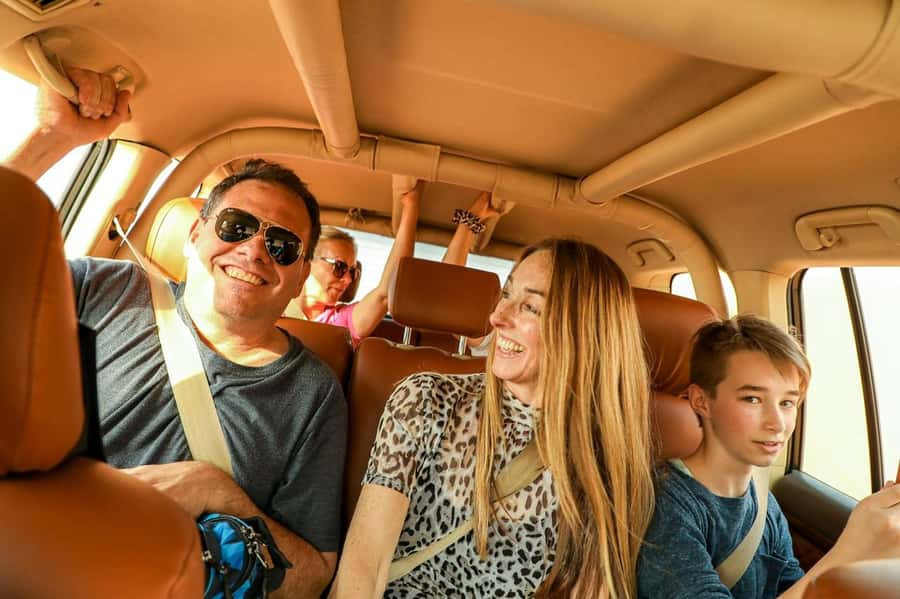
The transport is a shared, air-conditioned modern vehicle, with a group limited to 13 people. That is a useful size for a trip with frequent stops and desert activities. Several guides have also been praised for making the road hours easier with conversation, snacks, Arabic phrases, and cultural explanations. Drivers are a key part of the experience too. Names including Mohamed Mongy, Mohamed Rock, Taha, Kiro, Asseam, and Mahmoud appear in the trip’s feedback, with careful driving and help during long hours repeatedly emphasized.
Still, you should plan for fatigue. The road is long, and the exact duration can change with traffic, stops, and the pickup location. Pickup is included from Cairo, Giza, and Alexandria, while longer-range pickup from places such as Cairo Airport, Heliopolis, New Cairo, Nasr City, Madinaty, and 6th of October is available as an added booking option.
More Camping Safaris in the world:
- Dubai: Desert Safari, Quad Bike, Camel Ride & Al Khayma Camp
★ 4.9 · 68,962 reviews - Dubai: Premium Safari, Camel Ride & Al Khayma Camp 3-Buffets
★ 4.9 · 30,335 reviews - Dubai Premium Red Dunes Safari, Camels & 5* BBQ at Al Khayma camp
★ 5.0 · 12,388 reviews
El Alamein puts the desert trip in context
Your first major stop is the El Alamein World War II Military Museum. This is a useful break in the long drive, not just a box to tick. The museum focuses on the North African campaign and includes cannons, armored vehicles, military displays, and soldiers’ Holy Books.
El Alamein helps explain why this otherwise quiet stretch of Egypt became strategically important during the war. The visit gives you a dose of modern history before the tour shifts toward ancient tombs, oasis traditions, and desert life.
Do not expect El Alamein to be the main event. The museum is a stop on the way to Siwa, and your time there is part of a packed schedule. Its value is greatest if you like history and want a change from temples and pharaohs. If your only interest is the oasis, you may see it as a useful rest stop rather than a highlight.
First views of Siwa, Fatnas Island, and the Oasis Lodge
After the long drive, Siwa’s palms and water feel almost unreal. The first afternoon includes time to swim and float in the oasis, with the chance to enjoy the scenery from the water. This is a welcome change after hours in the vehicle, so bring swimwear where you can reach it easily.
The program then heads to Fatnas Island for sunset. You can sip Siwa tea, take photographs, and watch the light change across the palms and water. This is one of the gentler moments of the trip, and I like that it is not all monuments and fast-moving activities.
Your first night is at the Oasis Lodge. The accommodation is described as rustic but comfortable, with a friendly atmosphere and local food. Daily light breakfast is included, along with lunches on Days 1 and 2. The food is part of the appeal here, especially if you enjoy simple local meals rather than polished hotel dining.
The exact order can change, and the overnight arrangement may be two nights at the lodge or one lodge night plus one desert camp. Confirm your preferred option when booking, even though both are offered at no extra cost.
Mountain of the Dead and the tombs of Si-Amun
Day 2 begins with a guided visit to the Mountain of the Dead. The name sounds dramatic because it is a hill filled with rock-cut tombs. The tombs of Si-Amun are the key focus, giving you a look at ancient burial art and the way people used the dry desert setting for preservation.
This stop rewards a guide who can explain what you are seeing. Guides such as Sabra, Ahmed, Ramy, and Mahmoud have been praised for adding historical and cultural context without rushing people through the sites. Some also help with photographs, which is useful in a place where the light and stone details deserve attention.
You will be walking on uneven ground, so comfortable shoes matter. The tour is not suited to wheelchair users, and it is not recommended for pregnant women. A hat, sunglasses, windbreaker, and water bottle are sensible choices for the exposed desert setting.
More Multi-Day Safaris around the world:
- From Marrakech: Merzouga 3-Day Desert Safari with Food
★ 4.7 · 12,232 reviews - Dubai: Overnight Safari, Dinner, Stargazing & Al Khayma Camp
★ 4.8 · 2,562 reviews - Dubai Overnight Desert Safari, BBQ & Stargazing at Al Khayma Camp
★ 5.0 · 2,327 reviews - From Marrakech: Zagora 2-Day Desert Safari with Food & Camp
★ 4.5 · 1,137 reviews
The Oracle Temple and Siwa’s ancient identity
The Temple of the Oracle is another important historical stop. It is known for its grand vestibule and forecourt, and it connects the oasis to the ancient religious world of Egypt.
The temple is also associated with the famous oracle consulted by Alexander the Great. The supplied tour information specifically highlights the chance to make wishes there, which adds a personal touch to the visit. You get history, local custom, and a moment that feels less formal than simply walking around ruins.
Do not expect a large temple complex on the scale of Luxor or Karnak. The attraction is its setting and meaning, not sheer size. Your guide makes a real difference here by explaining how the temple fits into Siwa’s story.
Salt lakes, Cleopatra’s Spring, and the best swims
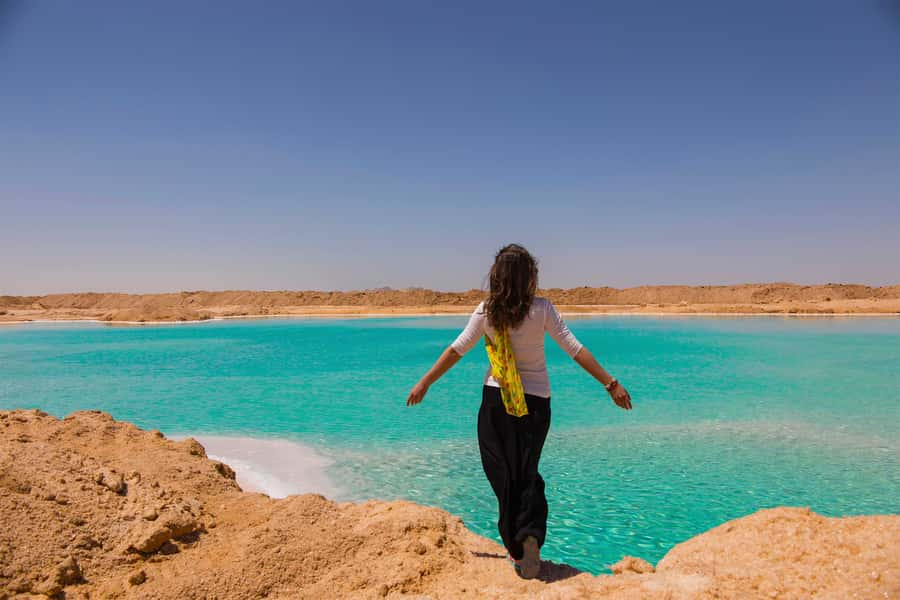
The salt lakes are among the strongest reasons to choose this tour. The water is highly saline, so you can float with very little effort. The bright water, pale salt edges, and surrounding desert make this one of the most memorable stops for photographs and swimming.
Bring a swimsuit and a small towel, though the supplied details do not specify towel service. You should also avoid getting salt water in your eyes and follow local instructions. The experience is about floating and enjoying the place, not swimming laps.
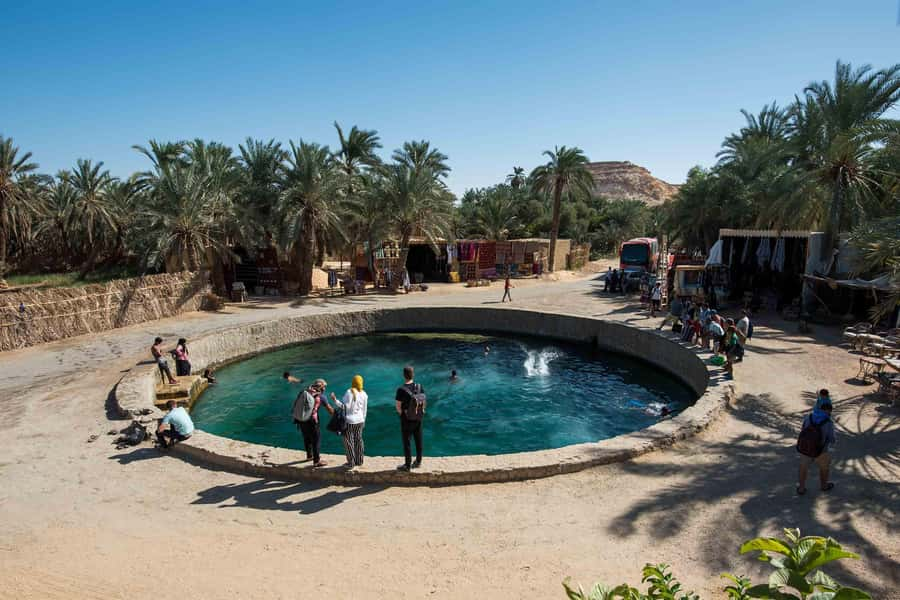
Cleopatra’s Spring offers a different kind of swim. It is a natural stone pool filled with spring water in the middle of the palm oasis. The pool is associated with Cleopatra in local tourism, and its setting under the palms gives it a completely different feel from the open salt lakes.
Fresh fruit juice and Siwan tea are served during the day, with the chance to pause and enjoy the palms. These small breaks are valuable because the itinerary is full. You get time to sit, cool off, and take in the oasis rather than rushing from one attraction to another.
Dune bashing, sandboarding, and sunset tea
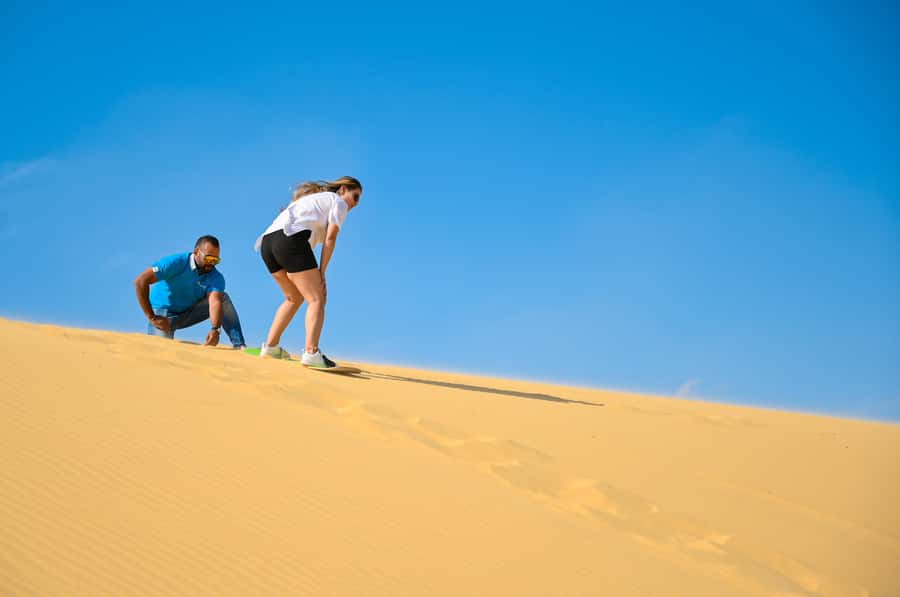
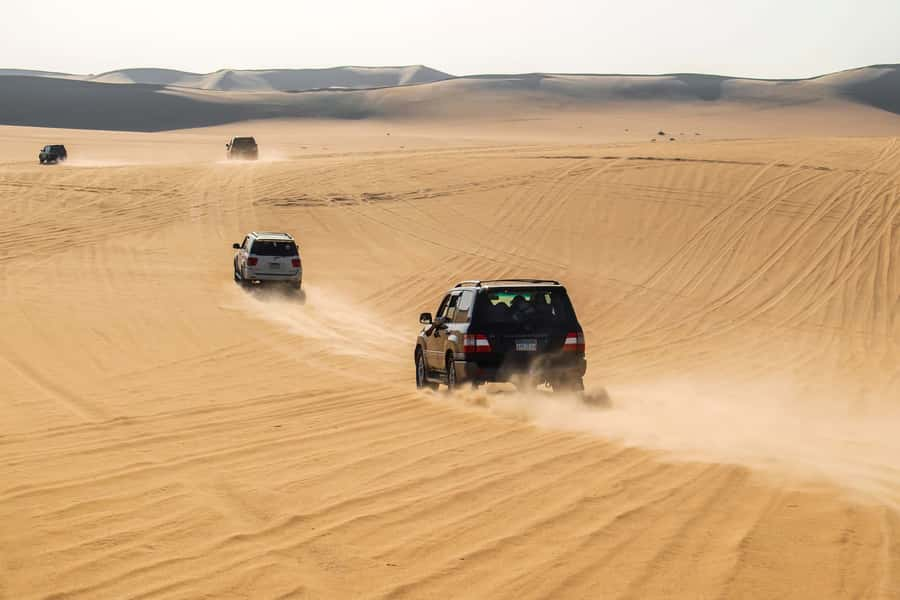
The 4×4 safari is the trip’s most playful section. You ride through the Siwa desert, cross dunes, and have the option to climb a high dune for sandboarding. The vehicle rides can be bumpy and lively, so this is not the right choice if you want a quiet sightseeing day.
The desert drive also includes hot springs and cold lakes, with time for another dip. The mixture of warm and cool water, sand, and palm-lined areas gives the day plenty of variety. The itinerary can change, so the exact order of the swims and dune rides may differ.
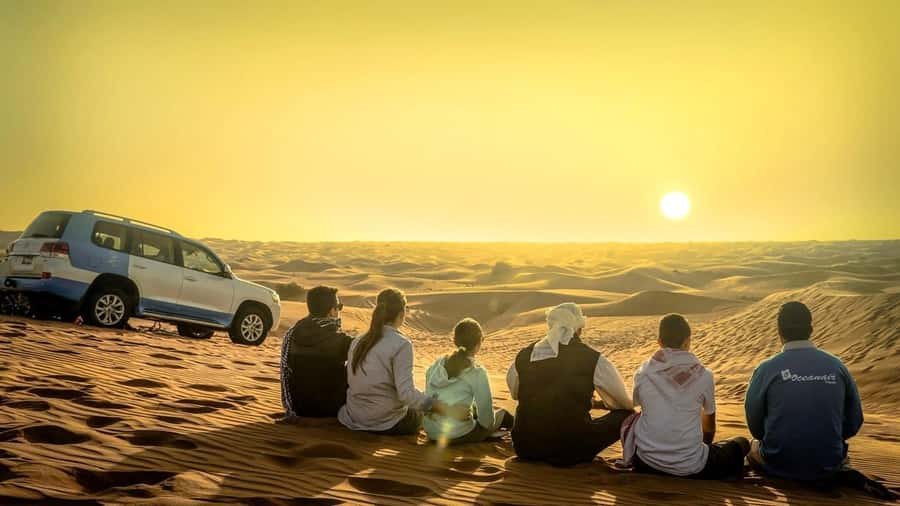
Sunset is the payoff. After the dune drive, you can watch the sun drop over the Great Sand Sea while drinking Bedouin tea and eating nuts. This is the point where the long trip begins to make sense. The desert feels broad and silent, and the simple tea stop is more memorable than a formal attraction.
Sandboarding is included, but participation is optional. Wear clothing you can move in, protect your eyes from sand, and keep valuables secured during the ride. The tour also includes bottled water, though carrying extra water is sensible in a hot, remote area.
A night at the desert camp
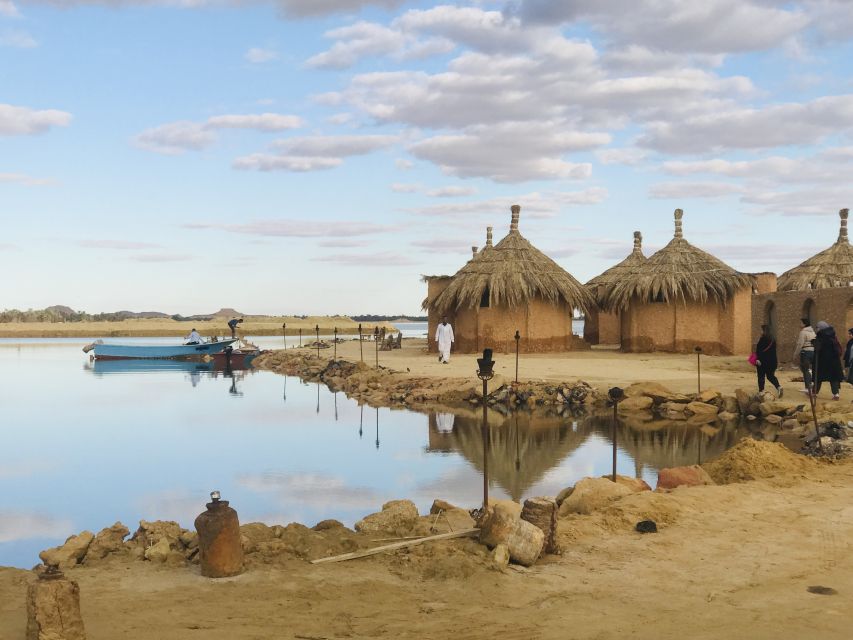
If you choose the camp option, the second night includes a barbecue dinner after the safari. You sleep in tents and spend the late evening in a desert setting, often with tea, conversation, and local hospitality.
The camp is not presented as a luxury glamping stay. Think of it as a simple outdoor night that adds atmosphere and variety to the lodge accommodation. If you prefer a proper room and predictable facilities, choose two nights at the Oasis Lodge. If you want the more memorable version of the trip, the camp is the better fit.
Food is included, and the local hospitality has been a major part of the experience for many people. The combination of a shared meal, guides, other participants, and the open desert gives the second night a social feel that a standard hotel cannot match.
Shali and the Old Souq on Day 3
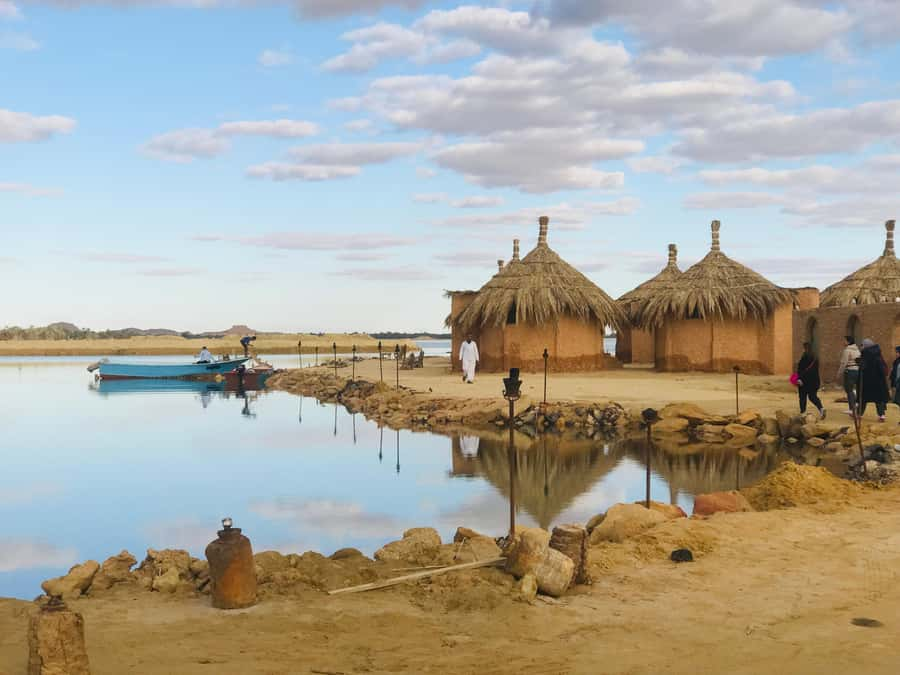
The final morning turns back toward Siwa’s built heritage. Shali was constructed from karshef, a traditional material made from salt and clay. The old structure has a rough, earthy appearance and shows how local builders worked with materials available in the oasis.
Shali is one of the most visually distinctive parts of the tour. Its primitive architecture feels very different from the grand stone monuments elsewhere in Egypt. Walk slowly and look at the walls, shapes, and remaining structures. The site is less about one perfect viewpoint and more about understanding how an oasis town was built.
The Old Souq gives you free time to stroll and shop before the return journey. This is your chance to look for local products and take in everyday Siwan life. Keep luggage light because oversize luggage is not allowed on the tour, and make sure anything you buy can fit comfortably in your bags.
The return to Cairo is another long road transfer. You should avoid scheduling a tight flight or major appointment immediately afterward. Give yourself a buffer, since the route and pickup location can affect the timing.
What the price includes and what it is worth
At $361 per person, this is not a cheap day trip, but it covers far more than transport. You receive hotel pickup and drop-off, shared air-conditioned transport, entry tickets, two nights of accommodation, breakfasts, two lunches, a desert barbecue dinner, a 4×4 safari, sandboarding, city touring, bottled water, and Bedouin tea.
The value is strongest if you would otherwise need to arrange a private vehicle, accommodation, desert permits, local drivers, entry tickets, and a separate safari. Siwa is remote, so organizing each piece independently could take time and create more chances for confusion.
The tour is less attractive if you dislike long road journeys or prefer to explore at your own pace. A private trip might suit you better if you want a slower schedule, though this shared experience already offers some flexibility. Several guides have adjusted stops, allowed extra time, and helped with local shopping or translation, but the overall three-day structure remains busy.
The high rating reflects the strongest parts of the experience: caring guides, safe driving, tasty food, modern transport, flexible timing, photography help, and the desert safari. Names vary by departure, so you cannot assume you will have Sabra, Ramy, Ryan, Ahmed, Fares, or Mahmoud. You can ask about guide availability, but it should not be treated as guaranteed.
Who should book this Siwa trip?
I would choose this tour if you want an active introduction to Siwa without arranging the complicated pieces yourself. It suits couples, friends, solo participants comfortable in a small group, and anyone who wants ancient sites plus swimming and desert fun.
It is especially good for first-time visitors to Siwa because the route combines the main sights: El Alamein, the oasis, Mountain of the Dead, Si-Amun’s tombs, the Oracle Temple, salt lakes, Cleopatra’s Spring, Shali, the Old Souq, and the Great Sand Sea.
I would think twice if you have limited mobility, are pregnant, dislike rough vehicle rides, or need reliable luxury facilities. The days are full, the road is long, and the camp option is basic. Pack light, bring sun protection, wear comfortable shoes, and keep swimwear handy.
Should you book it?
Book it if the thought of floating in salt lakes, racing over dunes, drinking tea at sunset, and sleeping near the desert sounds more appealing than another crowded city tour. Siwa takes effort to reach, but this package makes that effort practical by combining transport, accommodation, food, guides, and activities in one three-day plan.
Choose two lodge nights if comfort matters most. Choose the lodge and camp combination if you want the fuller desert experience. Either way, allow for the long road and accept that the schedule may shift. For the right person, the remote setting is not a problem to overcome. It is the reason to go.
FAQ
How long is the Siwa tour from Cairo?
The tour lasts three days. The drive to Siwa is very long and may take roughly 9 to 13 hours depending on the route, stops, traffic, and pickup location.
Is hotel pickup included?
Yes. Pickup and drop-off are included from accommodations in Cairo and Giza, and pickup is also available from Alexandria. Long-range pickup from places such as Cairo Airport, Heliopolis, New Cairo, and 6th of October can be booked as an add-on.
Where do I sleep during the tour?
You can choose two nights at the Oasis Lodge, or one night at the lodge and one night at a desert camp. Both options are available at no additional cost.
Is the desert safari included?
Yes. The tour includes a 4×4 desert safari, dune driving, sandboarding, hot springs, cold lakes, sunset tea, and a barbecue dinner at the desert camp option.
Can I swim during the tour?
Yes. Swimming opportunities include the Siwa salt lakes, Cleopatra’s Spring, and other water stops listed in the program. Bring suitable swimwear and sun protection.
What languages can the guide speak?
Guides are available in Arabic, English, German, Spanish, and Italian.
What should I bring?
Bring a passport or ID card, comfortable shoes, a windbreaker, sunglasses, a sun hat, and a student card if relevant. Bottled water is included.
Is the tour suitable for wheelchair users or pregnant women?
No. The tour is not suitable for wheelchair users or pregnant women because of the long road journey, uneven historical sites, swimming, desert rides, and active schedule.
More history between the parks around the world
- Dubai Evening Heritage Safari by Vintage G Class Al Marmoom Oasis
★ 5.0 · 1,500 reviews - Dubai Camel Desert Safari, Traditional Meal & Heritage Activities
★ 5.0 · 937 reviews - Dubai: Heritage Safari in Vintage Land Rover with Dinner
★ 4.8 · 861 reviews - Dubai: Heritage Safari, Camel Ride & Al Marmoom Oasis Dinner
★ 4.8 · 431 reviews
More museum stops between drives around the world
- Khao Lak Eco-Safari: Elephants, Tsunami Museum, and Turtles
★ 4.7 · 50 reviews - Private Rhino and Lion Park, Cradle Caves or Maropeng Museum
★ 4.6 · 25 reviews
New safaris around the world
- Safari Camel Ride in Banana Beach from Agadir★ 5.0 · 10 reviews
- Agadir Quad Bike Safari Desert Sunset★ 5.0 · 29 reviews
- Agadir Buggy safari / off road Experience Half Day | Adventure & Connections ®★ 4.5 · 65 reviews
- Agadir Buggy Safari Adventure★ 5.0 · 93 reviews
- Full-Day Safari Small Desert With Lunch★ 4.5 · 224 reviews
- Agadir Jeep safari 4×4 Desert Adventures with Lunch★ 5.0 · 365 reviews
- Agadir National Park & 4×4 Jeep Desert Safari Tour with Lunch★ 4.5 · 30 reviews
- Jeep safari 4×4 mini sahara desert with Berber Lunch★ 5.0 · 130 reviews
Camping Safaris: how they compare.

Dubai: Desert Safari, Quad Bike, Camel Ride & Al Khayma Camp
Read our review →
Dubai: Premium Safari, Camel Ride & Al Khayma Camp 3-Buffets
Read our review →
Dubai Premium Red Dunes Safari, Camels & 5* BBQ at Al Khayma camp
Read our review →
Dubai: Quad Bike Safari, Camels & Al Khayma Camp BBQ Dinner
Read our review →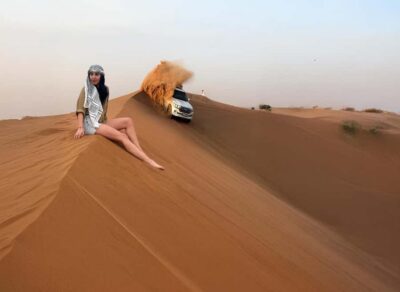
Dubai: Red Dunes Desert Safari with Premium Camp BBQ & Shows
Read our review →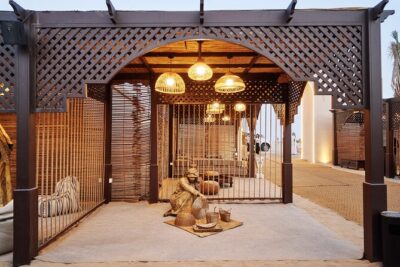
Dubai Evening Desert Safari BBQ Dinner & Transfer to Noble Camp
Read our review →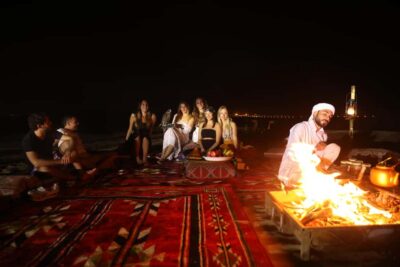
Dubai: Overnight Safari, Dinner, Stargazing & Al Khayma Camp
Read our review →
Dubai Overnight Desert Safari, BBQ & Stargazing at Al Khayma Camp
Read our review →Other lists this safari sits on