
Review · MARINE WILDLIFE SAFARIS
Auckland Dolphin and Whale Watching Eco-Safari Cruise
A pod of dolphins racing beside a catamaran is the star of this Hauraki Gulf eco-safari. You may also see Bryde’s whales, seals, blue penguins, sharks, and rare seabirds, all against a backdrop of Auckland’s islands. The boat leaves right from central Auckland, so you can reach the wildlife without arranging a long transfer.
I like the mix of real marine research and easy sightseeing. Your onboard team shares current work with local scientists, explains the animals you are looking for, and treats the wildlife with care. I also like the repeat-trip promise: if no marine mammals appear, you receive a voucher to try again at no extra charge.
The catch is simple: wild animals set the schedule. Some outings produce dolphins by the dozen and several whale sightings. Others offer only a few dolphins, or none at all. The boat can also feel crowded at its maximum of 99 passengers, especially when rain pushes everyone under cover.
Key points before you book
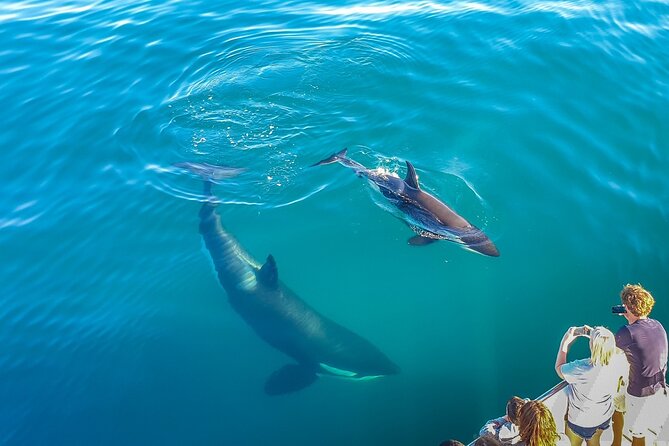
- Dolphins are the most dependable highlight: Pods often swim and play near the boat for long stretches, sometimes with young calves.
- The science is part of the tour: Marine research scientists explain local species, conservation work, and the animals being tracked.
- The route is scenic even without sightings: You pass the Auckland Harbour Bridge, Rangitoto, Motuihe, Motutapu, Tiritiri Matangi, and North Head.
- It is a serious half-day outing: Allow about four and a half hours, with time on open water and possible wind, spray, or chop.
- The boat has indoor and outdoor viewing: Bring layers and claim a viewing spot early, since a full sailing can make seat-hunting awkward.
- No-mammal sightings bring a useful safety net: You can return another day at no added cost, though this is less useful if you are leaving Auckland soon.
What this Auckland marine safari is really like
This is not a quick harbor trip. The cruise lasts about 4.5 hours and heads well beyond the city waterfront into the Hauraki Gulf Marine Park. That extra time matters because whales and dolphins are free to move across a large area, and the crew may need to search rather than simply motor to a fixed viewing spot.
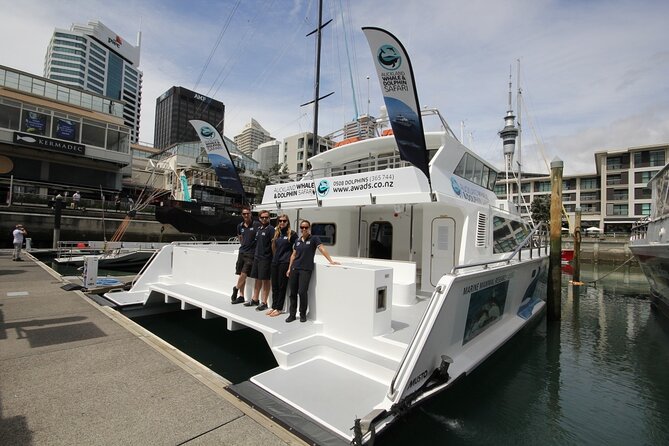
You meet at the New Zealand Maritime Museum on Auckland’s Eastern Viaduct. From there, you board a custom-built 65-foot, or 20-meter, catamaran. It is designed for viewing, with places to watch from inside and outside, plus toilets and a small shop selling snacks.
The captain and guides keep the trip moving with information about the gulf, its islands, its five marine preserves, and the roughly 23 marine species found in the area. The focus is not just on ticking off animals. You learn how the crew works with marine scientists, which whales they track, and why the boat gives animals space to approach on their own terms.
That approach makes a difference. The crew may adjust the route, slow down, or spend extra time with a pod if the conditions allow. It is a wildlife trip, not a staged show, and the uncertainty is part of the bargain.
More whale, dolphin and seal trips around the world:
- Los Cristianos Respectful No-Chase Whale and Dolphin Safari
★ 4.6 · 12,782 reviews - Tromsø Whale Safari with MS Gabriele
★ 4.3 · 1,937 reviews - From Tromsø: All-Inclusive Whale & Orca Safari
★ 4.5 · 1,221 reviews
Viaduct Harbour to Rangitoto: an easy city departure
The first part is convenient. Viaduct Harbour sits in downtown Auckland, close to the Maritime Museum and public transportation. You do not need a hotel transfer, and the cruise ends at the same meeting point.
The boat passes through Waitemata Harbour and under or near the Auckland Harbour Bridge. This gives you a quick change of scene: marina and city views at the start, then open water and island scenery. Keep your camera ready before the wildlife search begins, since the harbor itself provides some of the clearest views of Auckland’s waterfront.
Rangitoto Island is one of the route’s visual anchors. Its volcanic form is easy to recognize from the water, and it helps you understand how close Auckland’s island-filled gulf is to the city. You are not stopping for a land visit, so do not expect a hike or shore exploration. The value here is the changing view as the catamaran moves past.
This early stretch can also be breezy. The boat may feel stable in moderate conditions, but wind builds quickly once you leave sheltered harbor water. Flat-soled shoes are a sensible choice, and warm layers are more useful than relying on a sunny forecast.
Searching the Hauraki Gulf for whales and dolphins
The main search takes place in the Hauraki Gulf Marine Park, a large protected area with many islands and marine habitats. The crew may look for up to six types of whales, though Bryde’s whales are especially associated with these waters. Dolphins are often bottlenose dolphins, and pods can appear suddenly, then disappear just as fast.
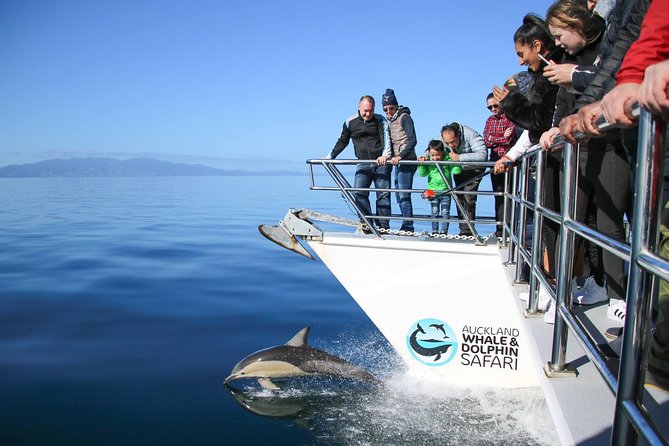
A good encounter can be remarkably active. Dolphins may travel alongside the bow, leap near the front deck, or stay with the boat for 30 minutes or more. Several outings have included large pods, mothers with calves, and repeated close passes. For many people, this is the best part of the day, and it can be worth the fare even if whales remain out of sight.
Whales are less predictable. You might see a blow, a back, or a full sequence of surfacing. You might also spend hours searching without a clear sighting. The crew cannot control the animals, the weather, or the season, so book this as a wildlife safari rather than a guaranteed whale performance.
The tour’s no-mammal policy softens the risk. If you see no marine mammals, you can go again on another day without paying for a second ticket. That is genuinely helpful if you are staying in Auckland for a while. It has less practical value for a short visit from overseas, since you may not have another free day.
Motuihe, Motutapu, and Tiritiri Matangi from the water
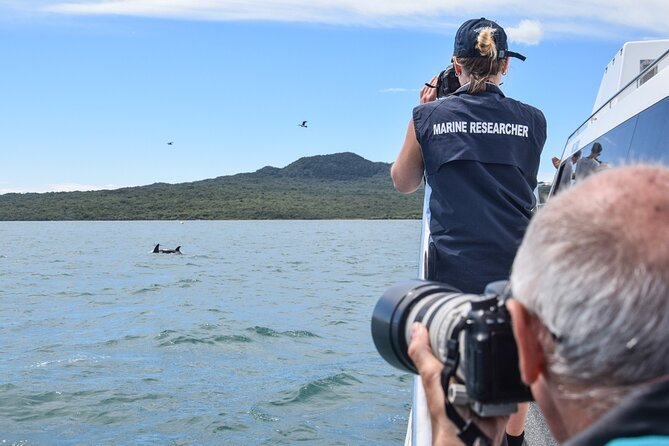
The island route gives the cruise more depth than a simple out-and-back search. Motuihe and Motutapu add quiet coastal views and show how many islands sit within Auckland’s reach. You will not tour these islands on foot, but seeing their shores from the water helps explain the gulf’s mix of open sea, sheltered bays, and marine habitat.
Tiritiri Matangi is another notable point on the route. The cruise does not include a landing there, so treat it as a scenic and natural-history stop rather than a separate island excursion. The guides may use the islands to explain the marine park and the relationship between protected land and protected water.
The scenery is a useful fallback on a slow wildlife day. It does not replace a whale sighting, but it keeps the four-and-a-half-hour trip from becoming nothing but empty horizon. If you enjoy boats, island views, and natural-history commentary, you will get more from this cruise than someone interested only in a photograph of a whale.
More safaris around the world:
- Dubai: Desert Safari, Quad Bike, Camel Ride & Al Khayma Camp
★ 4.9 · 68,962 reviews - Dubai: Desert Safari, Quad Bike, Camel Ride and Sandboarding
★ 4.9 · 43,505 reviews - Dubai: Safari, Quad Bike, Camel Ride, and Buffet Dinner
★ 4.9 · 33,424 reviews - Dubai: Red Dune Safari, Quad Bike, Camel Ride, BBQ Dinner
★ 4.9 · 32,185 reviews
Seabirds, penguins, seals, and surprise sightings
Bring binoculars if you have them. The crew may point out Australasian gannets, petrels, shearwaters, and white-fronted terns flying above the water or plunging toward fish. These sightings reward patience, since seabirds can be harder to frame than a dolphin pod.
Blue penguins are another possibility. They are small, so you may get only a brief glimpse, but spotting one adds a different kind of excitement to the trip. Seals can also appear, and one particularly successful outing included a hammerhead shark alongside whales, dolphins, and birds. That sort of variety is possible, but it should not be treated as a standard checklist.
The scientists and guides help you notice more than you would on your own. A distant dark shape, a burst of birds, or a small penguin near the waterline can be easy to miss without someone scanning and explaining what to look for.
The boat, seating, and weather reality
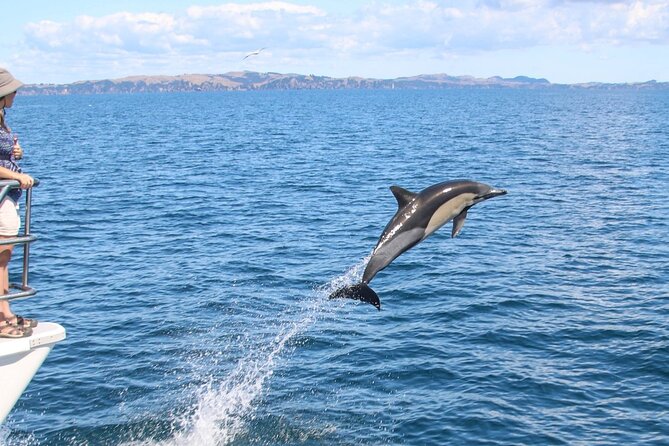
The 65-foot catamaran is comfortably set up for viewing, with indoor and outdoor areas. That flexibility is important in Auckland, where the weather can shift during a half-day on the water. You can step inside if the spray or wind becomes unpleasant, then move back outside when wildlife appears.
The main practical issue is crowding. The boat can carry up to 99 people, and full departures may feel tight when everyone heads to the rail at once. If you leave your seat to buy a snack or move inside, someone else may take the space. During an animal encounter, several rows of people can gather along the edge, so the crew may ask passengers to rotate and share the view.
I would check in early and decide where you want to spend most of the trip. The front deck can offer exciting views while underway, but it is also exposed to wind and spray. The rear outdoor area may feel calmer, though sightlines depend on how many people are gathered around you.
Wear warm layers, weatherproof clothing, sturdy flat-soled shoes, sunscreen, sunglasses, and a hat with a chin strap. The advice about sunscreen is not minor. Bright sun reflecting off the water can catch you even on a cool day. Bring a camera and binoculars, but keep both secure in wind.
Rough water is possible. Several experiences have been smooth, while others have been distinctly choppy. If you are prone to motion sickness, plan carefully, though the supplied information does not specify medication or special seating arrangements.
Expert commentary and conservation value
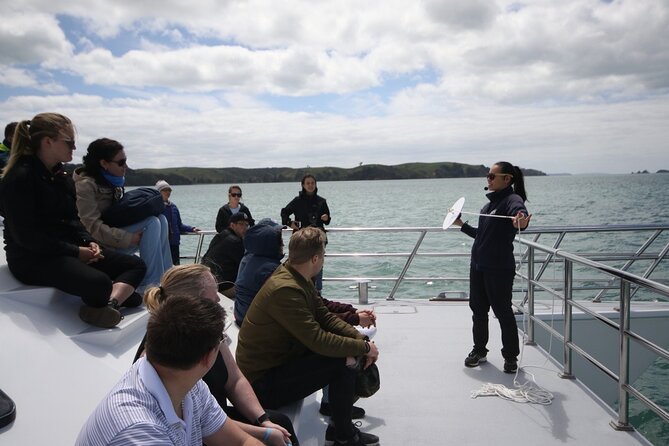
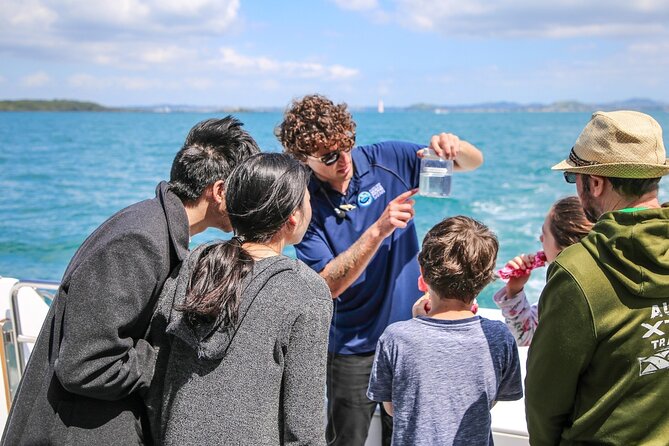
The crew’s strongest feature is the educational side of the trip. Marine research scientists join the cruise and discuss fieldwork, animal behavior, local species, and conservation. You are not simply told where to point your camera. You get context about why the gulf matters and how data is gathered.
Every ticket purchased contributes directly to marine mammal conservation. That gives the price more purpose than a standard sightseeing cruise, especially if you care about responsible wildlife tourism. The crew also aims to limit stress on the animals, allowing them to choose how close they come rather than forcing an encounter.
The commentary may vary by speaker and conditions. On one full sailing, some passengers found that parts of the microphone commentary were too quiet to hear from the back. If learning is a major reason you are booking, stay near the main commentary area when possible and ask staff to repeat anything you miss.
Is $135.91 a fair price?
At $135.91 per person, this is not a cheap harbor ride. You are paying for a 4.5-hour vessel operation, a large search area, trained staff, marine research involvement, and the chance to see several kinds of wildlife. The conservation contribution also adds value for people who want their money to support protection work.
The price makes the most sense if you see the outing as both a wildlife safari and a natural-history cruise. If you want a guaranteed whale photograph, no price can remove the basic risk. You could spend the full time on the water and see only a few dolphins, or none at all.
The return-trip voucher improves the value, but only if your schedule allows you to use it. For a visitor with several Auckland days, it gives you a reason to try again in different conditions. For a tightly planned New Zealand itinerary, treat the voucher as a kind gesture rather than part of the expected value.
Food and drinks are not included, though snacks are available for purchase onboard. Hotel pickup and drop-off are not included either. Since the meeting point is central Viaduct Harbour, that is less of a burden than it would be for a remote marina departure.
Who should book this cruise?
I would choose this experience if you like wildlife, boats, coastal scenery, and good natural-history commentary. Families can enjoy it, and most people can participate, but the four-and-a-half-hour duration and possible chop deserve attention if you have very young children or anyone sensitive to motion.
It is also a good fit for visitors who want to support conservation while sightseeing. The research connection makes the trip feel purposeful, and the crew’s careful approach is reassuring when animals come near the boat.
I would be cautious if your entire Auckland plan depends on a whale sighting. You may see whales, but you may not. The better mindset is to hope for whales, expect a search, and value the dolphins, seabirds, islands, and science along the way.
Check-in closes 15 minutes before departure, and late passengers risk losing their allocated seats. Free cancellation is available until 24 hours before departure. If bad weather cancels the cruise, you are offered another date or a full refund. The operator may also reschedule or refund if the minimum number of passengers is not reached.
Should you book the Auckland Dolphin and Whale Watching Eco-Safari?
Yes, if you can accept the uncertainty of wild animals. The strongest reasons are the frequent dolphin encounters, the chance of whales and unusual sightings, the central departure point, and the chance to hear directly from marine research scientists.
Book it as a full half-day on the water, not as a guaranteed photo stop. Arrive early, dress for wind, protect yourself from the sun, and keep some room in your schedule in case you want to use the return-trip voucher. If the idea of a dolphin pod racing along the catamaran sounds worth the risk, this is a sound Auckland choice.
FAQ
Where does the Auckland Dolphin and Whale Watching Eco-Safari depart?
The cruise departs from the New Zealand Maritime Museum at Eastern Viaduct, Auckland Central, in Viaduct Harbour.
How long does the cruise last?
The experience lasts approximately 4.5 hours.
What animals might I see?
Possible sightings include up to six types of whales, bottlenose dolphins, seals, blue penguins, sharks, Australasian gannets, petrels, shearwaters, and white-fronted terns.
Are whale and dolphin sightings guaranteed?
No. Wildlife sightings cannot be guaranteed because the animals are wild and move through a large marine area.
What happens if no marine mammals are seen?
If you do not see any marine mammals, you can take the cruise again on another day at no extra charge.
Is food included?
No. Food and drinks are not included, but snacks are available to purchase onboard.
Is hotel pickup included?
No. Hotel pickup and drop-off are not included. You make your own way to Viaduct Harbour.
What should I wear?
Wear warm layers and weatherproof clothing. Bring sturdy flat-soled shoes, a sun hat with a chin strap, sunscreen, and sunglasses.
How many people can join the cruise?
The maximum group size is 99 passengers.
How early should I arrive?
Check-in closes 15 minutes before the stated departure time. Arriving late may mean losing your allocated seat.
Can I cancel for a refund?
You can cancel up to 24 hours before the experience for a full refund. Cancellations or changes made less than 24 hours before departure are not accepted for a refund.
New safaris around the world
- Safari Camel Ride in Banana Beach from Agadir★ 5.0 · 10 reviews
- Agadir Quad Bike Safari Desert Sunset★ 5.0 · 29 reviews
- Agadir Buggy safari / off road Experience Half Day | Adventure & Connections ®★ 4.5 · 65 reviews
- Agadir Buggy Safari Adventure★ 5.0 · 93 reviews
- Full-Day Safari Small Desert With Lunch★ 4.5 · 224 reviews
- Agadir Jeep safari 4×4 Desert Adventures with Lunch★ 5.0 · 365 reviews
- Agadir National Park & 4×4 Jeep Desert Safari Tour with Lunch★ 4.5 · 30 reviews
- Jeep safari 4×4 mini sahara desert with Berber Lunch★ 5.0 · 130 reviews
Marine Wildlife Safaris: how they compare.
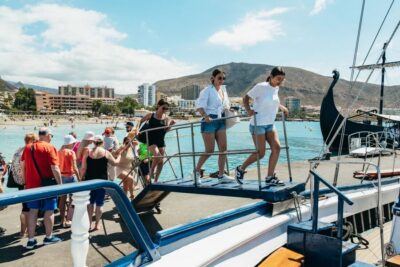
Los Cristianos Respectful No-Chase Whale and Dolphin Safari
Read our review →
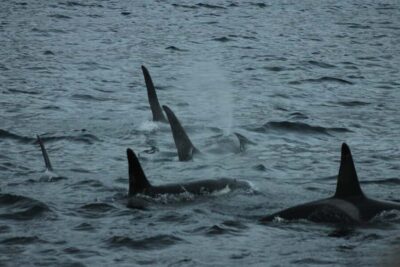
From Tromsø: All-Inclusive Whale & Orca Safari
Read our review →
Húsavík: Original Big Whale Safari & Puffins by Speedboat
Read our review →
From Svolvær: Lofoten RIB Sea Eagle Safari Trollfjord Cruise
Read our review →
Ocean Safari Great Barrier Reef Experience in Cape Tribulation
Read our review →
Lisbon: Dolphin Watching with a Marine Biologist – Ocean Safari
Read our review →
Wild Dolphin Watching and Snorkel Safari Off West Coast of Oahu
Read our review →Other lists this safari sits on