
Review · JACKSON
Grand Teton Wildlife Safari in a Enclosed or Open-Air Vehicle (season dependent)
Grand Teton wildlife watching is part luck, part timing, and part knowing where to look. This four-hour outing puts you in the park at dawn or dusk, when moose, elk, deer, bears, and birds are often easier to spot. Guides such as Kyle, Kelsey, Anthony, and Allie also explain the park’s geology, ecology, wildlife, and human story as you ride.
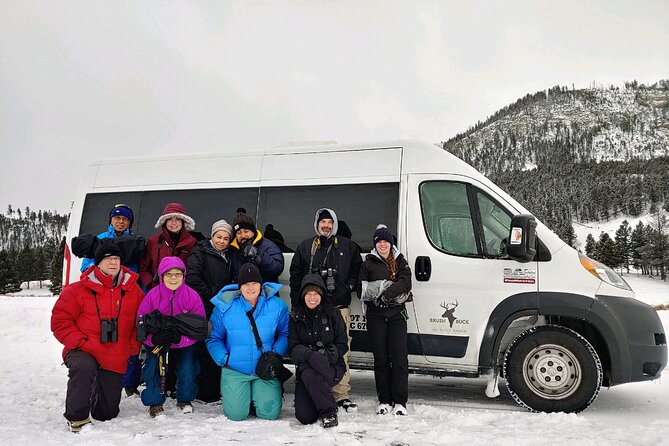
I like the small maximum group of 12, which gives you a better chance to ask questions and get a clear view through the guide’s binoculars or spotting scope. I also like the choice of vehicles: open-air seating in warmer months, then a heated enclosed vehicle when cold weather makes a roof and windows a very good idea.
The main consideration is simple: wildlife is never guaranteed. Some outings produce bears, wolves, moose, and bison. Another may produce only a distant moose or pronghorn. At $159 per person, you are paying for the guide’s time, transport, equipment, and park expertise, not a guaranteed animal list.
Key details to know before booking
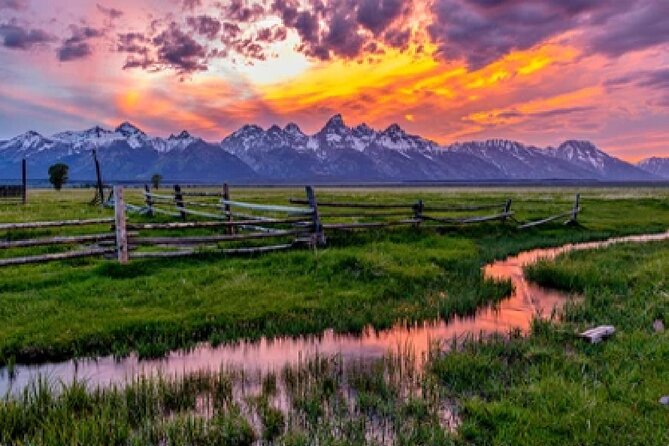
- Four hours in Grand Teton: You cover paved roads and dirt routes, with stops for wildlife, photos, and mountain views.
- Morning or evening timing: Sunrise and sunset outings match the periods when animals are often more active.
- Vehicle changes by season: Expect open-air seating from June through mid-September when weather allows, and an enclosed heated or air-conditioned vehicle from mid-September through May.
- Binoculars and a spotting scope: Your guide supplies viewing equipment, which matters when animals are far from the road.
- Small groups, up to 12 people: The size leaves more room for questions and shared viewing.
- Mormon Row is seasonal: The historic barns are included from March through November, but snow prevents this stop in December, January, and February.
Why four hours is the right length for wildlife watching
A four-hour safari gives you enough time to search several parts of Grand Teton National Park without turning the outing into an all-day commitment. You start near Jackson Hole, at 210 North Cache Street, then head toward the park and its broad valleys, river corridors, wooded areas, and mountain viewpoints.
The route includes paved highways and dirt roads. That mix matters. Paved roads let the vehicle cover ground efficiently, while dirt routes can bring you closer to quieter stretches where animals may be feeding or moving between wooded areas. You are not simply riding from one attraction to another. The guide is continually scanning the road edges, open fields, trees, and distant slopes.
Morning and evening departures are smart choices for this kind of outing. Sunrise can be chilly, even in summer, but it gives you an early start when wildlife may be moving. Sunset tours bring softer light and a different feel, with the possibility of seeing animals become active later in the day.
The tradeoff is that the schedule may not suit every holiday plan. A dawn start means getting up early, and an evening tour may finish after a full day of sightseeing. Still, the timing is a major part of the experience, not a minor scheduling detail.
More safaris around the USA:
- Miami: Everglades Safari Park Airboat Tour
★ 4.4 · 1,267 reviews - Everglades Airboat Safari Adventure with Transportation
★ 3.0 · 956 reviews - 3 Hour Off-Road Sunset Safari to Grand Canyon with Entrance Gate Detour
★ 5.0 · 904 reviews
Open-air safari seating or an enclosed vehicle
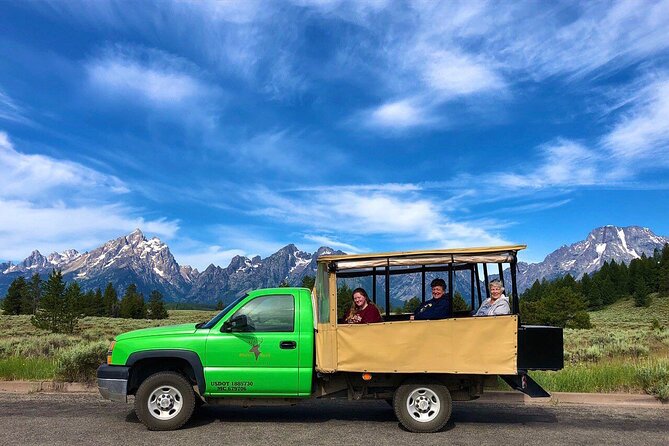
From June through roughly mid-September, the safari vehicle is open-air when weather allows. This is the more memorable way to ride. You feel the air, hear the surroundings, and have a broad view in every direction. The open sides also make it easier to scan for movement without peering through a regular car window.
Bring a jacket and wear long pants, even in summer. Several people have found the early morning surprisingly cold, and blankets may be available on some outings. Sturdy walking shoes are also recommended because the safari includes stops outside the vehicle.
The open-air format has a real drawback: it can be uncomfortable for anyone with back problems, and weather can change quickly in the mountains. The listing specifically says summer safari tours are not recommended for people with back problems. If you need a smoother, more sheltered ride, ask about the enclosed option when booking.
From mid-September through May, tours use an enclosed vehicle with heat and air conditioning. This is the sensible choice for fall, winter, and spring conditions. Dress in full winter gear during the coldest months: snow boots, snow pants or bibs, a winter jacket, gloves, a warm hat, scarf, and other layers.
The enclosed vehicle does not remove the appeal of the trip. It makes long periods of watching more comfortable, especially when you are sitting quietly and waiting for an animal to appear.
Searching Grand Teton for moose, elk, and bears
The animal list is impressive, but it should be read as a list of species found in the park, not a promise. Grand Teton supports about 60 mammal species and more than 300 bird species. Sightings change with season, weather, animal movement, and plain chance.
Possible mammals include:
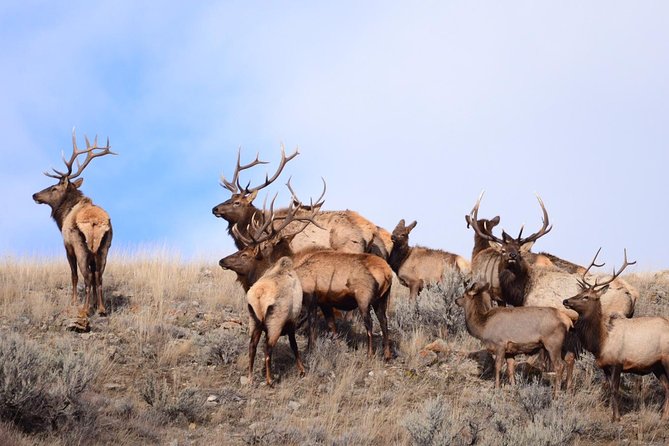
- Elk and moose
- Mule deer and pronghorn
- Bison and bighorn sheep
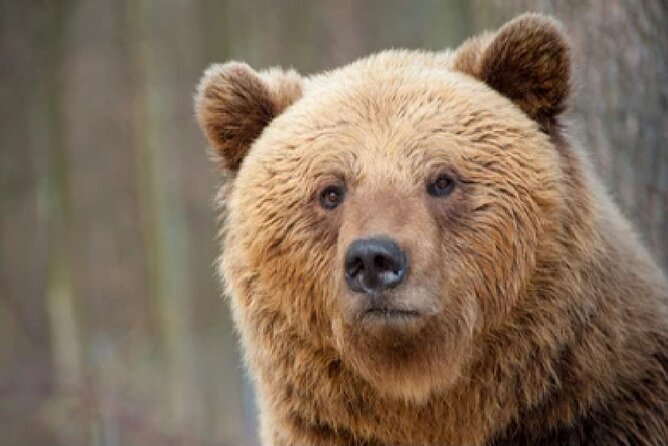
- Black bears and grizzly bears
- Wolves
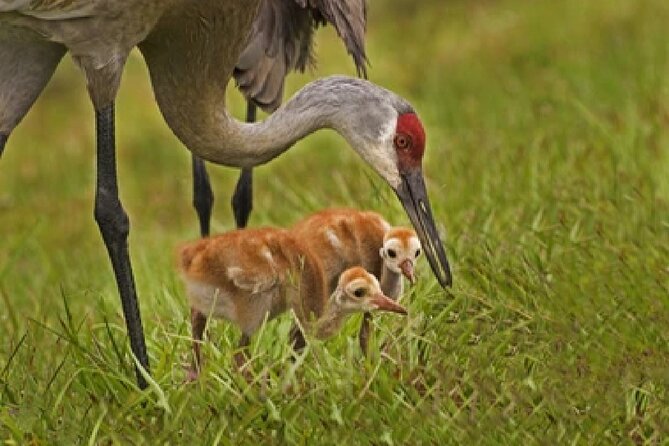
Birds may include bald eagles, golden eagles, ospreys, hawks, owls, and sandhill cranes. Spring and summer are especially appealing for birdwatching, though birds can be seen at other times as well.
The guide’s role is more important than the vehicle itself. Guides such as Anthony and Kevin have been praised for explaining animal behavior and seasonal movement. Kelsey and Allie have been noted for taking time to help everyone see an animal, including children and people who find binoculars difficult to use. Kyle is often singled out for spotting animals and taking useful photographs.
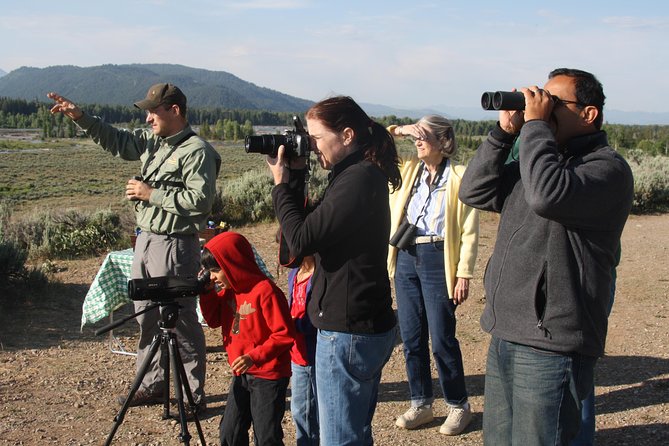
A spotting scope can make a major difference. A bear or wolf may be too far away for a phone camera and too small for the naked eye. The guide can set up the scope and help each person take a turn. You may see an animal clearly through the scope even when it looks like a dark speck from the road.
Do not expect a close encounter. A responsible wildlife safari keeps a safe distance, follows park rules, and avoids disturbing animals. One person found that animals were often far away, but also said the supplied binoculars worked well. That is a fair description of the experience: the reward is seeing wild animals in their own setting, not touching distance.
The Snake River and Teton mountain scenery
Wildlife is the main purpose, but the scenery gives the tour structure. The Snake River and the rugged Teton peaks provide a dramatic backdrop while you search the open country and woods.
Grand Teton is known for its sharp mountain profile, and the guide discusses the geology behind those peaks. You also hear about ecology, plants, animal habits, local culture, and the area’s early settlement. This helps turn a series of roadside sightings into a clearer picture of how the park works.
The educational side varies with the guide and the vehicle’s speaker system. Most of the time, the guide explains things during the drive and at stops. One outing was affected by a faulty speaker system, making it difficult for some people to hear commentary while the vehicle was moving. That appears to be an equipment problem rather than a normal feature, but it is worth knowing that an audio issue can affect the quality of the day.
The strongest guides do more than name animals. They explain why a moose is near water, why a herd may gather in one area, or how the seasons change animal behavior. Guides also fill quiet stretches with stories about the park, the town, early settlers, and places such as Jenny Lake.
Same parks, another way to see the animals:
- Off the Beaten Path Ketchikan Photo Safari – 3 hr.
★ 5.0 · 901 reviews - Kauai Deluxe Waterfall Safari: Helicopter Tour
★ 5.0 · 900 reviews - Wild Florida Drive-Thru Safari and Gator Park Admission
★ 4.5 · 892 reviews - Wild Dolphin Watching and Snorkel Safari Off West Coast of Oahu
★ 5.0 · 795 reviews
Mormon Row and the famous barns
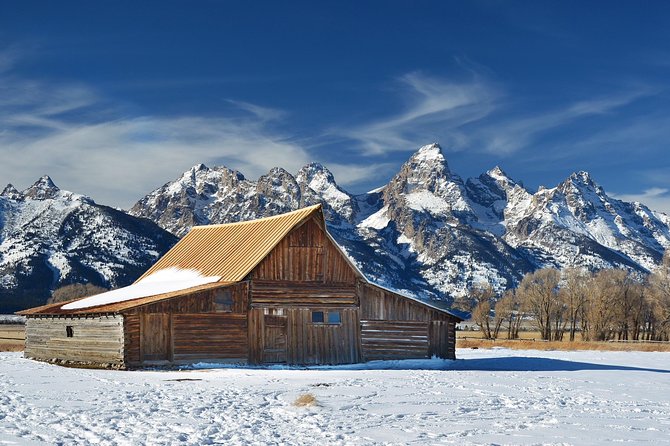
From March through November, the route includes Mormon Row Historic District. This area preserves the setting of some of Jackson Hole’s early Mormon homesteads and offers a classic view of the Teton range behind old farm buildings.
The stop lasts about 20 minutes. That is enough time for a photograph and a quick look around, but not an extended historical visit. The main attraction is the chance to photograph one of the most recognizable barns in the region.
The tour stops at either the T. A. Moulton Barn or the John Moulton Barn, not necessarily both. That distinction matters if you are planning a detailed barn photography session. The barns are an added benefit to a wildlife outing, not a separate historical tour.
Snow coverage prevents this stop from being included in December, January, and February. Winter passengers should expect the focus to remain on wildlife, mountain views, and other accessible park roads.
Snacks, binoculars, and practical comfort
The price includes snacks, bottled water, and soda. That may sound minor, but it helps during a four-hour outing, particularly when you are leaving early or spending the evening away from town. Coffee is not included, so bring your own if a sunrise departure requires it.
Binoculars are supplied, and the guide may also carry a spotting scope. This is one of the strongest practical benefits of booking the safari instead of simply driving your own car. You do not need to buy or pack wildlife optics for one day, and the guide can direct your attention to the exact tree line or field where an animal is hiding.
Some guides also take photographs for the group or send images afterward. That has been a welcome extra, especially when the wildlife is too far away for a phone. Treat this as a helpful possibility, not the core service. Your own camera is still worth bringing, and you should not assume every photograph will arrive automatically.
Wear clothing for sitting outside or near open windows, then add more than you think you need. In summer, bring a jacket, long pants, and sturdy shoes. In winter, use proper snow gear rather than ordinary city clothing. You may be outside at stops even when the vehicle itself is comfortable.
What $159 buys you
At $159 per person, this is not the cheapest way to see Grand Teton. You can drive through the park yourself and watch the roadside pullouts at no extra tour cost, though the national park entrance fee is separate either way.
The value comes from several services bundled together:
- Four hours of transport and route planning
- A guide focused on finding animals
- Binoculars and possibly a spotting scope
- Snacks, water, and soda
- Frequent stops for photographs and points of interest
- Explanations of wildlife, geology, ecology, and local history
- A small group rather than a large coach
The price makes the most sense if you do not want to plan the route yourself, do not own binoculars, or would like help identifying what you see. It is also useful for families and couples who want to concentrate on the park rather than watch the road and scan every field alone.
The value is weaker if you already have good optics, enjoy independent driving, and are mainly hoping to see one specific animal. One person on a sunrise outing saw only a partial moose and some pronghorn, then felt a self-drive trip would have delivered about the same result. That possibility is real.
The 4.9 rating from 1,212 reviews and 97 percent recommendation show that the experience works very well for most people, but they do not change the central rule of wildlife viewing: nature controls the schedule.
Who will enjoy this safari most
I would recommend this tour to first-time visitors to Jackson Hole who want a useful introduction to Grand Teton without spending a full day in a vehicle. It is also a strong choice for families with older children, couples, photographers who want help locating animals, and anyone who prefers a guide to independent route planning.
Children age five and younger cannot join. Most people can participate, but summer open-air rides are not recommended for anyone with back problems. Service animals are allowed, and the meeting point is near public transportation.
Winter visitors should pay special attention to the clothing advice. The heated vehicle helps, but you still stop outdoors, and cold conditions can make a poorly dressed outing miserable. In summer, the opposite problem applies: the open-air vehicle is exciting, but wind and cool temperatures remain possible.
Hotel pickup is available on request in approved Jackson Hole areas from November through mid-May. Summer hotel pickup and drop-off are not included. The standard meeting point is 210 North Cache Street in Jackson, and the trip returns there.
The tour is non-refundable and cannot normally be changed. If poor weather cancels it, you can receive a full refund or choose another date. The same applies if the minimum number of people is not met.
Should you book the Grand Teton safari?
Book it if you want an informed guide, shared spotting equipment, snacks, and a small vehicle that can search beyond the most obvious roadside stops. The strongest part of the outing is the combination of animal tracking and explanation. Guides such as Anthony, Kelsey, Kyle, Allie, Kevin, and Pat have been praised for their enthusiasm, patience, storytelling, and ability to help everyone see what they find.
Skip it if you are comfortable driving the park yourself and would be disappointed by a day with limited wildlife. No guide can guarantee a wolf, bear, or moose. You are paying for better odds, local eyes, comfort, and context.
For the best chance at an exciting outing, book well ahead, aim for sunrise or sunset, bring serious layers, and think of the animals as a bonus to a well-guided ride through Grand Teton. If you can accept that uncertainty, $159 is a reasonable price for four focused hours in one of America’s most striking national parks.
FAQ
How long does the Grand Teton Wildlife Safari last?
The safari lasts approximately four hours and returns to the meeting point in Jackson.
Where does the safari begin?
The standard meeting point is 210 N Cache Street, Jackson, Wyoming 83001.
What animals might I see?
Possible sightings include elk, moose, mule deer, pronghorn, bison, bighorn sheep, black bears, grizzly bears, and wolves. Birds may include bald eagles, golden eagles, ospreys, hawks, owls, and sandhill cranes.
Is the vehicle open-air all year?
No. Open-air vehicles operate from June through mid-September when weather allows. From mid-September through May, tours use enclosed vehicles with heat and air conditioning.
Are binoculars and food included?
Yes. Binoculars and a spotting scope are available for wildlife viewing. Snacks, bottled water, and soda are included. Coffee is not listed as included.
Does the tour stop at Mormon Row?
Tours running from March through November stop at Mormon Row Historic District and either the T. A. Moulton Barn or the John Moulton Barn. Snow prevents this stop from December through February.
Can young children join the safari?
Children five years old and younger are not allowed. Most other people can participate, though summer open-air tours are not recommended for people with back problems.
New safaris around the USA
- Orlando: Airboat Ride Tour with Hotel Pickup★ 4.9 · 39 reviews
- St. Augustine: St. Johns River Airboat Safari with a Guide★ 4.8 · 110 reviews
- Sarasota: Myakka State Park E-bike Safari Experience★ 4.6 · 27 reviews
- San Diego: San Diego Zoo Safari Park 1-Day Ticket★ 4.4 · 240 reviews
- San Diego Zoo Safari Park 1-Day Ticket★ 4.5 · 283 reviews
- San Diego Zoo and Safari Park: 2-Day Entry Ticket★ 4.7 · 79 reviews
- San Diego Zoo and Safari Park 2-Day Entry Ticket★ 4.5 · 85 reviews
- Lihue: Deluxe Waterfall Safari Helicopter Tour★ 4.8 · 422 reviews
Jackson Safaris: how they compare.
Half-Day Wildlife Safari Tour in Grand Teton National Park
Read our review →
Best of Yellowstone – Guided National Park Safari Tour
Read our review →
Half-Day Grand Teton Wildlife Private Safari Tour
Read our review →Other lists this safari sits on