
Review · SAFARI
Aqua Safari Introductory Helmet Dive (Underwater Walk)
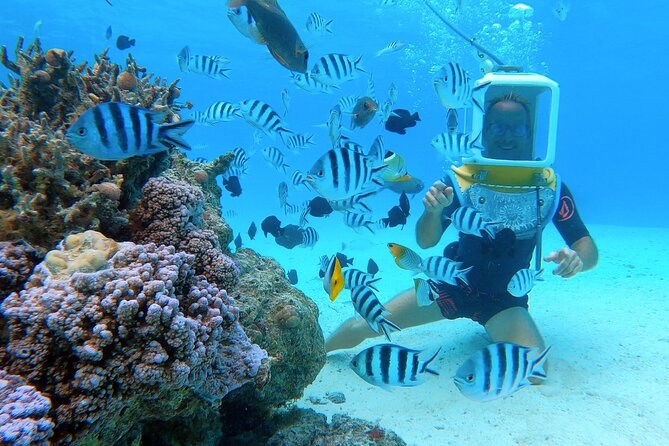
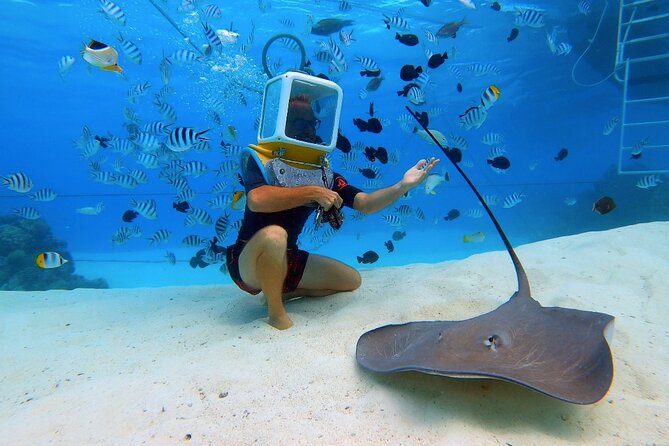
Bora Bora’s underwater helmet walk gives you a close view of the lagoon without asking you to swim, snorkel, or manage scuba gear. You walk on the sandy bottom at about 3 meters, with fish around you, coral nearby, and sometimes a friendly stingray gliding past.
I like two things especially: the clear-air helmet lets you breathe normally, and the professional guides stay close as you enter and leave the water. The included photo service is another practical touch. The main drawback is price: at $158.76 per person, this is not a cheap way to spend two hours, especially if rough water shortens the outing or a last-minute cancellation disrupts your plans.
Key points at a glance
- A rare option for non-swimmers: You can enjoy the lagoon without knowing how to swim, snorkel, or scuba dive.
- About 30 minutes on the lagoon floor: The underwater portion takes place at roughly 10 feet, inside a controlled coral-garden area.
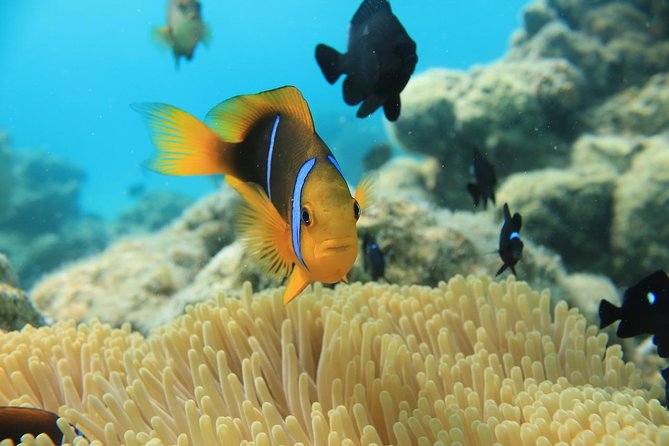
- Tropical fish at close range: Expect parrot fish, butterfly fish, clown fish, moray eels, stingrays, and other lagoon life.
- Guides do the hard work: Tama, JP, Rémi, Sébastien, Frédéric, and other instructors have been praised for patient explanations and calm support.
- Photos are part of the experience: Your instructor takes high-definition images, which you can review and purchase after the activity.
- Weather matters: Poor sea conditions can lead to a refund or a new date, so do not schedule this immediately before an important flight or cruise departure.
Walking on Bora Bora’s Lagoon Floor
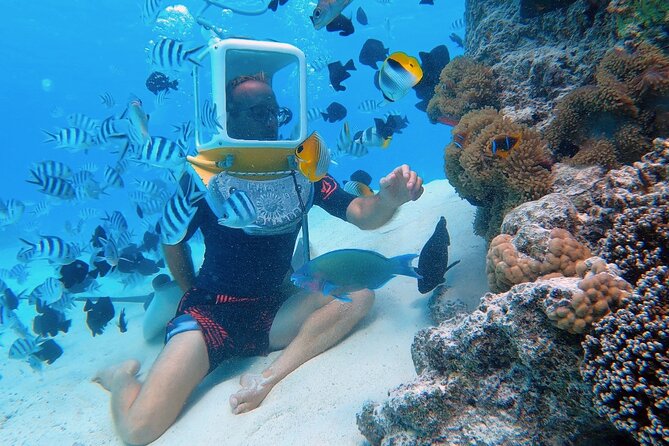
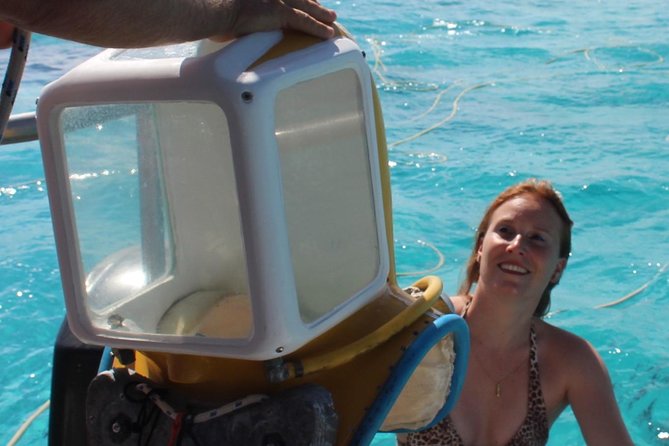
The appeal is simple. You put on a large helmet supplied with air from above, step down into the water, and walk across the sandy floor while keeping your head dry. The helmet feels unusual at first, but you breathe normally once it settles into place.
This is not scuba diving, and it is not a standard snorkeling trip. You are not swimming across the lagoon or learning complicated equipment. Instead, an instructor guides you through a short underwater walk in a roped-off section of coral garden.
The water reaches about 3 meters, or roughly 10 feet. That is shallow by scuba standards, but it feels close and personal when tropical fish gather around your helmet. A stingray may pass within touching distance, and guides sometimes point out starfish, anemones, moray eels, and other creatures.
The area is controlled, which helps nervous participants. You cannot wander far, but that limitation is useful. The guide knows where you are, the group stays together, and you spend less time worrying about direction and more time looking around.
More safaris around the world:
- Dubai: Desert Safari, Quad Bike, Camel Ride & Al Khayma Camp
★ 4.9 · 68,962 reviews - Dubai: Desert Safari, Quad Bike, Camel Ride and Sandboarding
★ 4.9 · 43,505 reviews - Dubai: Safari, Quad Bike, Camel Ride, and Buffet Dinner
★ 4.9 · 33,424 reviews
What the Two-Hour Schedule Feels Like
The full outing lasts about two hours according to the tour summary, though the detailed itinerary describes roughly two and a half hours including transport and preparation. Plan your day around the longer estimate. The underwater portion lasts about 30 minutes, with the rest used for pickup, boat transfers, safety instructions, equipment setup, and returning to the meeting point.
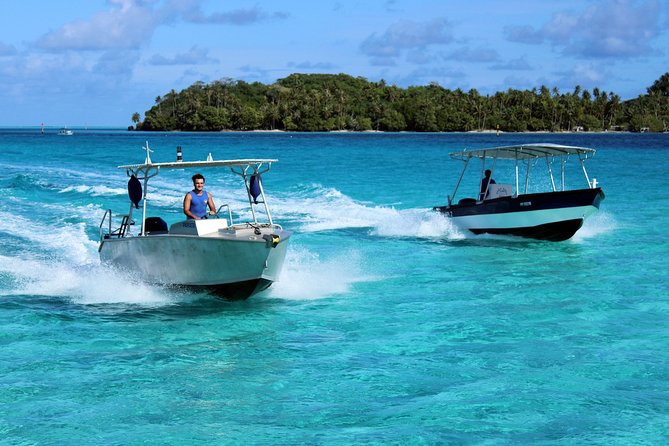
Pickup may be available from your hotel, and the listed starting point is Ferry and Boat Point at F6VX+53X in Bora Bora. Several participants were collected at resort docks, then taken by boat to the activity site. The exact pickup time matters, so read the operator’s message carefully rather than relying only on the general time shown when booking.
Once you reach the site, the crew explains the helmet, the descent, hand signals, and basic safety steps. Instructors such as Sébastien, Rémi, Tama, JP, and Frédéric have been singled out for making the process clear and helping people settle their nerves.
The descent can be the most stressful moment. One person noted feeling anxious when another participant was coming back up, while others found the staff reassuring once the helmet entered the water. If you are nervous, tell the crew before you begin. They can take things slowly and keep you close to the guide.
The Helmet, Ear Pressure, and Your Field of View
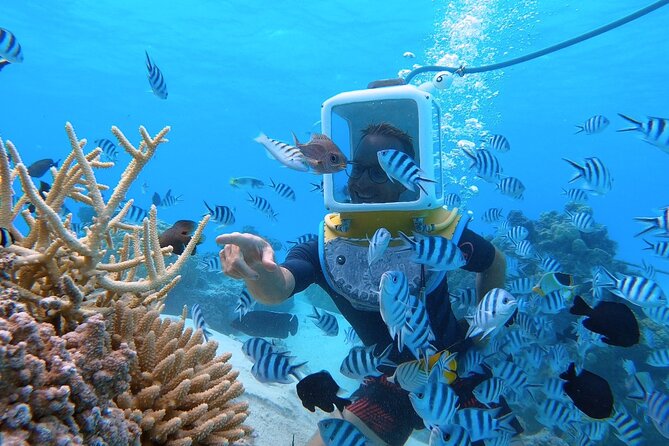
The helmet keeps your head dry, which is a major reason this activity works for people who struggle with masks or cannot swim. It also helps people who wear glasses and find conventional snorkeling difficult.
You still need to equalize your ears as you go down. One participant suggested bringing gum, and the guides provide advice for getting your ears to pop. If you have a history of ear trouble, this is worth taking seriously. The water is shallow, but pressure still changes during the descent.
The helmet has limited peripheral vision. You may need a moment to get used to looking straight ahead rather than turning your head freely. One participant found it easy to become disoriented at first. Move slowly, follow the guide’s instructions, and avoid trying to look everywhere at once.
You do not need to know how to swim, but you should be comfortable following instructions in shallow open water. Most people can participate, and the operator describes the activity as suitable for children and adults. The supplied information does not give a full medical or age restriction list, so ask before booking if anyone in your group has a health concern.
Fish, Coral, and the Resident Stingray
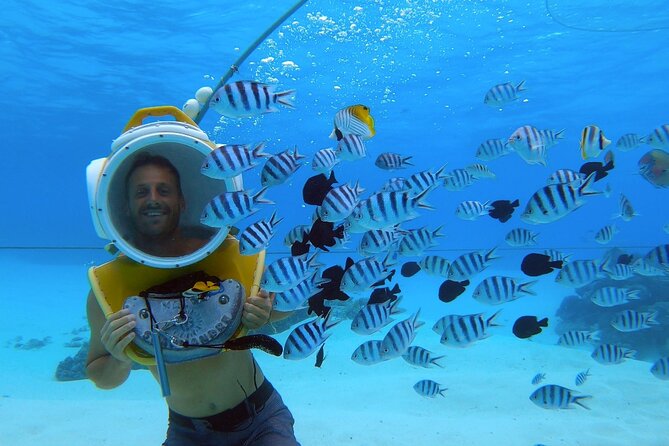
The underwater site is a coral garden surrounded by reef. The bottom is sandy, giving you a stable surface for walking while fish move around the coral. The setting is more focused than a long reef expedition, but that concentration works well for first-time participants.
You may see parrot fish, butterfly fish, clown fish, moray eels, starfish, anemones, and stingrays. Fish often gather around food carried by the group. Some outings provide bread or bananas in small bags to attract them. This creates close encounters, though you can choose not to use the food if you are uneasy about fish brushing against you.
The stingray is often the star of the outing. The crew has a familiar ray that has been visiting the area for years, and guides have worked with it long enough for it to approach comfortably. You may see it glide around the group or pass close by. Treat the encounter as a privilege, not a guarantee. Wild animals have their own plans, and sea conditions affect what you see.
The coral garden is the main attraction, but do not expect a huge reef system or a free-ranging exploration of the lagoon. You remain inside the designated area. That makes the activity safer and easier to manage, but it also means the experience feels more like a guided encounter than an independent expedition.
Same parks, another way to see the animals:
- Dubai: Red Dune Safari, Quad Bike, Camel Ride, BBQ Dinner
★ 4.9 · 32,185 reviews - Dubai: Premium Safari, Camel Ride & Al Khayma Camp 3-Buffets
★ 4.9 · 30,335 reviews - Dubai: Desert Safari with BBQ Dinner & Quad Biking Options
★ 4.9 · 20,485 reviews - Dubai: Half-Day Desert Safari, Camel Ride, ATV & Dune Buggy
★ 4.9 · 19,221 reviews
The Guides Make the Difference
The strongest part of this outing is the crew. Names attached to different departures include Tama, JP, Rémi, Sébastien, Frédéric, Neven, Nicholas, Eliza, and Captain T. The staff roles vary. One person may handle the boat, another may help participants descend and return to the surface, and another may take photos.
That division of work matters. A helmet is heavy and unfamiliar on land, and entering the water can feel awkward. Instructors help with setup, stay near you underwater, point out wildlife, and watch the group as people move along the bottom.
A group of eight was described as manageable, with enough staff to keep participants from feeling ignored. The maximum group size is listed as 12. A smaller group may feel more personal, but even a full departure should have several crew members working around the activity.
The tone is informal and friendly. Guides share jokes, local festival tips, and information about the lagoon. That human touch helps if you are nervous or taking the tour alone. It also makes the experience feel less like a machine-operated attraction and more like a local boat outing with a clear plan.
Photos, Cameras, and What You Can Take Home
Your instructor takes photographs with a high-definition camera during the underwater walk. The images are offered after the activity, and you can decide whether to buy them. Several participants felt the pictures were worth the added cost, especially because taking your own photographs while wearing the helmet can be awkward.
You may also bring a waterproof camera or GoPro. A waterproof camera lets you capture close views of fish and coral, though you should keep your attention on the guide and the people around you. Do not let photography distract you from the short time you have on the lagoon floor.
The operator’s camera is useful for group shots and photographs taken while you are properly positioned. Ask how the images are priced before you commit to purchasing them. The tour price does not clearly state that the photo package is included. The photographs are offered after the activity, so treat them as an optional extra unless the operator confirms otherwise.
Who Will Get the Most From This Activity
This is a strong choice for the person in your group who cannot swim, dislikes snorkeling masks, wears glasses, or does not want to learn scuba equipment. It also works well for families with children who are comfortable following directions.
It can be a good middle ground if you already love snorkeling but want something more structured and close to the bottom. You will not cover as much water as you would while snorkeling, but you get more time to look at fish without constantly kicking, floating, or clearing a mask.
Nervous participants can still enjoy it. The water is shallow, the site is controlled, and a professional scuba instructor leads the underwater portion. That said, this is not entirely effortless. You must manage the helmet, equalize your ears, adjust to limited peripheral vision, and accept being in open water.
If you are seeking a long, quiet reef session with freedom to swim wherever you like, choose a snorkeling or scuba excursion instead. The helmet walk is designed for access and novelty, not distance.
Is $158.76 a Fair Price?
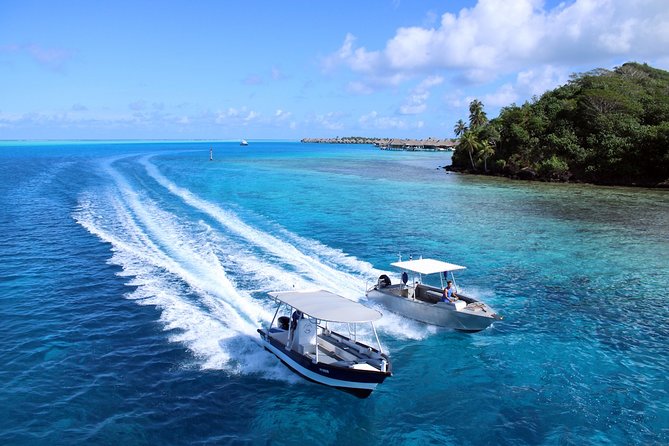
At $158.76 per person, the price is high for a two-hour activity with only about 30 minutes underwater. You are paying for more than time on the lagoon floor, though. The cost covers equipment, a boat transfer, professional instruction, staff support, and an experience that allows non-swimmers to see Bora Bora’s underwater world.
The value improves if someone in your group cannot snorkel or scuba dive. For that person, the helmet removes a major barrier and may provide the only comfortable way to see the reef during the trip. The guide service and underwater photographs add further value.
The price feels less compelling if everyone in your group already snorkels confidently and can join a longer reef tour for less. In that case, compare the duration, boat time, photo costs, and group size before booking.
The outing is booked regularly, so reserve ahead if your schedule is tight. Confirmation arrives within 48 hours, subject to availability. You can cancel at least 24 hours before the start time for a full refund. Cancellations or changes inside that window are not accepted for a refund.
Weather, Delays, and Planning Around Flights
Sea conditions matter more than the sunny view from your hotel. The operator can cancel for poor weather, strong swells, or underwater currents that may not be obvious from shore. If that happens, you should be offered another date or a full refund.
One cancellation caused serious frustration because the guests had arranged an extra hotel night around the activity and were not informed until pickup time. Another participant reported a pickup delay of about 40 minutes. These situations appear to be exceptions, but they show why you should keep a buffer in your schedule.
Do not book this as your final activity before a flight or cruise departure. The supplied guidance recommends allowing 12 hours before a domestic flight and 24 hours before an international flight. Even if the underwater portion is shallow, follow that timing advice.
The meeting point is Ferry and Boat Point, and the tour ends back there. If hotel pickup is important, confirm it directly and watch for the exact pickup message. If you are connecting to a cruise ship, allow extra time for the return transfer.
My Verdict: Who Should Book It?
I would book the Aqua Safari helmet walk if you want a close look at Bora Bora’s lagoon but cannot swim, dislike snorkeling gear, wear glasses, or feel uneasy about scuba equipment. The calm guidance, shallow depth, controlled site, and dry head make it unusually accessible.
I would also choose it for a family group with mixed abilities. A strong swimmer and a non-swimmer can share the same activity, which is not always possible on water excursions.
I would hesitate if you want maximum time underwater, a large reef area, or the lowest possible price. The 30-minute walk is short, the group may include up to 12 people, and the optional photographs add to the cost.
For the right person, this is one of Bora Bora’s most distinctive outings. Book it with weather flexibility, read the pickup instructions, bring gum if ear pressure concerns you, and let the guides handle the helmet and descent. You will get a carefully managed introduction to the lagoon, with fish, coral, and a fair chance of a friendly ray coming by.
FAQ
Do I need to know how to swim?
No. The activity is designed for people who do not know how to swim, snorkel, or scuba dive. You still need to follow the guide’s safety instructions.
How deep does the underwater walk go?
The walk takes place at about 3 meters, or roughly 10 feet. Some participants described the depth as around 15 feet, but the stated tour depth is approximately 3 meters.
How long am I underwater?
The underwater portion lasts about 30 minutes. The full outing takes approximately two hours, though the detailed description allows about two and a half hours including transport and preparation.
What marine life might I see?
Possible sightings include parrot fish, butterfly fish, clown fish, moray eels, starfish, anemones, stingrays, and other tropical fish. Wildlife sightings can vary with conditions.
Will I wear a mask or scuba tank?
You wear a special underwater helmet that keeps your head dry and lets you breathe normally. The activity does not require standard scuba or snorkeling equipment.
Are photographs provided?
Your instructor takes high-definition photographs during the underwater walk. The images are offered afterward, and the supplied information indicates they may be purchased as an optional photo package.
Where does the activity start and end?
The listed meeting point is Ferry and Boat Point, F6VX+53X, Bora Bora. The activity ends back at the meeting point. Pickup may also be available from your hotel.
What happens if the weather is poor?
The activity requires good weather. If the operator cancels because of poor conditions, you should be offered another date or a full refund.
Can I cancel for a full refund?
Yes, if you cancel at least 24 hours before the scheduled start time. Cancellations or changes made less than 24 hours in advance are not accepted for a refund.
New safaris around the world
- Safari Camel Ride in Banana Beach from Agadir★ 5.0 · 10 reviews
- Agadir Quad Bike Safari Desert Sunset★ 5.0 · 29 reviews
- Agadir Buggy safari / off road Experience Half Day | Adventure & Connections ®★ 4.5 · 65 reviews
- Agadir Buggy Safari Adventure★ 5.0 · 93 reviews
- Full-Day Safari Small Desert With Lunch★ 4.5 · 224 reviews
- Agadir Jeep safari 4×4 Desert Adventures with Lunch★ 5.0 · 365 reviews
- Agadir National Park & 4×4 Jeep Desert Safari Tour with Lunch★ 4.5 · 30 reviews
- Jeep safari 4×4 mini sahara desert with Berber Lunch★ 5.0 · 130 reviews