
Review · USA
Sunset Photo Safari
Anchorage turns into a working photo class as the evening unfolds. You might photograph the city with the Chugach Mountains behind it, migratory birds at Potter Marsh, a float plane at Lake Hood, and a waterfall under the last light. The route gives you far more variety than a single sunset viewpoint.
I like the small group of no more than 10, which leaves room for real camera help. I also like the practical teaching: guides such as Colin, Ben, and Tyler have helped people work with unfamiliar cameras, while Ben has even lent out a tripod and taught slow shutter technique.
The main drawback is that wildlife and sunset color are never guaranteed. One past outing had rain and little wildlife, although whales were seen. You should also expect cold, wind, and mosquitoes, especially near the water and high viewpoints.
Key points to know before you book
- Five very different photo stops: You move from city views and wetlands to mountain overlooks, float planes, and a waterfall.
- Useful instruction, not just sightseeing: Expect help with camera settings, composition, low light, and slow shutter speeds.
- Small-group attention: With a maximum of 10 people, you can ask questions and get advice suited to your skill level.
- Four hours well spent: The tour covers a lot of Anchorage without requiring you to arrange several separate outings.
- Wildlife is possible, not promised: Birds, moose, whales, eagles, and belugas have all appeared, but nature sets the schedule.
- Bring layers and mosquito spray: The mountains can be cold and windy, while wetland areas may have active mosquitoes.
Why this Anchorage photo tour works
The best part of the Sunset Photo Safari is its range. You are not parked at one overlook waiting for the sun to drop. Instead, you get a moving lesson in how to photograph Alaska in different settings.
That matters if you have a good camera but are not fully comfortable using it. The guides can help with exposure, focus, composition, and low-light choices while you work with actual subjects. You might begin with a skyline and end with a waterfall, so you get several chances to apply the advice.
It also suits phone photographers and beginners, not only serious camera owners. The focus is on seeing better and making thoughtful images, not on owning expensive gear. Still, you will get the most from the tour if you bring a camera you want to understand and arrive with a few questions.
The price is $195 per person. That is not a casual add-on, but it covers roughly four hours, transportation between five areas, a professional photographer guide, a local guide, snacks, and state park fees. Hotel pickup and drop-off are included if you select that option.
I see the value in the combination. A regular sightseeing ride might show you some of these places, but it would not normally include hands-on instruction or time to set up a tripod for a waterfall. If you already know your camera well and only want a sunset drive, the cost may feel high. If you want both a guided outing and a practical photography lesson, the price is easier to justify.
More Photography Safaris around the USA:
- Off the Beaten Path Ketchikan Photo Safari – 3 hr.
★ 5.0 · 901 reviews - Everglades National Park: Private 2.5-Hour Photo Safari
★ 4.9 · 9 reviews - Selous Luxury Day Safari with Photographer
★ 5.0 · 211 reviews
Point Woronzof starts with Anchorage and the Chugach Mountains
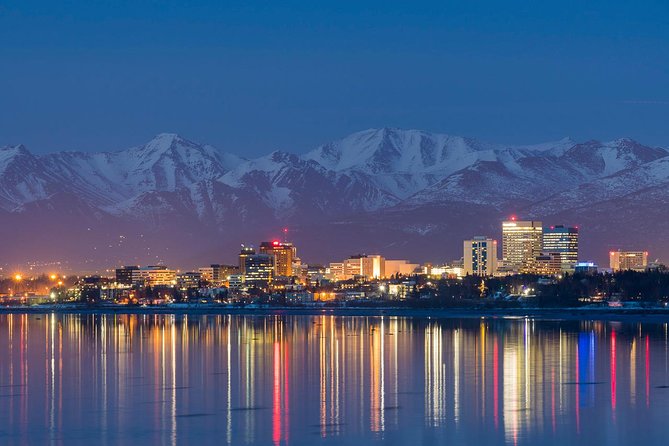
The first stop is Point Woronzof, where you photograph evening light on the Anchorage skyline with the Chugach Mountains behind it. The scheduled visit is about 20 minutes, so this is a quick opening session rather than a long walk or extended shoot.
That short stop has a useful purpose. It gives you a clean subject for practicing composition before the evening gets darker. You can work out how much of the frame to give the city, mountains, and sky, then compare wide views with tighter details.
The Anchorage Viewpoint also helps you get your bearings. The city is not treated as a mere starting point for wilderness. It becomes part of the picture, with urban shapes set against Alaska’s mountains.
The light may change quickly, so listen closely when the guide suggests a different angle or exposure. The route is built around evening conditions, and a few minutes can make a real difference. This is one reason the small group helps: you can ask for a quick adjustment without losing the whole stop.
Potter Marsh brings birds and patience into the lesson
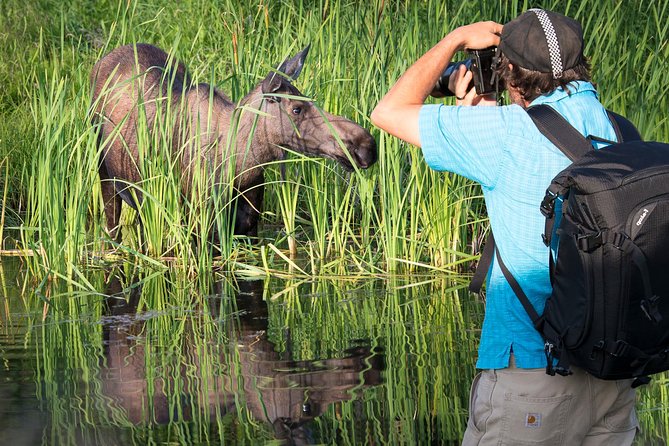
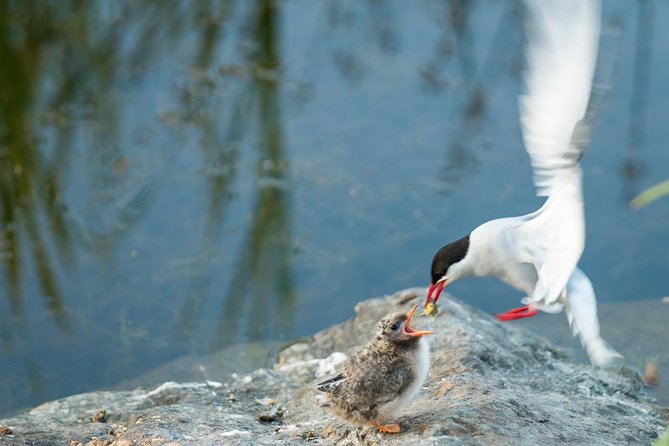
Potter Marsh Bird Sanctuary is an accidental wetland created during construction of the Alaska Railroad. Today it is a major nesting and migratory area, making it one of the most promising stops for birds and other wildlife.
You get about 30 minutes here. That is enough time to watch and photograph, but not enough to control the action. Birds may sit in a useful position, disappear into the reeds, or move before you are ready. Think of this stop as a lesson in patience and readiness.
The wildlife possibilities add excitement. Sightings mentioned from outings have included eagles, moose, whales, and a beluga whale. Those are welcome surprises, not part of a guarantee. If animals do not appear, the wetland still gives you practice with distant subjects, reflections, reeds, and changing light.
Bring mosquito spray. One of the clearest practical warnings from this experience is that mosquitoes can be active around the marsh. Wear clothing that works for an outdoor stop rather than dressing only for a vehicle ride.
Glen Alps gives you the big sunset view
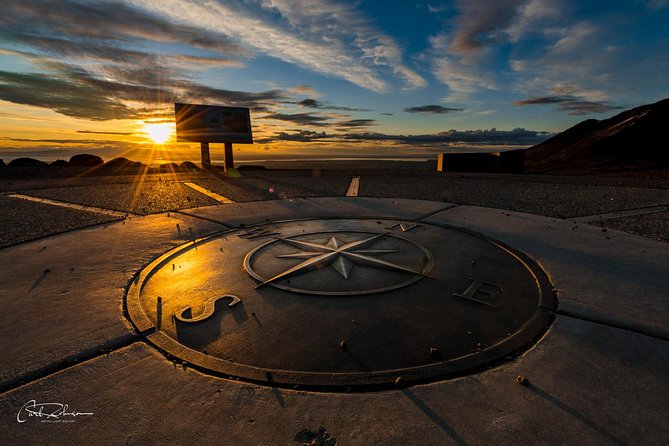
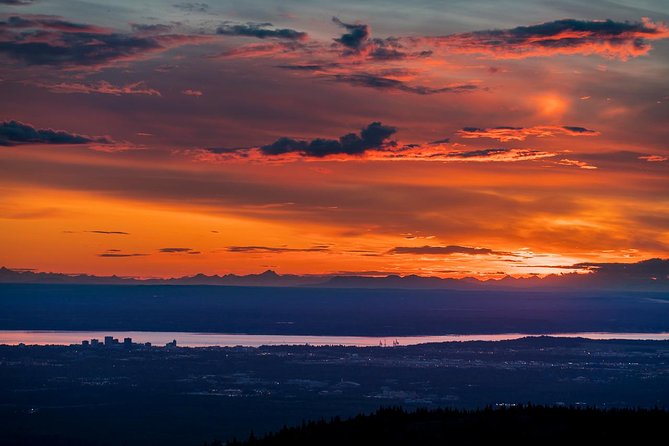
In Chugach State Park, the tour heads to the Glen Alps area high in the Chugach Mountains. The planned photography time is about 30 minutes, with panoramic views over Anchorage and Cook Inlet as sunset approaches.
This is likely the most dramatic viewpoint of the evening. You can photograph the broad sweep of the city and water, then watch the color shift across the mountains. The word sunset can be misleading in Alaska, since the exact look depends heavily on cloud, season, and weather. Some evenings may produce strong color, while others offer soft, subdued light.
The higher setting also brings a practical concern: it can be windy and cold. One outing included hot chocolate after the group returned to the vehicle, but you should not rely on a warm drink to replace proper clothing. Pack a warm layer, even if Anchorage feels mild when you start.
You do not need to be an expert to enjoy this stop. A guide can show you how to keep the bright sky from overpowering the city, how to frame the mountains, and how to use a tripod if one is useful. Ben has lent a tripod during an outing, but you should confirm equipment arrangements rather than assume one will be available.
More sunrise and sunset drives around the USA:
- 3 Hour Off-Road Sunset Safari to Grand Canyon with Entrance Gate Detour
★ 5.0 · 904 reviews - Grand Canyon: Off-Road Sunset Safari with Skip-the-Gate Tour
★ 4.6 · 171 reviews - Jackson: Grand Teton Sunrise Safari with Naturalist Guide
★ 4.8 · 49 reviews - Teide National Park Sunset & Stargazing with Dinner (Star Safari)
★ 5.0 · 2,601 reviews
Lake Hood adds a distinctly Alaskan subject
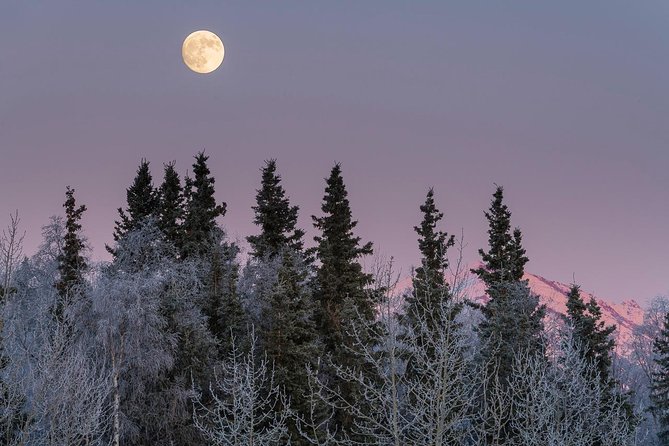
Lake Hood Harbor is home to the world’s busiest seaplane base, and the tour spends about 25 minutes photographing its float planes. This changes the mood completely.
The planes provide strong shapes, reflections, and a clear sense of place. They are also more approachable photographic subjects than a distant mountain ridge. You can work on composition, lines, and timing without waiting for an animal to cooperate.
This stop is valuable for anyone who wants pictures that say Alaska in a direct way. A mountain view can belong to many regions, but a float plane at a major seaplane harbor gives your photo a more specific local character.
The light may be lower by this point, which makes the guide’s advice especially useful. You may need to adjust shutter speed, ISO, or focus as conditions change. That is where this tour differs from simply stopping at the harbor on your own. You are practicing while the conditions keep moving.
McHugh Creek teaches slow shutter speed
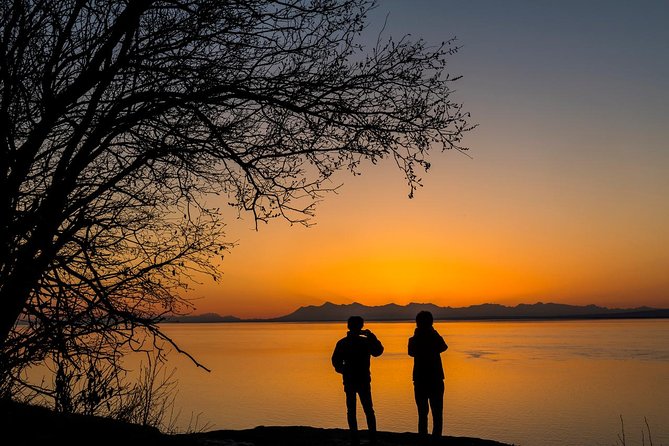
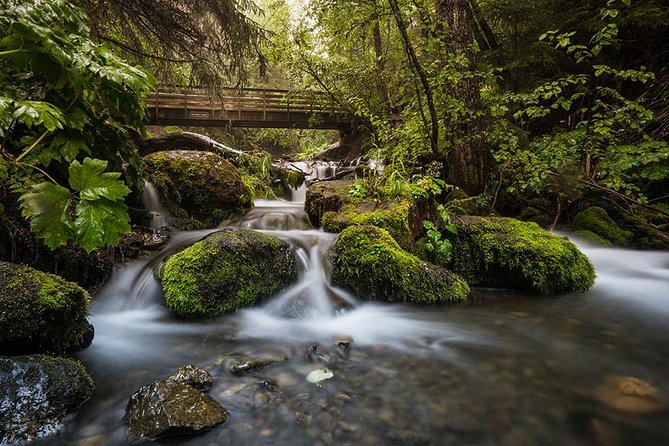
At McHugh Creek Recreation Area, the focus turns to water and technique. You photograph water cascading down a rugged mountainside, with about 30 minutes to work on slow shutter speeds.
This is the most clearly structured photography lesson on the route. A slow shutter can soften moving water, while a faster setting can preserve separate drops and sharper action. The guide can help you compare the results and understand what changed.
A tripod is useful for this type of work, especially when you are using a slower exposure. If you do not have one, ask whether equipment support is available. The point is not to produce one perfect waterfall picture. You are learning a method you can use later at rivers, fountains, surf, and city scenes.
The creek also gives you a break from wide views. After photographing the skyline and mountains, you are working close to rock and flowing water. That change helps you notice texture, movement, and smaller compositions.
The guides make the difference
The experience depends heavily on the person leading your group. Colin has been praised for taking time with camera tips and looking for strong shots. Tyler has combined photography instruction with broad knowledge of Anchorage and Alaska. Ben has been singled out for patience, practical advice, and helping people with different skill levels.
Jody has also guided small groups where each person wanted something slightly different. That matters because a group may include a beginner, a serious amateur, and someone using a phone. The best use of the tour is to tell the guide what you want early: wildlife, sunset color, camera basics, or more advanced technique.
The guide is also your driver and local source during the outing. You can ask about the places you pass, but the main value is hands-on help at the stops. Harry, another guide, has worked with visitors to understand their cameras and then chosen several locations where they could practice.
Do not expect a formal classroom with printed lessons. The teaching happens beside the marsh, harbor, mountain, or creek. That makes it practical, though it also means you should speak up if you want more help with a particular setting.
Timing, transport, and group comfort
The tour lasts about four hours and begins at the Visit Anchorage Log Cabin Visitor Information Center at 546 W. Fourth Avenue. It ends back at the same meeting point.
Hotel pickup and drop-off are available if you select that option. Pickup is centered on hotels in the Downtown, Midtown, and Spenard areas. An Airbnb may qualify if it is near a hotel in one of those areas, so you should request this in advance rather than assume every address is covered.
A maximum of 10 people keeps the outing personal without making it a private tour. That size should allow questions and some flexibility, although every stop still has a planned time. If you want a fully customized route or unlimited time at one location, a private arrangement would be a different type of outing.
The tour operates in all weather conditions, so dress for the forecast and for a cooler mountain stop. At the same time, poor weather can lead to cancellation, with a different date or full refund offered. Good conditions are important here because the experience depends on visibility, outdoor stops, and evening light.
The activity is not recommended for children aged 8 and under. Most people can participate, but it is not suited to those with severe mobility problems. Service animals are allowed, and the meeting point is near public transportation.
Who will get the most from the $195 price
I would choose this tour if you want to improve your photographs while seeing several parts of Anchorage in one evening. It is especially useful if you are unsure how to handle changing light or want help with a camera you rarely use.
It also fits couples and families with older children who enjoy making pictures together. The small group makes it easier to ask for individual advice, and the route gives each person different subjects to enjoy.
You may want to skip it if your priority is guaranteed wildlife. No responsible outdoor tour can promise a moose, eagle, whale, or beluga. You should also think twice if you dislike changing vehicles and locations, since this is an active evening with five stops rather than a single relaxed viewpoint.
The strongest reason to book is the instruction. Several people have continued using the techniques after returning home, which is a better value than simply collecting a few scenic snapshots. The outing gives you places to practice, but the real payoff is understanding why one setting works better than another.
Booking advice and final call
Book well ahead if your dates are fixed. This experience is commonly reserved about 114 days in advance, which suggests limited availability during popular summer periods.
You can cancel for a full refund up to 24 hours before the start time. Changes made inside that window are not accepted, and late cancellations are not refunded. If the minimum group size is not reached or weather forces cancellation, you can choose another date or receive a full refund.
I recommend the Sunset Photo Safari for photographers at beginner to intermediate level, couples who want a shared activity, and anyone who prefers local guidance over a standard sightseeing ride. You will get the most from it if you bring layers, mosquito spray, and a willingness to practice.
Skip it if you need guaranteed animals, perfect sunset color, or a tour built around long walks at one site. Otherwise, the mix of city, wetland, mountain, float plane, and waterfall gives you a smart four-hour introduction to photographing Anchorage.
FAQ
Where does the Sunset Photo Safari begin?
It begins at the Visit Anchorage Log Cabin Visitor Information Center at 546 W. Fourth Avenue in Anchorage.
Where does the tour end?
The activity ends back at the meeting point.
Is hotel pickup available?
Yes. Hotel pickup and drop-off are available when you select that option. Pickup is focused on hotels in Downtown, Midtown, and Spenard. An Airbnb may qualify if it is near a hotel in those areas.
How long does the experience last?
The tour lasts approximately four hours.
How many people can join the tour?
The maximum group size is 10 travelers.
What is included in the price?
The experience includes a professional photographer guide, a local guide, state park fees, and snacks. Hotel pickup and drop-off are included if that option is selected.
Is the tour suitable for children?
It is not recommended for children aged 8 and under. Most other participants can take part, but the experience is not recommended for people with severe mobility problems.
What happens if the weather is poor?
The tour operates in all weather conditions, but it may be canceled if conditions are unsuitable. In that case, you will be offered another date or a full refund.
New safaris around the USA
- Orlando: Airboat Ride Tour with Hotel Pickup★ 4.9 · 39 reviews
- St. Augustine: St. Johns River Airboat Safari with a Guide★ 4.8 · 110 reviews
- Sarasota: Myakka State Park E-bike Safari Experience★ 4.6 · 27 reviews
- San Diego: San Diego Zoo Safari Park 1-Day Ticket★ 4.4 · 240 reviews
- San Diego Zoo and Safari Park: 2-Day Entry Ticket★ 4.7 · 79 reviews
- San Diego Zoo Safari Park 1-Day Ticket★ 4.5 · 283 reviews
- San Diego Zoo and Safari Park 2-Day Entry Ticket★ 4.5 · 85 reviews
- Lihue: Deluxe Waterfall Safari Helicopter Tour★ 4.8 · 422 reviews
USA Safaris: how they compare.
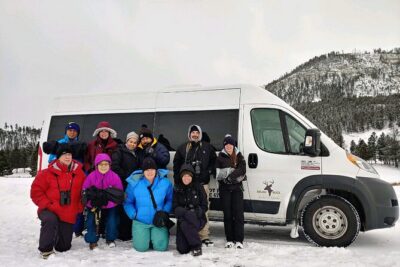
Grand Teton Wildlife Safari in a Enclosed or Open-Air Vehicle (season dependent)
Read our review →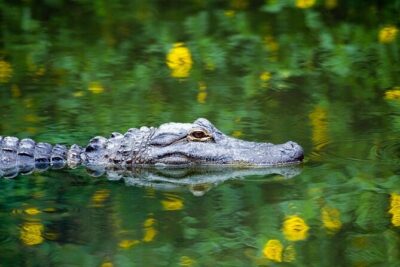
Everglades Airboat Safari Adventure with Transportation
Read our review →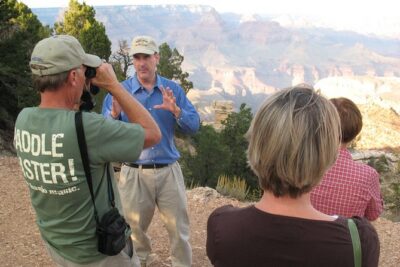
3 Hour Off-Road Sunset Safari to Grand Canyon with Entrance Gate Detour
Read our review →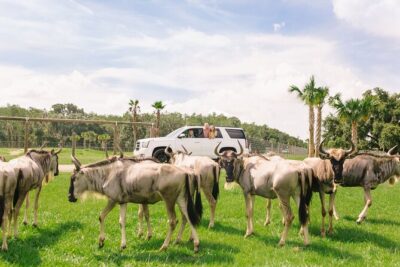
Wild Florida Drive-Thru Safari and Gator Park Admission
Read our review →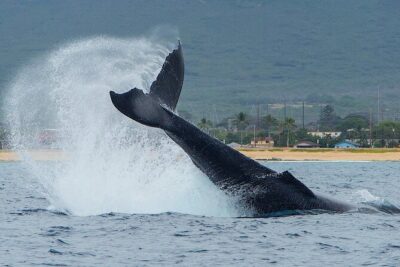
Wild Dolphin Watching and Snorkel Safari Off West Coast of Oahu
Read our review →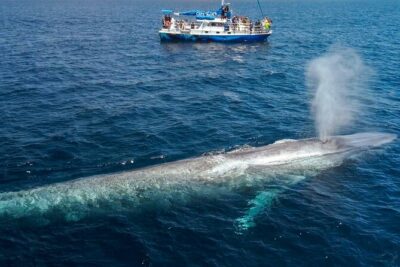
Dana Point Dolphin and Whale Watching with Underwater Viewing
Read our review →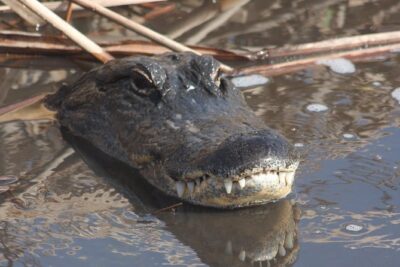
Other lists this safari sits on