
Review · INDIA
Nomadic Non-Touristic Overnight Camel & Desert Safari Tour
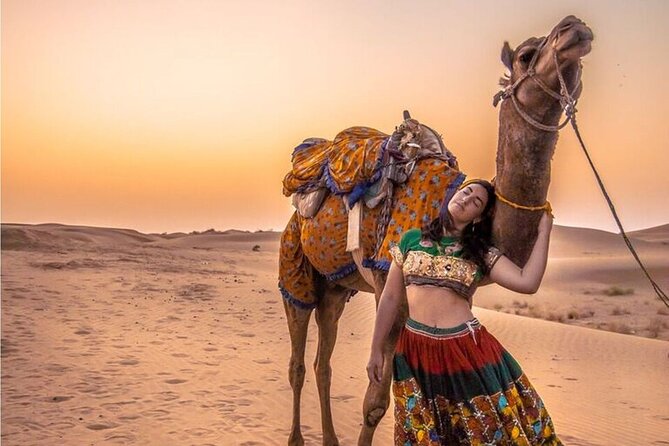
The best part of this $34 overnight safari is also the simplest: you sleep outdoors on a mattress in the Thar Desert, with no tent, electricity, or mobile signal between you and the stars. The camel ride, sunset, chai, and wood-fire dinner give the night a gentle rhythm, but the real attraction is the quiet.
I like the small-scale, non-touristic setting and the chance to eat food cooked by your camel driver rather than at a fixed desert camp. I also like the useful mix of sights: an oasis, Khabha Fort, remote villages, dunes, and two short camel rides. The trade-off is clear: there is no bathroom, electricity, or phone network, and bad weather can force a change of plan.
Key points at a glance
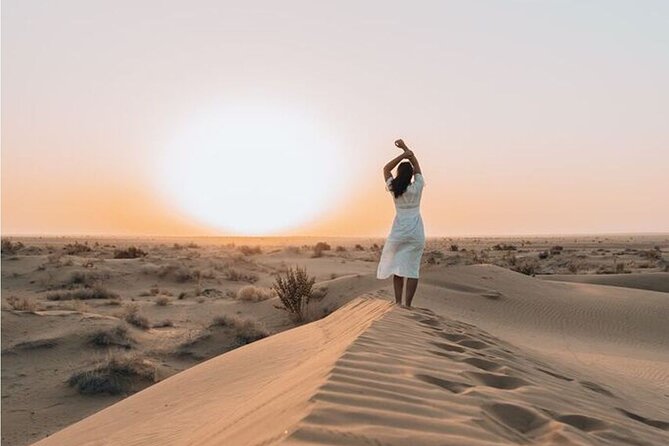
- Sleep on the dunes: Your bedding is a mattress and blanket in the open air or beneath a simple shelter, not a permanent tented camp.
- A short camel safari: The main rides last about 30 to 45 minutes on day one and around 30 minutes on day two.
- Useful desert stops: The route includes a natural oasis and Khabha Fort before the camel ride begins.
- Food with the desert experience: Dinner is cooked over wood fire, with tea and snacks at sunset and breakfast after sunrise.
- Local hosts: Marvin leads the operation, with camel drivers and camp helpers including Ali and Abu mentioned in the experience details.
- Real back-to-basics conditions: There are no washrooms, electricity, or mobile network in the desert, so pack for comfort rather than glamour.
Why the open-air night is the main event
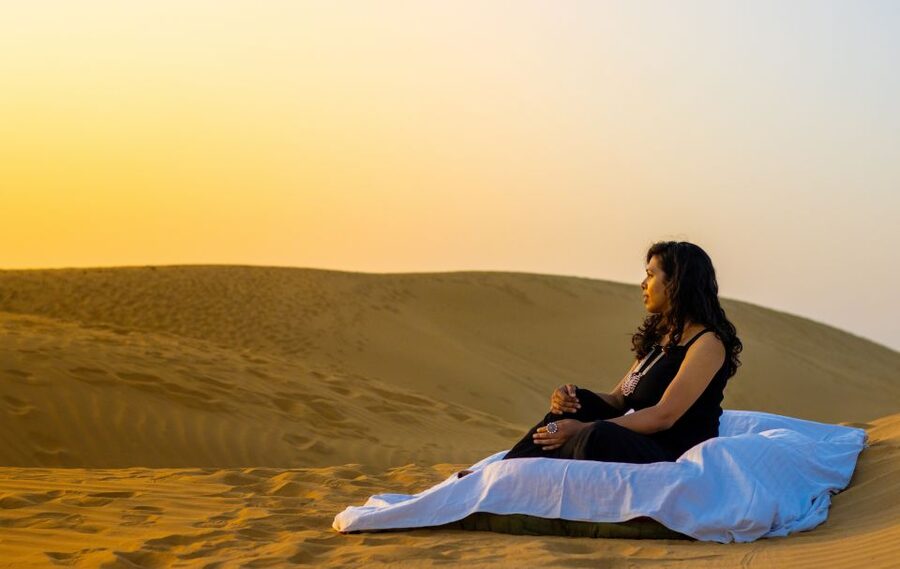
Many desert trips sell a tent, a dining area, and a polished evening program. This one offers something more exposed and more memorable. You lie on a mattress with a blanket, either directly on the dunes or under a basic open shelter. The sky is the entertainment.
That matters because the Thar feels different after dark. With no electricity or mobile signal at camp, your attention moves to the moon, the dunes, the fire, and the stars. On a clear night, you can see why the hosts call it a billion-star hotel. This is not luxury, but it is a fine form of comfort if you enjoy simple nights outdoors.
The open-air arrangement also brings limits. Wind, rain, dust, and cold are part of the deal. One party had a rainstorm shortly after reaching camp and could not spend the night in the desert. Another enjoyed clear skies and a comfortable night. Check the forecast before booking, and bring warm clothing in winter even if the afternoon feels hot.
More Multi-Day Safaris around India:
- Private 4-Day Golden Triangle Tour with Ranthambore Tiger Safari
★ 5.0 · 248 reviews - 4 Day Golden Triangle with Ranthambore Tiger Safari Tour from Delhi
★ 5.0 · 110 reviews - Jodhpur Camel Safari & Overnight Stay In Desert With Sumer
★ 4.9 · 89 reviews
Leaving Jaisalmer around 2 PM
The safari begins at about 2 PM from the Marvin Camel Safari office. A shared jeep or car picks you up at your hotel, provided you give the exact pickup location when booking. The drive takes you away from Jaisalmer toward quieter parts of the Thar.
The road portion is useful, not wasted time. You pass remote settlements, old ruins, and open desert before reaching the camels. Depending on the route and conditions, the drive includes a natural oasis and Khabha Fort.
The oasis gives you a quick reminder that desert life is not only sand and emptiness. Water has always shaped where people live, rest, and move. Khabha Fort adds a more atmospheric stop, with abandoned buildings and old stonework overlooking the desert. The fort is often described as haunting, so it suits visitors who like a little atmosphere with their sightseeing.
Do not expect a long guided history visit with extensive interpretation at every stop. The strength here is the combination of places and the local explanation you receive along the way. Guides such as Marvin and Mr. Hyatt have been praised for sharing stories and answering questions, while Mr. Gaji is also named in connection with the camel experience. The exact guide can vary, but the operation uses its own camel drivers and guides rather than outside escorts.
Meeting your camel and riding into the dunes
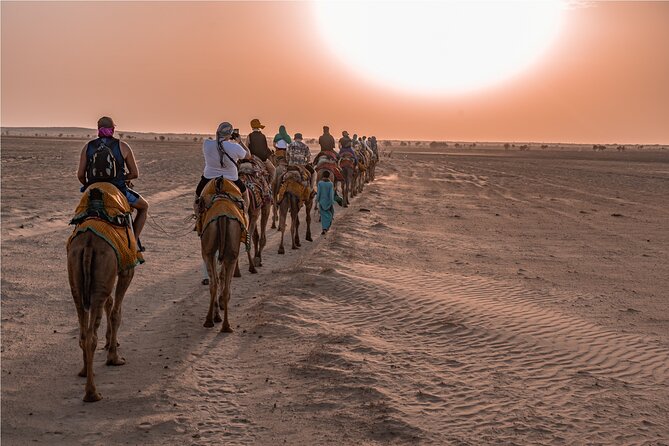
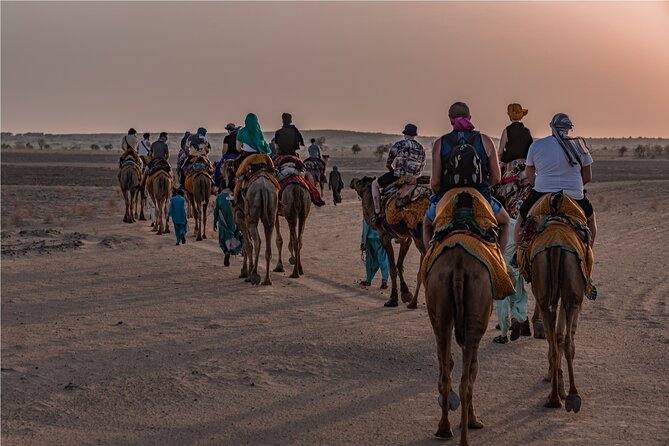
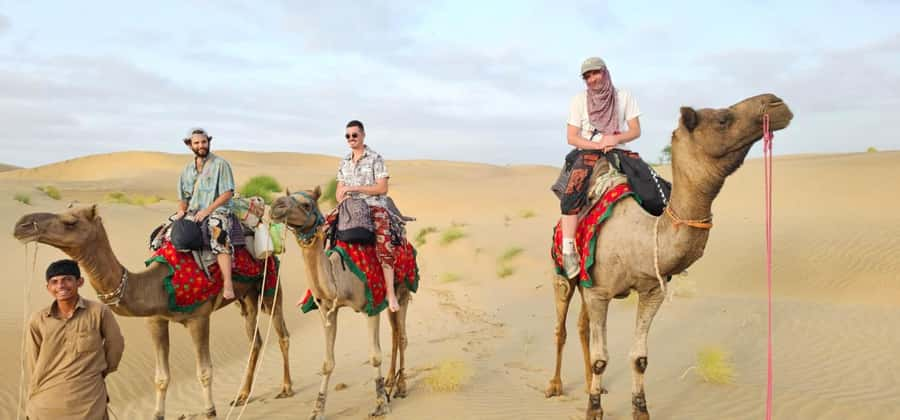
At the desert meeting point, you are introduced to your camel and camel driver. Each person gets an individual camel, which is important. You are not squeezed onto a shared animal or left watching someone else ride.
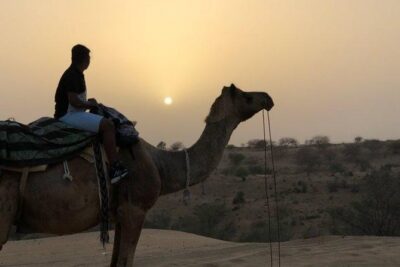
The first ride lasts about 30 to 45 minutes. That may sound short, but it is a sensible length for a first camel ride. Camels rise and kneel in stages, and their rolling walk can test your balance and legs. A shorter ride leaves you time to enjoy the dunes without turning the experience into an endurance test.
Your driver handles the camel and guides the route. The trip is less about covering a great distance than about slowing down and seeing the desert from a traditional mode of transport. You move through the dunes, stop for views, and arrive in time for sunset.
Camel comfort depends on your own preparation as much as the animal. Wear long trousers, a long-sleeve shirt, and sturdy shoes. A hat, cap, or turban helps with the sun, while sunscreen and sunglasses are essential. If you have back, hip, or balance concerns, keep in mind that pregnant women are not permitted on the tour.
Sunset chai, snacks, and a quiet stretch of sand
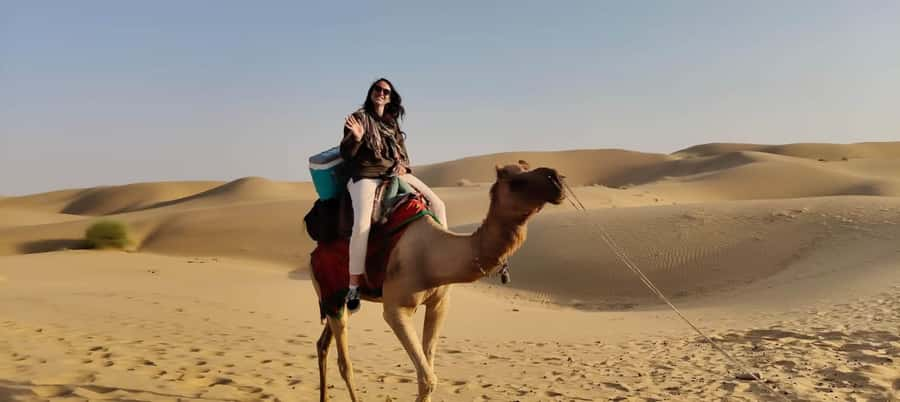
A stop in the dunes brings tea and snacks as the sun drops. This is one of the nicest details in the program because it gives you time to sit still. You can take photographs, watch the light change, and let the camel ride settle into your muscles.
The Thar is at its best during these pauses. The dunes take on warmer colors near sunset, and the wide horizon gives you plenty of room to watch the sky without a crowd in front of you. The experience is designed around quiet rather than a long list of activities.
Bring a fully charged camera battery, but do not spend the whole stop behind a screen. There is no electricity at camp, and the desert rewards patience. A small torch is also important once the sun goes down. Your phone may be useful as a camera, but do not count on a mobile signal.
More safaris around India:
- From Jaipur: Ranthambore National Park Day Trip with Safari
★ 4.6 · 244 reviews - Desert Camel Safari Day Tour In Jodhpur
★ 5.0 · 161 reviews - Jhalana Panther Safari Park Tour in Jaipur
★ 4.5 · 127 reviews - Tiger Safari in Ranthambore National Park
★ 4.5 · 124 reviews
A wood-fire dinner with the camel team
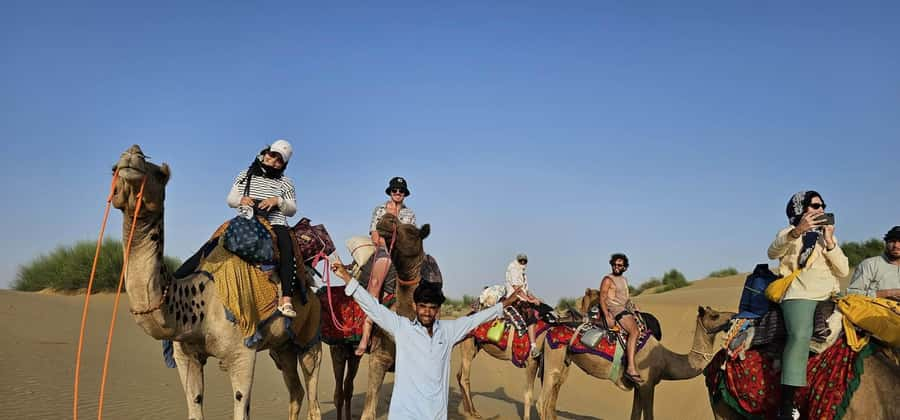
Dinner is prepared by the camel driver and camp team, generally as traditional vegetarian food cooked over a wood fire. Tea, coffee, bottled water, breakfast, and dinner are included. The food is part of the appeal because it connects the meal to the place and the people preparing it.
The evening meal is followed by time around a bonfire in winter, when fires are permitted for safety reasons. In warmer months, the fire may not be lit. This is worth knowing if you picture a dramatic campfire scene in every season. You still receive dinner, but the evening setup can be different.
Food arrangements can include vegetarian and non-vegetarian needs according to the experience details, but the itinerary specifically describes a traditional vegetarian dinner. If your diet is important, confirm it when booking rather than assuming every request is covered.
The hosts are part of the evening. Marvin has been described as funny and helpful, while the young camel handlers are noted for speaking English, answering questions, and talking about remote desert communities and camel life. That human contact is one reason this feels less like a staged camp program and more like an evening spent with a working local team.
Sleeping without a tent
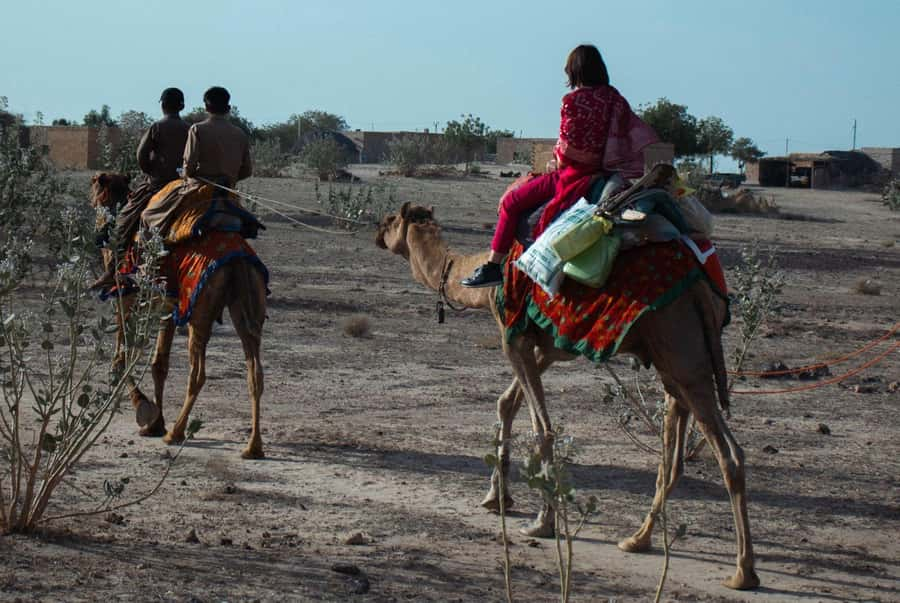
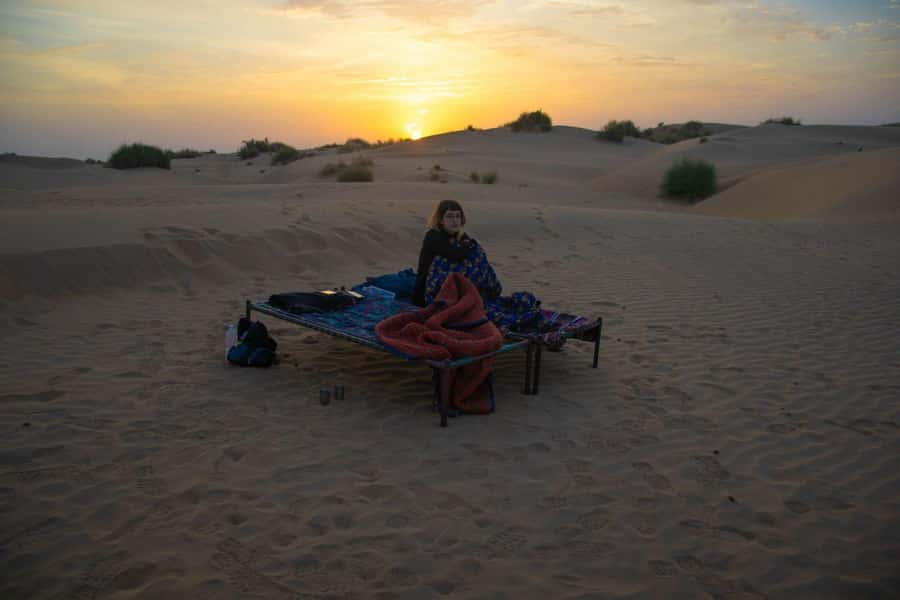
After dinner, you settle into desert-style bedding. Expect a mattress and blanket, not a bed, cabin, or enclosed tent. You may sleep directly on the dunes or under a simple open shelter, with the starry sky still visible.
This is the point where you need to be honest about your camping habits. If you need a private bathroom, firm walls, charging points, or air conditioning, this tour is the wrong choice. There is no washroom, electricity, or mobile network at the desert stay.
If you are comfortable with basic outdoor sleeping, the simplicity is the reward. You hear less, see more, and wake close to the sand rather than packing up inside a resort tent. Bring toiletries, toilet paper, a towel, and a medical kit. The tour information also recommends warm clothes for winter nights, and that advice should be taken seriously.
Weather is the one factor no operator can control. Rain or a sandstorm can change the overnight plan. One group experienced a short sandstorm and light rain that cooled the desert, while another could not sleep outdoors because of a storm. This is a real desert outing, not a weather-proof hotel room.
Sunrise, breakfast, and the return to Jaisalmer
Day two begins with tea and sunrise. The early light is often the calmest time in the desert, with fewer distractions and cooler air. You then eat breakfast before mounting the camels again.
The second ride lasts about 30 minutes. It gives you one last look at the dunes and a final chance to get used to the camel’s motion. Afterward, a jeep or car takes you back to Jaisalmer, with arrival planned for around 10 AM.
That timing makes the safari easy to fit around a Jaisalmer sightseeing day. You leave in the afternoon and return in the morning, so you do not lose a full second day. Lunch is not included, and the program ends after the return to town, so plan your next meal and any onward transport accordingly.
What the $34 price really buys
At $34 per person, this is an unusually inexpensive overnight experience. The price includes hotel pickup and drop-off, shared round-trip transport, the camel trek, an individual camel, overnight bedding, dinner, breakfast, tea or coffee, bottled water, and the listed entry for the camel safari package.
The value is strongest if you want the core desert experience rather than comfort. You receive transport, food, a camel ride, local guidance, and a night outside for less than many hotel-based excursions cost. The lack of a permanent camp helps keep the price down.
The low price does not mean every possible expense is covered. Lunch, alcoholic drinks, personal purchases, travel insurance, and adventure insurance are not included. The safari also does not provide a washroom, electricity, or mobile service in the desert. Think of the price as paying for access to a simple local experience, not a polished resort package.
The shared vehicle may also mean less control over departure details than a private tour. If you want a private car or a longer camel ride, those points should be confirmed before booking. The listed plan is designed around a shared transfer and short riding periods.
Who will enjoy this safari most
I would choose this trip if you want a low-cost, quiet night in the desert and are happy to trade facilities for atmosphere. It suits couples, friends, solo visitors, and families with older children who can handle heat, sand, a camel ride, and outdoor sleeping.
Families should note that children enjoyed running on the dunes and seeing camels and other animals, including goats, cows, peacocks, lizards, and birds. Still, the lack of toilets and electricity can make the trip harder with very young children. Babies under one year are not accepted.
This is also a good fit if you want contact with a local team. Marvin and the camel handlers are part of the experience, and the guides can explain desert life, old sites, camels, and nearby communities. English and Hindi are available.
You should skip it if you need reliable weather, a private bathroom, indoor sleeping, or a structured camp with fixed facilities. It is also not suitable for wheelchair users or pregnant women. Alcohol and drugs are not appropriate, and the operator accepts no responsibility for problems connected with intoxication.
How to prepare for the desert night
Pack lightly, but pack intelligently. Your small kit should include:
- Long trousers, a long-sleeve shirt, and sturdy shoes
- A hat, cap, or turban
- Sunscreen and sunglasses
- Warm clothes for winter nights
- Toilet paper and a towel
- A torch
- Toiletries and a small medical kit
- A fully charged camera or phone battery
- Passport or ID card
- Proof of travel insurance
Avoid sharp objects, weapons, fireworks, and explosives. The operator also prohibits nudity and intoxication. These rules are straightforward, especially in an exposed setting where a small problem can become a serious one.
Give the operator your exact hotel pickup details. Carry enough personal medication, and do not assume you can buy supplies once you leave Jaisalmer. A positive attitude helps too, because sand, wind, and basic conditions are not faults to be fixed. They are part of the outing.
Should you book the Nomadic Non-Touristic Overnight Camel Safari?
Book it if your ideal desert night means sleeping under a clear sky, eating food cooked over wood fire, and talking with local camel handlers away from a fixed tourist camp. The combination of oasis, fort, sunset dunes, camel rides, and sunrise gives you plenty for the price.
Do not book it for luxury, long-distance riding, or guaranteed weather. The camel rides are short, the facilities are almost nonexistent, and a storm can change the overnight stay. For a genuine back-to-basics experience from Jaisalmer, though, this is a strong choice at $34, especially if you arrive prepared for cold, sand, and a night without a bathroom.
FAQ
How long is the Nomadic Non-Touristic Overnight Camel Safari?
The experience lasts two days and one night. Day one begins around 2 PM, and you return to Jaisalmer at about 10 AM on day two.
What is included in the price?
The price includes shared hotel pickup and drop-off, round-trip transport, a guided camel trek, one camel per person, desert bedding with a mattress and blanket, dinner, breakfast, evening tea or coffee, bottled water, and the listed camel safari admission.
Is lunch included?
No. Lunch is not included in the tour.
Are there bathrooms or electricity in the desert?
No. The desert stay has no washroom, electricity, or mobile network. Bring toilet paper, a towel, toiletries, and a torch.
Can I sleep inside a tent?
The overnight setup uses a mattress and blanket on the dunes or beneath a simple open shelter. It is not described as an enclosed tented camp.
Is a campfire available all year?
No. Campfires or bonfires are offered only in winter because of safety concerns. Dinner is still prepared as part of the desert experience, but the fire arrangement can vary by season.
New safaris around India
- Sanjay Gandhi National Park + Kenheri Caves + Lion Safari★ 4.4 · 19 reviews
- Ranthambore National Park: Safari Ticket with Pickup Option★ 4.5 · 32 reviews
- Sawai Madhopur: Ranthambore National Park Guided Jeep Safari★ 4.4 · 23 reviews
- Peeps Billions of Star Experience with Desert & Camel Safari★ 4.8 · 18 reviews
- Munnar: Tea Garden and Elephant Safari Trip by 4×4★ 4.1 · 16 reviews
- Munnar: Anakulam Jeep Safari with Waterfall and Elephant★ 4.4 · 22 reviews
- Jodhpur: Desert Camel and Jeep Safari with Traditional Food★ 4.9 · 57 reviews
- Jodhpur Camel Safari & Overnight Stay In Desert With Sumer★ 4.9 · 89 reviews
India Safaris: how they compare.
Private 4-Day Golden Triangle Tour with Ranthambore Tiger Safari
Read our review →
Jodhpur Camel Safari & Jeep Safari In Desert Jodhpur SR
Read our review →
Old Delhi Food Tour Safari – The Capital of Flavors
Read our review →Other lists this safari sits on